Discover some of the area’s top locally owned businesses in 2025
Locally owned businesses are the backbone of Greater Lafayette, and those small business owners invest time, finances, energy and passion into their companies. Here we take a look back at the small business of the month winners recognized by Greater Lafayette Commerce in 2025, along with the Small Business of the Year winner. Old National Bank is a longtime sponsor of the Small Business of the Month & Year program. The winners were recognized each month at a ceremony at Ripple & Co.
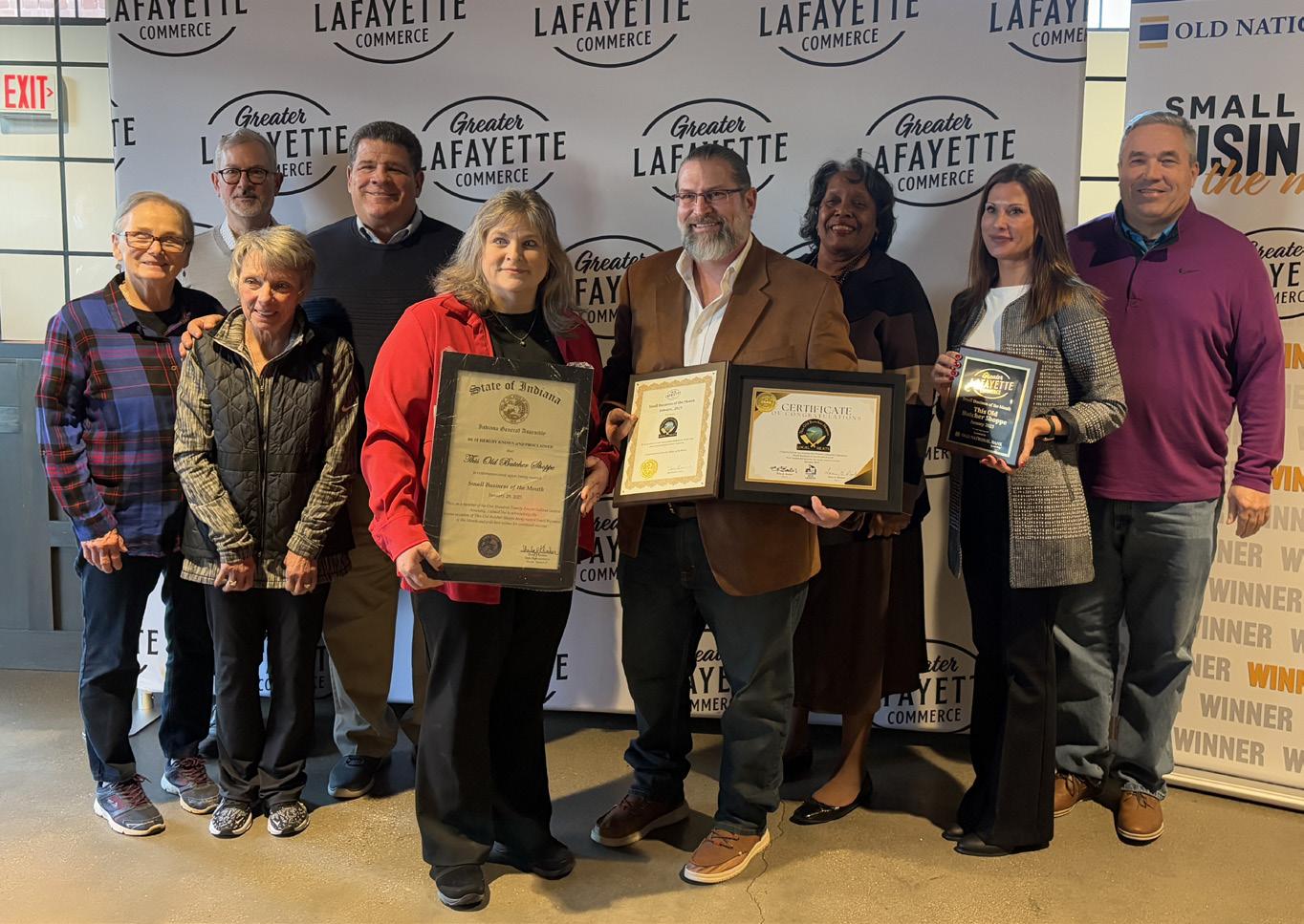
JANUARY – THIS OLD BUTCHER SHOPPE
This locally owned full-service butcher shop serving the Greater Lafayette area was launched in September 2021 by owner Jessica Roosa, a Purdue University graduate, as an offshoot of the family’s agriculture business (This Old Farm) and with a mission to bring sustainable, locally sourced meats to the community. What sets This Old Butcher Shoppe apart is its emphasis on transparency, regenerative agriculture and traceability. It offers pasture-raised pork, non-GMO-fed poultry, grass-fed lamb and beef, and dry-aged beef cuts — all sourced from known local farms and processed under USDA inspection. Beyond its product selection, the shop is praised for knowledgeable staff and superior customer experience: reviewers highlight the butchers’ willingness to explain cuts, give cooking advice and consistently deliver high quality.
This Old Butcher Shoppe
3623 Braddock Dr., Suite B Lafayette (765) 767-4886
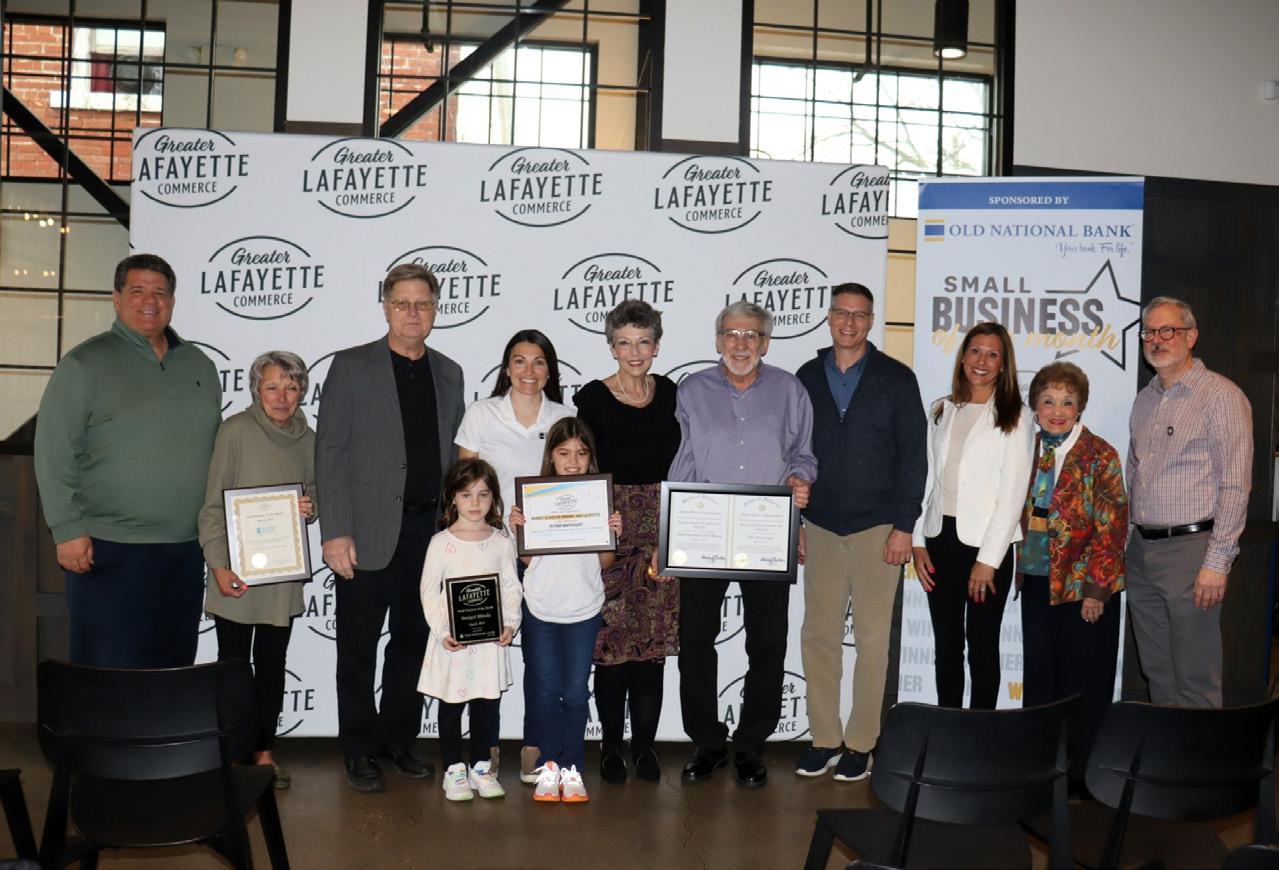
FEBRUARY – BUDGET BLINDS OF KOKOMO AND LAFAYETTE
Serving the Kokomo and Lafayette areas, Budget Blinds has been operated by owner John Fansler since 2005. The business emphasizes a full-service model: it provides free in-home (or virtual) consultations, brings the “showroom to your home,” takes precise measurements, manages the ordering of custom window coverings (blinds, shades, shutters, drapes) and performs professional installation. This business is known for focus on design consultation and customized solutions. Products offered include a wide variety of blinds (wood, faux wood, vertical); shades (roller, cellular, Roman, woven); shutters (plantation and vinyl); draperies, outdoor shading solutions and motorized/automated coverings.
Budget Blinds of Kokomo and Lafayette John Fansler jrfansler@budgetblinds.com (765) 234-1681
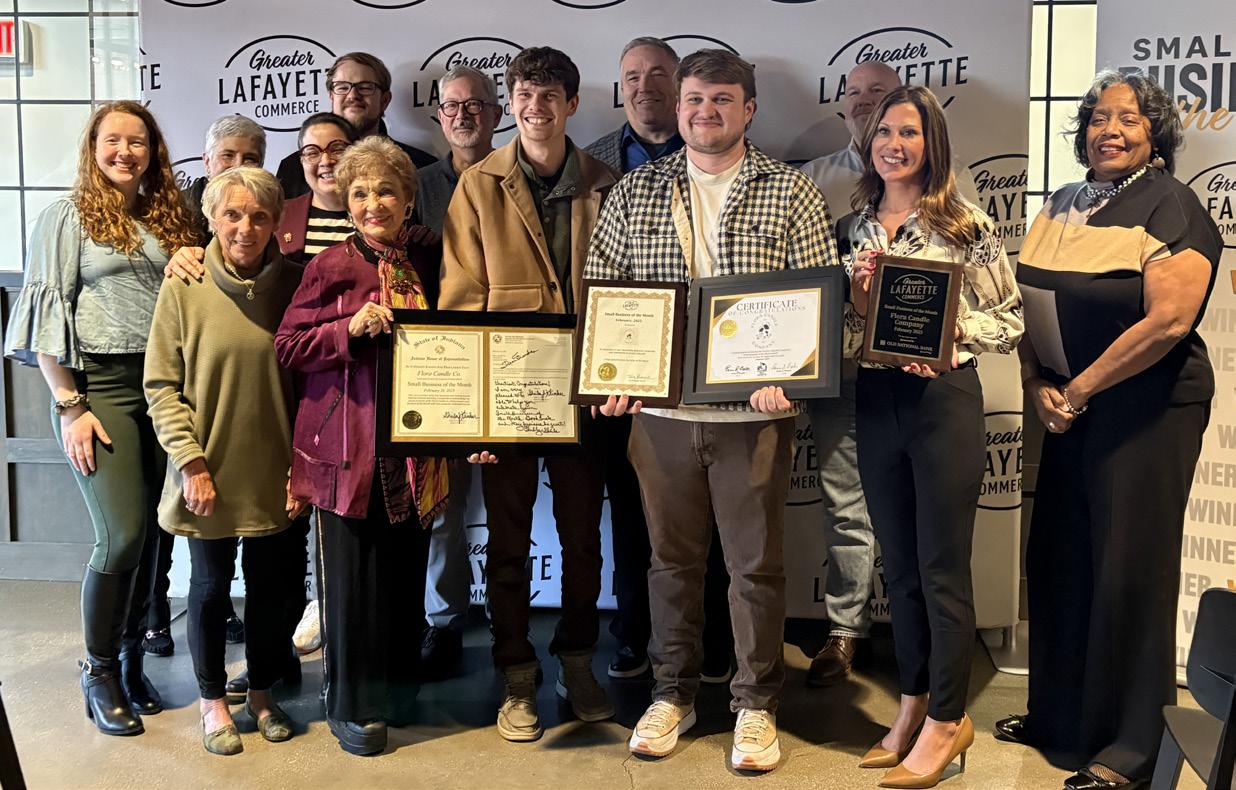
MARCH – FLORA CANDLE COMPANY
Flora Candle Company is a locally owned artisan candle shop whose mission is rooted in sustainability, inclusivity and community. The business was founded by Nolan Willhite and Troy Weber in tribute to Nolan’s late great-aunt Florann, and they chose to keep the name “Flora” as a way to honor her memory.
The two use 100% soy wax sourced from the Midwest, favor natural and low-emission materials and maintain an eco-friendly business model—emphasizing local sourcing to reduce transportation impact and using toxin-free ingredients. Inside the store, you’ll find a lively selection of hand-poured candles, room and linen sprays, wax melts and other fragrance products. Its catalog features hundreds of unique scents, such as names inspired by regional themes, pop culture and seasonal moods.
Flora Candle Company 609 Main St. Lafayette (765) 767-4819
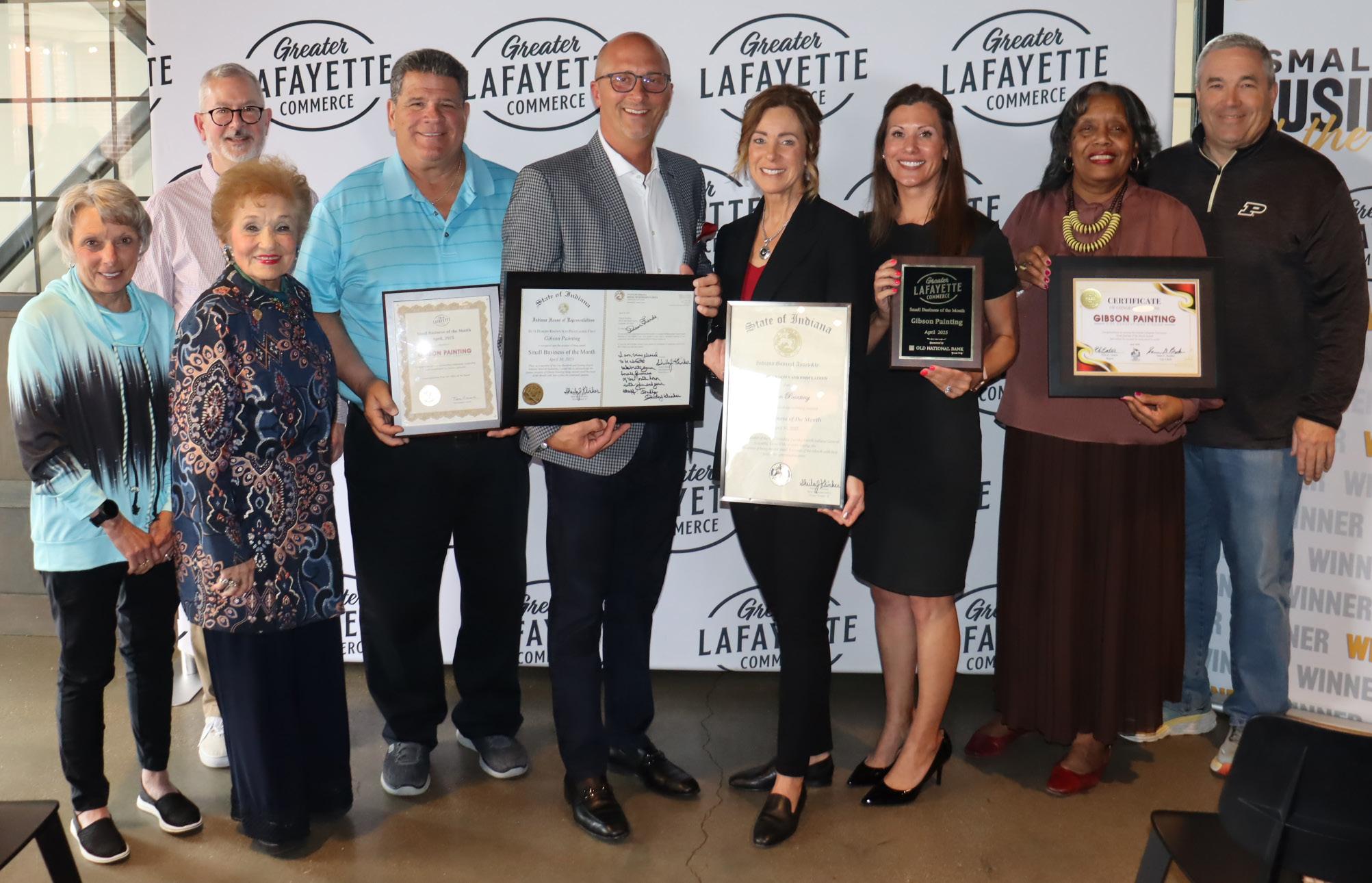
APRIL – GIBSON PAINTING GROUP
Gibson Painting Group is a family-owned painting and construction contractor serving the Greater Lafayette area. With a long legacy of five generations of experience, Gibson is committed to craftsmanship, attention to detail and delivering projects on time and on budget.
Its services cover both commercial and residential painting: everything from new construction and large facility repainting to home interior and exterior work, refinishing kitchens and bathrooms and preparing homes for sale.
Gibson Painting Group
105 N. 36th St., Suite C
Lafayette (765) 838-1233
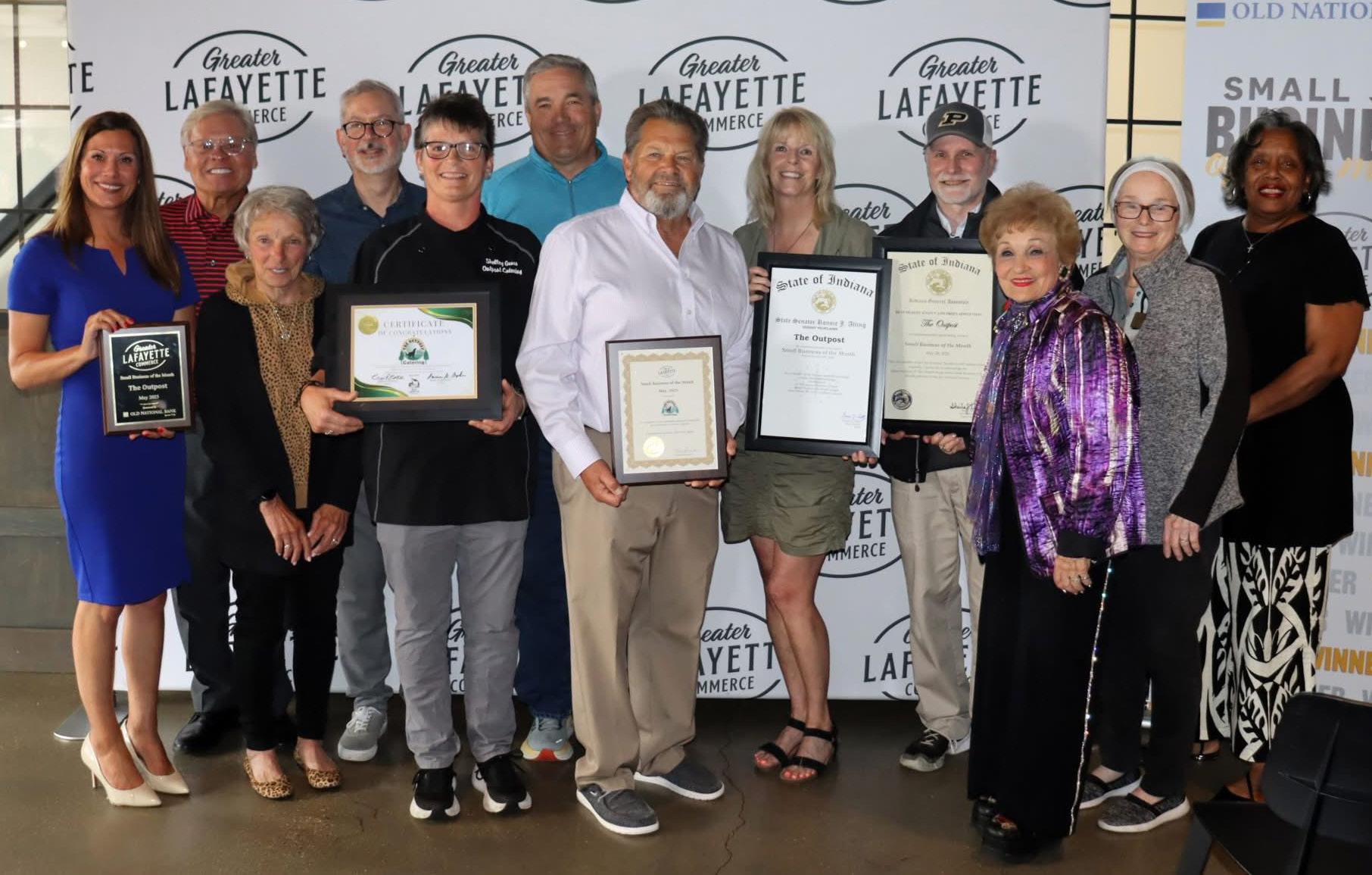
MAY – THE OUTPOST CATERING
Established in the early 2000s originally as Sgt. Preston’s Catering before rebranding to The Outpost in 2007— the company grew from a downtown catering operation into a full-service venue offering onsite and off-site catering for weddings, corporate events, reunions and more. The Outpost’s catering service is highlighted by a diverse menu and flexible service styles, which include plated dinners to buffet setups, outdoor cookout themes and full bar service with licensed bartenders. THe Outpost is owned by Doug and Karen Cooper.
The Outpost Catering
2501 Old U.S. 231 Lafayette (765) 471-1706
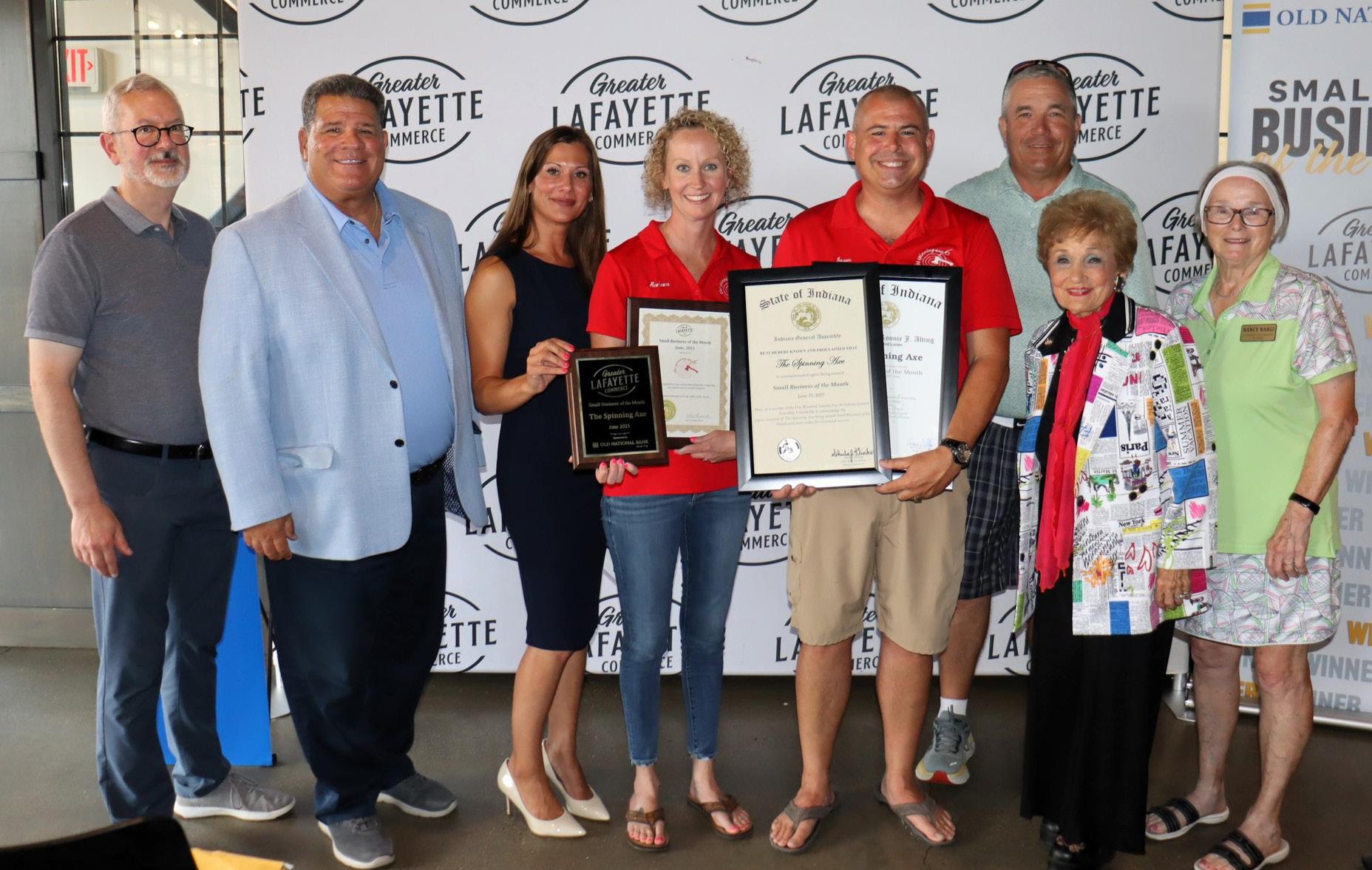
JUNE – THE SPINNING AXE
The Spinning Axe is an indoor axe-throwing venue offering an energetic and unique entertainment experience. It opened in January 2021 after owners Barbara and Jason Whitenight were inspired by a visit to an axe-throwing facility in Kentucky.
This physically entertaining business caters to a broad audience—from families and birthday parties to corporate team-building and private events. Inside, guests will find multiple throwing lanes, a full-service bar, a patio with games, and concession-style food offerings, creating a lively atmosphere that blends sport, socializing and casual fun.
The Spinning Axe
351 South St.
Lafayette, IN (765) 637-7775
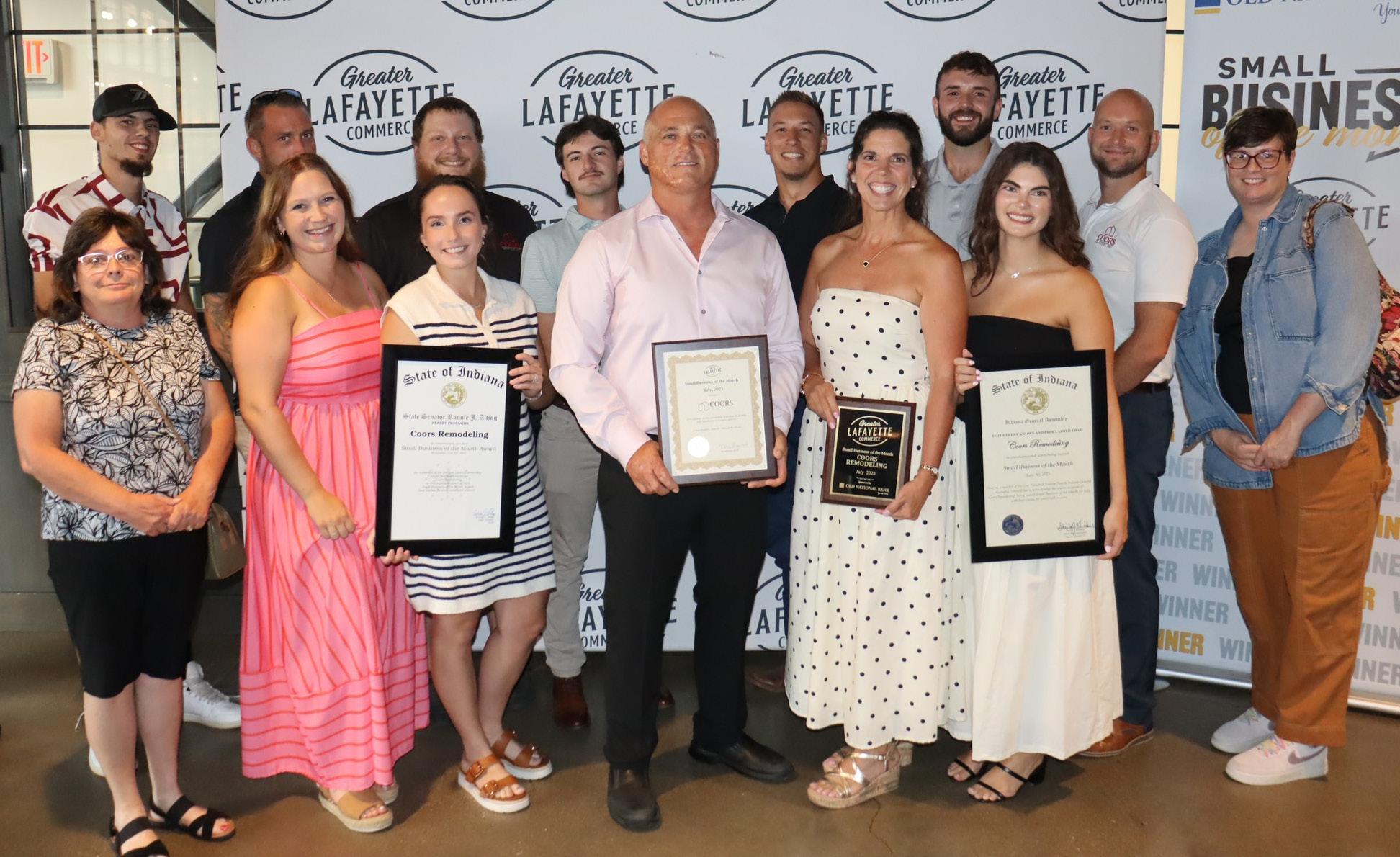
JULY – COORS REMODELING
Coors Remodeling is a family-owned, full-service residential remodeling company that has been serving the Greater Lafayette region since 1993. Founders Bart and Michelle Coors leveraged their backgrounds—Bart in construction and Michelle in interior/design education—to evolve the business from an exterior-focused remodeling company into a full-scope firm covering kitchens, bathrooms, basements, decks and whole-home renovations.
Coors Remodeling offers a wide spectrum of services across both interior and exterior domains. On the interior side, it handles kitchen remodels (custom cabinetry, quartz/granite counters); bathroom updates (luxury surrounds, accessible design); basement finishing and living-space reconfiguration. For exteriors, the company designs and builds custom decks and outdoor living areas, as well as siding, windows and doors from premium brands.
Coors Remodeling
3480 Kossuth St., #5
Lafayette (765) 449-2600
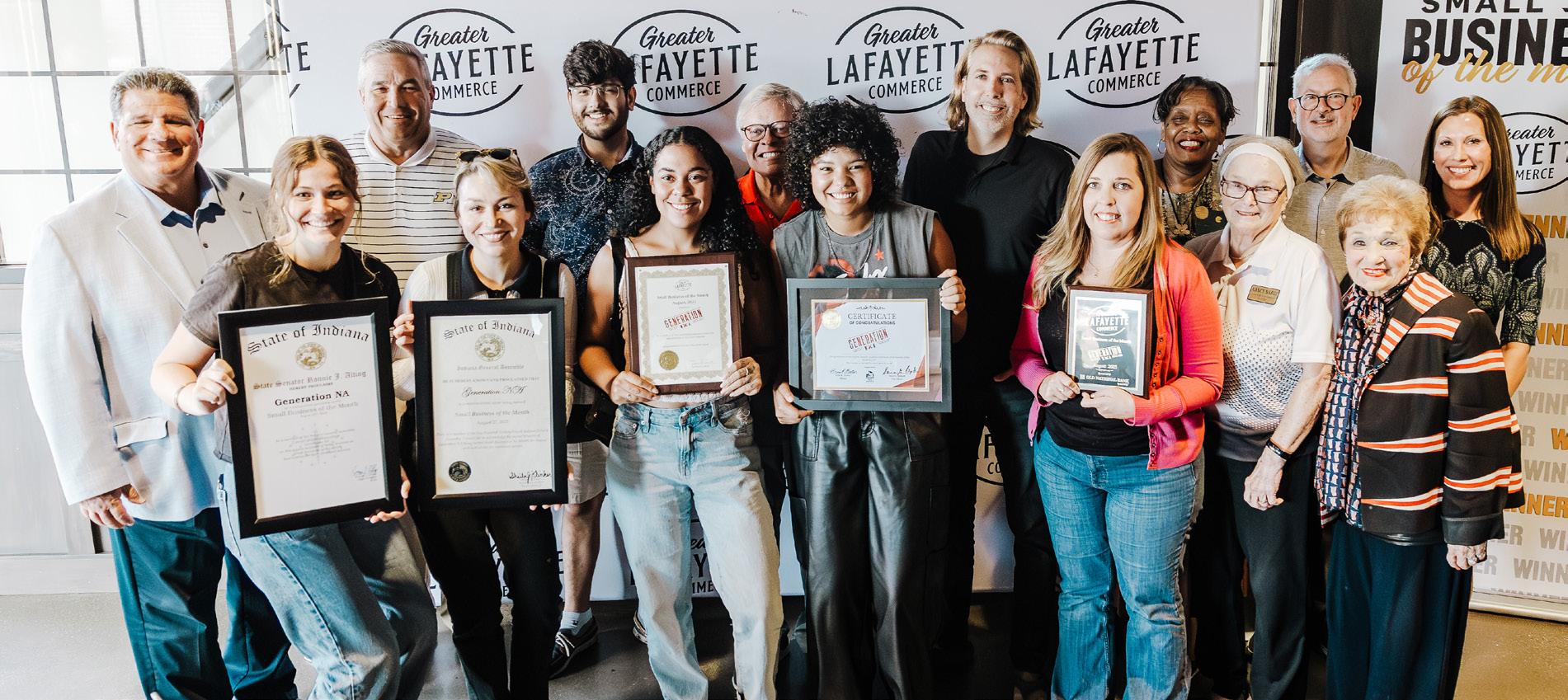
AUGUST – GENERATION NA
Generation NA is a pioneering functional bottle shop and taproom specializing in non-alcoholic (NA) beverages. Founded in 2022 by owner Rob Theodorow, the business launched with the aim of providing an inclusive social space where people could enjoy beer, wine and spirits without alcohol. With an exclusive variety of unique non-alcoholic beverages, there also is a lively atmosphere with pinball machines and relaxed events such as open mic nights. The venue positions itself as a social space not just for those abstaining from alcohol, but for anyone seeking a different kind of drink experience — for health, wellness or simply curiosity.
Generation NA
504 Main St. Lafayette (765) 233-2366
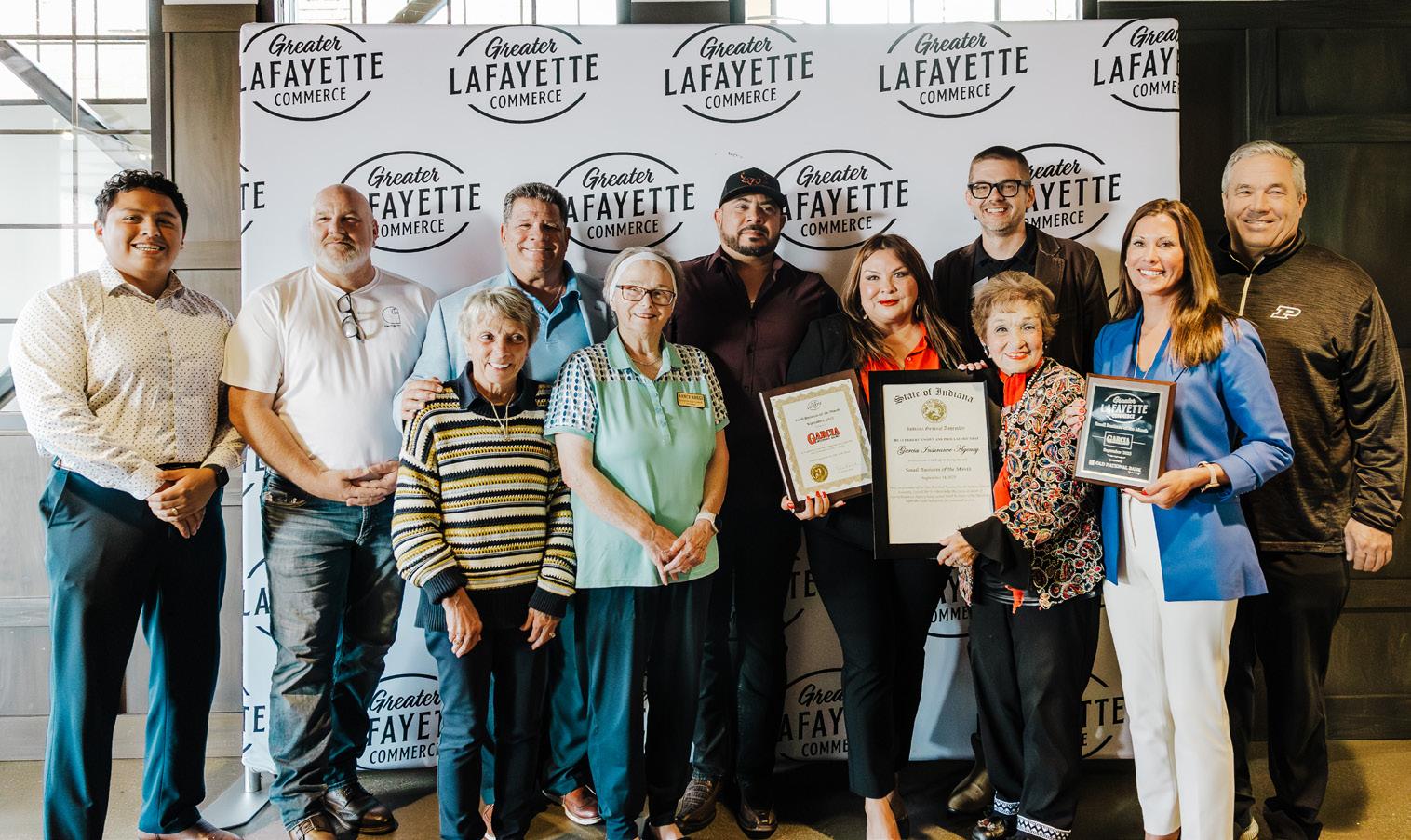
SEPTEMBER – GARCIA INSURANCE AGENCY
Garcia Insurance Agency is an independent insurance firm that offers a variety of coverage options tailored to individuals, families and small businesses. According to its website, it carries policies for auto, home, renters, business, bonds, special events and more. Affordable and responsive service is a key selling point, especially for clients who may appreciate a more personalized experience than large national carriers. Owned by Diana Garcia, the independent agency represents multiple carriers rather than a single insurance company, which allows the agency to compare options and find competitive rates and coverage combinations for its clients.
Garcia Insurance Agency
2927 Union St. Lafayette (765) 449-4544
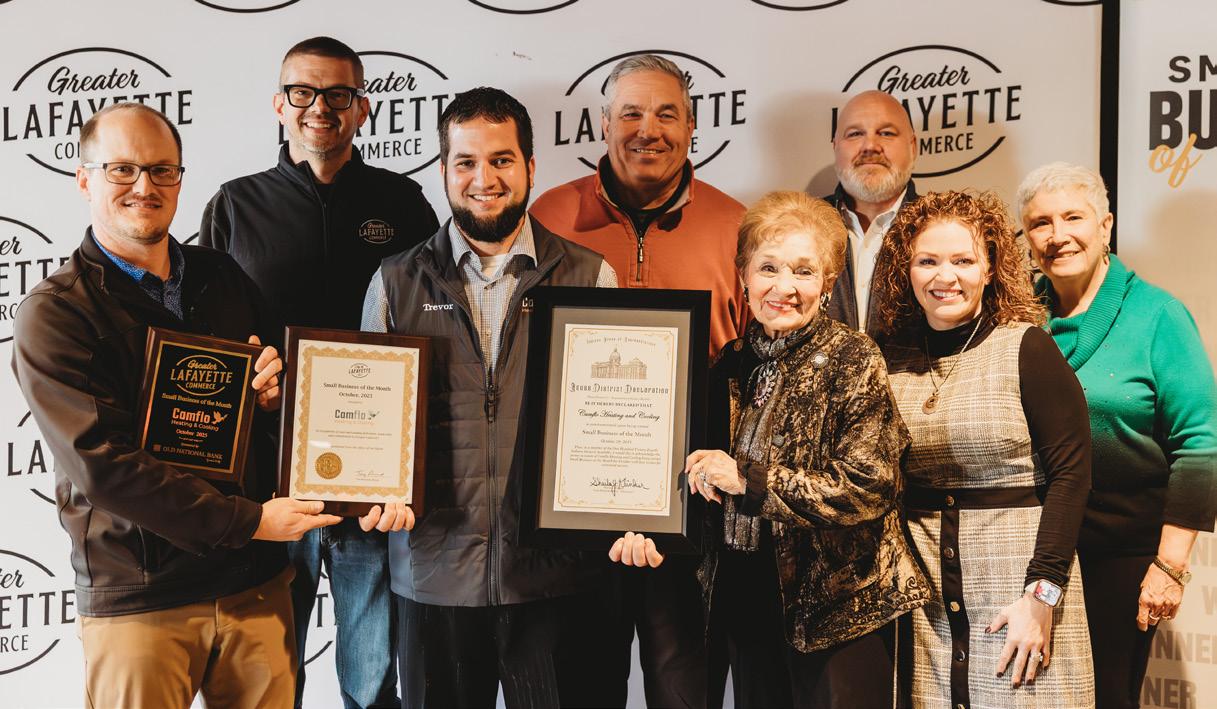
OCTOBER – CAMFLO HEATING & COOLING
Camflo Heating & Cooling, LLC is a familyrun HVAC firm that has been serving the area since 2009. Its name reflects its origins in the towns of Camden and Flora, and the leadership of the Hess family emphasizes a people-first philosophy: being easy to do business with, valuing your time and delivering on its word. The business places strong focus on honest service, expert workmanship (with many NATE-certified technicians), and longterm relationships rather than high-pressure sales.
Camflo offers a full range of HVAC services for both residential and commercial clients across the Greater Lafayette area. Its offerings include heating system repair, installation and maintenance (furnaces, boilers, heat pumps, ductless systems) and cooling services, including central air, ductless systems and full replacements.
Camflo Heating & Cooling
110 S. Center St.
Flora (574) 381-9919
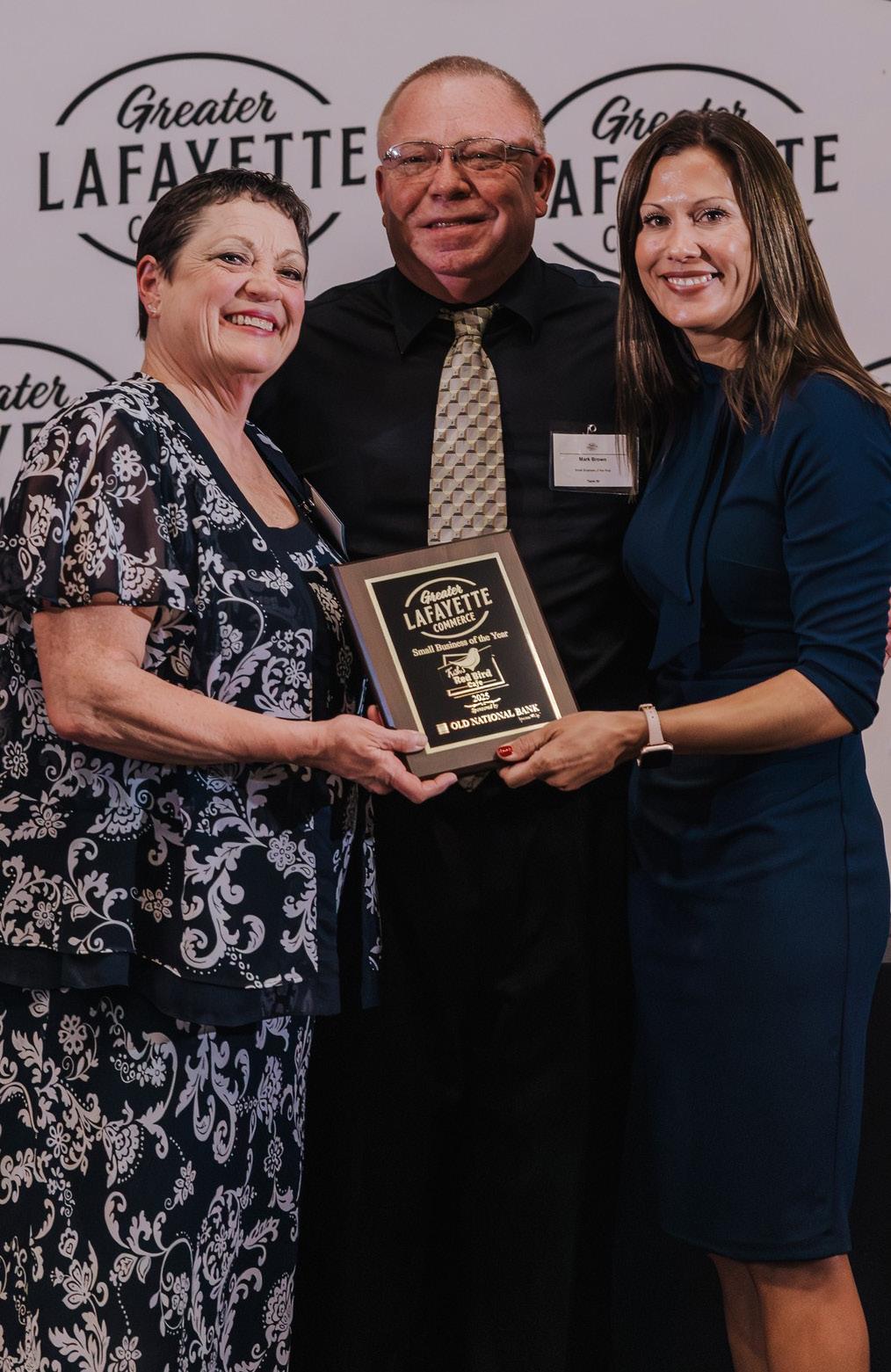
TRISH’S RED BIRD CAF É
This year’s Small Business of the Year winner is Trish’s Red Bird Café, which was a Small Busines of the Month Winner in 2023.
Trish’s Red Bird Café opened in April 2018 in the historic community of Dayton just off I-65 — making it a convenient stop for locals and travelers alike. Named after the “Red Bird” horse-drawn sleigh that once transported people from Lafayette to Dayton in the 1800s, the café embraces a strong sense of local history and nostalgia.
“Being Small Business of the Year for 2025 is beyond anything we could have dreamed of receiving,” says owner Trish Brown. “We do the things that we do just because it is the right thing to do. Being able to give back to those that need help is just a dream come true. As I mentioned in my speech [after accepting the award], my husband and I just wanted to make a small profit to support ourselves, and anything above that was a blessing that we would be more than happy to share.”
Trish’s Red Bird Café offers a full-day menu: breakfast, lunch and dinner. Its breakfast menu includes pancakes, omelets, biscuits with
sausage or pepper gravy, eggs any style, and its “Bird in the Nest” — eggs in toast — among others. For lunch and dinner, the café serves a broad array of comfort-style American fare: burgers, sandwiches, wraps, chicken tenders, catfish and cod meals, pulled-pork BBQ sandwiches and more hearty options such as country fried steak or prime rib sandwiches.
Brown adds, “The fact that we are becoming a favorite restaurant makes us very proud. We love sharing our family recipes with a modern-day twist. That is what we are based on and love to share. We hope to be able to continue to share our dreams for many years to come with our amazing staff that are so dedicated to our dream.” ★
Trish’s Red Bird Cafe
696 Walnut St
Dayton
(765)-296-6964
Greater Lafayette Kennel Club an Invaluable resource for dog owners
Greater Lafayette loves its dogs. So, the question begs: Why don’t more people know about the Greater Lafayette Kennel Club?
It’s not like the club is a new venture. The Greater Lafayette Kennel Club is celebrating its 80th anniversary inside a new home at 5139 E 400 S in Lafayette.
“We don’t really know,” says Deb Biesemeier, president of the Greater Lafayette Kennel Club. “It’s not like we keep it a secret. One of our big missions is to provide dog training and education to the community. Every time someone comes to us, they always say ‘Oh my gosh. I had no idea you existed.’
“We don’t do a lot of advertising. It’s just pretty much word of mouth. A great many of our students in our entry-level classes are not members of the club. They just seem to come and take a class and fade back into the community.”
The Greater Lafayette Kennel Club was founded by a group of men who enjoyed hunting sports and conformation, which the American Kennel Club (AKC) describes as how closely a dog conforms to the standard of its particular breed.
“Conformation is not just a beauty contest,” Biesemeier says. “Any reputable pure bred dog breeder will take part in conformation because that’s the stamp of approval by a judge that your dog conforms to that breed standard.”
Those standards include appearance, temperament and instinct.
As the years passed, the club’s emphasis shifted to classes and dog sports.
“It’s really mindboggling all the things you can do
with your dog and all the things people have thought of to do with your dog,” Biesemeier says. “It’s wonderful to have a dog as a pet. It’s a whole different level to have a dog as a teammate. It develops a relationship with a dog that’s hard to duplicate if you’re not in dog sports.”
Every dog is unique
While some dog owners struggle to teach their pets the simplest tricks, Biesemeier takes a different approach. She currently has three standard poodles, two of which she trained for agility sports. The youngest poodle, a 5-year-old, currently is active in agility.
“When I train my dogs, it’s not just a one-way street where I’m saying this is what I want you to do,” she says. “I just need to figure out a way for you to do it. I’m also taking feedback from my dog. Dogs are like children in that they learn in different ways. I recently taught my dog several tricks that she could demonstrate to some Girl Scouts. I’ve been training dogs for a long time, so I had a pretty good idea how I was going to train it. It was a pretty elaborate trick, so I put a blanket on the floor. She laid on the floor, took a corner of the blanket in her mouth and rolled over and rolled herself up in the blanket. So I started calling her my burrito dog.
“It took many, many steps to get there. Those steps were not necessarily what I envisioned they would be when I started. As I trained her I got signals from her that I don’t understand what you want me to do. It would force me to step back and say OK, how can I break this down into something easier or find a different way to teach her?”
A wish come true
The Greater Lafayette Kennel Club is not totally unknown in the community. It occupied a building in Shadeland for nearly 20 years.
“It was an old building. It was perfect for us, just a big old warehouse/garage-type building,” Biesemeier says.
One day, the landlord – a.k.a. the town of Shadeland — decided the building needed to be razed to make room for a community center.
The club moved to Delphi for three years, but that building was half the size of the club’s Shadeland home. Biesemeier and her fellow club members wished for a donor or donors to come along and fund a larger building in Lafayette.
“We had been saying for years we needed a fairy godmother to build us a building because we are a non-profit. We don’t have gobs and gobs of money.”
Their wish came true, thanks to a woman in Indianapolis who loves dogs and loves dog sports. The building’s final cost? Nearly $3 million.
“It’s still to me the most amazing thing to think about,” Biesemeier says.
The club received a certificate of occupancy in mid-September 2025 and slowly began building its classes back up. But for now, events will pay the bills.
One of them is a Fast CAT, which features dogs running one at a time, chasing a lure, to measure speed and agility. The club sponsors four three-day events a year in agility sports. Seminars and workshops also bring in needed funds.
Classes for every dog
The Greater Lafayette Kennel Club offers classes in fundamentals, conformation, competition obedience and therapy dog skills as well as dog sports (agility, rally and scent work). Classes are for eight weeks and cost $120 for members or $160 for non-members. Some classes have prerequisites to enroll.
“We have a lot of entry-level classes,” Biesemeier says. “Puppy training classes. Basic manners classes. What we call our ‘click obedience’ classes. It’s a form of training we like to use.
“Our training methods at the club are 100 percent positive reinforcement training. There’s no punishment, there’s no yanking on the leash when they do something wrong. It’s all letting the dog figure out what it is you want them to do.
“If you have a dog, I can’t stress enough you should take at least one dog training class. Hopefully if you come to the club and you get introduced to what dog
training has to offer that you would become interested in something and take another class.”
Biesemeier teaches the puppy training class and assists in the basic dog manners training class.
A community-centered club
“We are 100 percent volunteers,” she says. “We have some great instructors, but there are not enough hours in the day available for classes, nor do we have enough instructors. Our classes are open to anyone. There are benefits to being a member of the club. One of them is you get discounts on classes. You get the first option to take a class.”
Biesemeier wants the community to know that club members have a passion to teach people how to be good and responsible dog owners.
“People can’t do that if they don’t know how,” Biesemeier says. “We’re not a club that just exists to serve our own needs. It’s really a big mission that we serve the community.
“We are community centered. We want people to know we’re out there. We want them to come to us and let us help them train their dogs.” ★
With Handholder, entrepreneurial couple brings craft, care and community to every pour.
When Michael McCarty talks about bartending, it’s not really about the drink. It’s about the story that unfolds across the bar — the quiet exchange of trust, the laughter that bubbles up halfway through a cocktail, the way strangers become a little less so.
“I’ve always loved that connection,” McCarty says. “You’re not just making drinks — you’re part of someone’s night, their celebration, their memory.”
That sense of connection became the cornerstone of Handholder, the mobile bar service McCarty co-founded in 2024 with his partner, Amanda Findlay. Together, the couple has turned a simple idea — thoughtfully crafted drinks served
with genuine hospitality — into a business that brings warmth, personality and polish to events across Greater Lafayette.
Where craft meets community
Handholder began with a spark of possibility. McCarty has spent more than a decade devising drink recipes and developing bar programs for restaurants throughout Greater Lafayette. Known for his artistry with cocktails and his easy rapport with guests, he’d long imagined what it might look like to take that craft beyond brick and mortar.
“Over the years, people have asked me if I’ve ever considered starting my own business,” he says. “Conversations with
Amanda made what initially felt like an overwhelming dream become an actual possibility. Together, I knew we could build something that feels personal and special.”
Findlay, the executive director of MatchBOX Coworking Studio, was already immersed in Greater Lafayette’s entrepreneurial scene — coaching founders, marketing new ventures and building creative collaborations across the community.
“When you work with entrepreneurs every day, it’s easy to get caught up in their excitement,” Findlay says. “This is my first time co-founding a business, but in my decade at MatchBOX, I’ve learned a lot about what makes a small business thrive. With Handholder, Michael brings this incredible craft and hospitality experience and I bring the marketing and business strategy. It’s the perfect balance.”
Their first business experiment together came not as a grand opening but as a community fundraiser. In 2022, McCarty was invited to take part in Mental Health America’s inaugural Mocktail Monday event as a restaurant bartender. Findlay joined as a community representative. They served up a pineapple-shrub mocktail with flaming sage as a finishing touch — a creation that drew longer-than-expected lines and was named the event’s most creative mocktail. That experience working together led
to serious conversations about opening a liquid catering business.
What’s in a name
The pair were poring over lyrics by one of their favorite musical artists, Isaac Opatz, looking for inspiration for drink names when McCarty suggested “Handholder” might be a good moniker for a mocktail they were creating. Findlay replied it’d be a great name for a bar.
“We have a playlist that includes every song we’ve ever sent each other in the entirety of our relationship,” Findlay says. “It’s 67 hours and 46 minutes long, and ‘Handholder’ is one of the first songs Michael ever sent me.”
Not only does the name have significance for their relationship, it’s also a nod to the connection between bartender and guest — the simple, human act of reaching across a counter or a crowd to share something made with care.
“It’s about presence,” McCarty says. “Being there in that moment, paying attention to someone, making them feel seen. That’s what bartending is at its best.”
Pouring personality into every event
From intimate backyard weddings to downtown corporate mixers, Handholder has become a sought-after presence across the region. The pair’s reputation for professionalism and creative flair sets them apart, but it’s their warmth and personalization that keeps clients coming back.
“Every event is customized based on conversations with our client,” McCarty says. “We want to design a sensory experience that considers each client’s inspirations and influences to help them achieve their vision of the event.”
That approach shapes everything Handholder does, from the menus they design to the way they set up their custom-built bar. Every event is tailored — a signature cocktail that reflects the couple getting married, a locally sourced ingredient that ties into a company’s story or an inventive mocktail that makes every guest feel included.
For the Art Museum of Greater Lafayette’s Surrealist Costume Ball in 2024, McCarty and Findlay donated their supplies and services to contribute Handholder’s memorable signature touches for the event. Using the dreamlike and illogical imagery representative of surrealism as their inspiration point, the pair conceived the menu for Eggs Three Ways.
A Cynar sour, the only liquid item on the menu, featured a foamy egg white as part of a classic Italian amaro cocktail. A Negroni was presented as a Campari and sweet vermouth faux caviar — tediously made using an eyedropper — served with a juniper berry and orange zest crostini. Finally, a lemon drop that looked suspiciously like a deviled egg. A limoncello Jell-O shot molded to look like the boiled
egg white was topped with a lemon whipped créme filling and garnished with lemongrass.
Cocktails you can eat? That’s the kind of surreal challenge McCarty and Findlay enjoy concocting together. And attendees are still talking about the thought and creativity Handholder injected into the evening.
“We love when clients trust us to have fun with it,” McCarty says. “That’s when the magic happens.”
As the business grows, both founders are deliberate about keeping its soul intact.
“We’re not trying to scale so fast that we lose what makes it special,” Findlay says. “We’d rather focus on building something sustainable — something that stays rooted in the kind of experience we love to create.”
For McCarty, it always comes back to the small, human moments — the reason he started bartending in the first place.
“When you hand someone a drink, you’re giving them your time and attention,” he says. “It’s this little gesture that says, ‘I made this especially for you.’ That feeling of recognition, that’s what people remember.”
And that’s what Handholder is built on: the idea that a drink, done right, is never just a drink — it’s a shared moment, an act of connection, a story that lingers long after the glass is empty. ★
Try Your Hand
Looking to step up your cocktail game at home? McCarty and Findlay shared the recipe for a drink dubbed A Bushel & A Peck. The name was inspired by their grandmothers and the sweet saying from the classic song, “I love you, a bushel and a peck. A bushel and a peck and a hug around the neck.”
It contains a shrub, a mixture of fruit, sugar and vinegar that’s used to add complex flavors to both alcoholic and nonalcoholic drinks, and a homemade cinnamon syrup. Crafting bespoke ingredients is one way Handholder develops its signature flavor profiles. “This drinks like a peach whiskey sour, and I think it’s so delightful,” Findlay says.
A Bushel & A Peck
• 2 oz. High West Bourbon
• ½ oz. pickled peach shrub*
• ½ oz. lemon juice
• ½ oz. cinnamon syrup**
• 1 egg white
1. Add all ingredients to an empty cocktail shaker.
2. Shake vigorously.
3. Add ice to the shaker and shake again until chilled.
4. Strain into a coupe glass.
5. Garnish with a sprig of rosemary. Cheers!
Cinnamon Syrup
• 2 cups water
• 4 cinnamon sticks
• ½ cups white sugar
1. Bring water and cinnamon to a boil. Simmer for 10 minutes.
2. Strain out the cinnamon. Add sugar. Stir until dissolved.
3. Refrigerate in an airtight container.
Yields approximately 3 cups.
Pickled Peach Shrub
• 2 cups Turbinado sugar
• 2 cups water
• 4 cups fresh or frozen peaches
• 1 cinnamon stick
• 3 cloves
• ¼ tsp. black peppercorns
• ¼ tsp. allspice
• ¼ tsp. vanilla extract
• 2 cups apple cider vinegar
1. Combine water and sugar. Bring to a boil while stirring continuously. Reduce heat to a simmer.
2. Add peaches and spices. Return to a boil and simmer for 20 minutes.
3. Add vinegar and refrigerate overnight.
4. After approximately 24 hours, strain out the solids while pressing the peaches with the back of a spoon to extract any remaining liquid.
5. Refrigerate in an airtight container.
Yields approximately 5 cups.
“And wouldn’t you know it. On Resurrection Sunday, the Purdue Boilermakers have turned the doubters into believers. Believe this! For the first time since 1980, Purdue is headed back to the Final Four.”
Rob Blackman calls it his favorite broadcasting moment, that April 1, 2024, afternoon when the Purdue men’s basketball team ended the school’s 44-year absence from the NCAA Tournament’s Final Four.
Amid his sixth full-time season as the play-by-play voice of the Boilermakers on the Purdue Global Radio Network, Blackman has been asked frequently if he prepared those remarks in the final moments of Purdue’s 72-66 victory against Tennessee in Detroit.
“I did not prepare that word for word,” Blackman says. “I did however jot down a few notes in my hotel room the night before just in case Purdue did win. I wanted to tie it into the fact it was Easter Sunday. In my mind I had rehearsed a few different scenarios that I could somehow tie into Easter Sunday, and luckily for me it came out damn near perfect.”
Blackman and his broadcasting partner, Bobby Riddell, had different emotional reactions to the victory. Turning doubters into believers felt satisfying to Blackman, a member of the broadcasting team since 2004.
“The team had just fallen flat on its face the year before in the NCAA Tournament,” Blackman says, referring to the loss to No. 16 seed Farleigh Dickenson in the first round. “You had all these expectations and all these doubters out there ready to say ‘Ha ha, we told you so. You can’t win in the tournament.’ So many people were ready to say that.”
Riddell had played for Purdue Coach Matt Painter from 2005 to 2009 as a walk-on guard from Harrison High School.
“As someone who bleeds Gold and Black, it was such a surreal moment to witness Purdue go to the Final Four and be on the broadcast for it,” Riddell says. “Rob Blackman just totally knocked it out of the park with his closing of Purdue going to the Final Four. I made a rookie mistake even though I wasn’t a rookie. I was so nervous and wanted Purdue to win I could never get myself to say ‘if Purdue wins …’ I thought, ‘Is there something cool I should say on the broadcast?’ Rob had that awesome close and he came to me. I was like, ‘Oh, I should talk now and say something great.’ Off the top of my head, I rattled off something excited. It was a dream come true moment.”
TAKING OVER FOR A LEGEND
Blackman and Riddell are in their sixth season together. Blackman took over play-by-play duties from Larry Clisby when the long-time announcer’s health declined. Clisby passed away Feb. 27, 2021, following a nearly three-year battle with Stage 4 lung and metastatic brain cancer.
Growing up in Monticello, Indiana, Blackman idolized Clisby. “To me, he was an icon in broadcasting,” Blackman says. “I was born in 1970. Back then, as you know, it was antenna television. You had very few options, but Channel 18 was an option. I can remember ‘Cliz’ doing the sports anchoring on Channel 18. Then you add on top of that he’s the voice of the Boilermakers, so anything related to Purdue or Lafayette sports he had some kind of connection. He’s a childhood hero of mine, and the next thing you know I’m working alongside the guy, thinking to myself, ‘How did this happen?’
“His passion was so contagious. Some would argue over the top at times, and that’s a fair criticism. But look, there was never any doubt about where the Cliz stood on his thoughts about Purdue basketball. I think that’s endeared him so much to the fans.”
Clisby called 1,189 Purdue basketball games that spanned much of the careers of Naismith Basketball Hall of Fame coach Gene Keady and Painter. Keady taught Clisby a lesson that he passed along to Blackman.
“You can’t fool the fans,” Blackman says. “Look, if we’re playing poorly or badly – we being Purdue – then you need to let the fans know. Just as when we’re playing well, playing at a high level, you need to let the fans know. You can’t fool Purdue basketball fans. They’re too smart. Granted, these last handful of years there haven’t been too many bad nights for Purdue.”
Since Blackman and Riddell teamed up for the 2020-21 season, Purdue has won nearly 77 percent of its games (134-41) with two Big Ten regular season championships, a Big Ten Tournament title and a national runner-up finish in 2024.
That run of success included another memorable moment for Blackman. On Dec. 6, 2021, Purdue earned its first No. 1 ranking in The Associated Press poll.
“I will remember that day for the rest of my life,” Blackman says. “We had a Matt Painter coaches radio show that night, and we were doing it in the Union at Walk-Ons. He comes in about five minutes before the show begins and gets a standing ovation. What a great show that was that night.”
PAYING IT FORWARD
Just as Clisby mentored Blackman, Blackman has paid it forward to Riddell. After graduating from Purdue, Riddell was working for Heman Lawson Hawks in West Lafayette. The firm handled tax returns for Painter and other members of his staff.
“Because of my connection with Purdue basketball, my boss at the time who had been overseeing those accounts allowed me to take the lead,” says Riddell, who had no radio or media experience prior to joining the Purdue Global Radio Network. “That probably helped keep me fresh on their minds compared to any other former player.”
When Blackman ascended to the play-by-play role, it was “right place, right time” for Riddell.
“Coach Painter, Elliot Bloom (director of basketball operations) and some of those guys thought highly enough of me to give me an opportunity,” he says. “It couldn’t have worked out any better for me starting out in this industry to have a guy like Rob who literally had my job alongside Larry Clisby all those years. It was great to have someone like Rob who I could ask for feedback and constructive criticism.”
Blackman also had good timing in getting his foot in the door with Purdue. After graduating from North White High School in 1989, Blackman played four years of football at the University of Evansville. There, he got the bug to be a sportscaster.
“Evansville had a campus radio station at the time – they no longer do – so they allowed the students to also broadcast some of the college’s different sporting events,” Blackman says.
After graduation, Blackman began his career calling high school and junior college games in Mount Carmel, Illinois. A move to Nashville, Tennessee, followed to announce football and basketball games for Tennessee State and Lipscomb. Blackman and his wife returned to Indiana in 2001.
“I was calling Arena League football games on the radio, which isn’t that glamorous, but I needed something,” he recalls. “I did a lot of high school stuff and started cold calling every college and university in the state of Indiana hoping to catch a break.”
The person who picked up the phone at Purdue was a college classmate of Blackman’s. While no fulltime position was available, Blackman accepted the role of fill-in announcer.
“Luckily a full-time position opened up and somehow, some way a guy who grew up watching Larry Clisby on TV, figuring he was the coolest guy ever, was now working alongside him,” Blackman says.
learning the dance
Riddell says being a radio color analyst isn’t as easy as it sounds to the casual listener.
“It’s kind of a dance between the two broadcasters to make sure you’re not talking over each other,” Riddell says. “You have limited windows to get your point across. Rob would do a good job of giving me
those windows. The more reps we’ve had together, the more comfortable we’ve gotten with each other. I feel our personalities jibe together and we can joke with each other.”
The breaking-in period for Riddell was complicated by the COVID-19 pandemic. Blackman and Riddell called home games from an upper concourse position in Mackey Arena. Neither traveled with the Boilermakers, and they were forced to call games while watching television monitors inside a small room in Mackey.
“That was quite a challenge because you do not have the ambience of the crowd to feed off of, whether good or bad,” Blackman says. “The other part that we found was when the games are on the road, you are always at the mercy of the home team in how well they were going to film the game. Some schools you had five or six different camera angles, and you really felt you could call the game pretty accurately. Other schools might have two camera angles and maybe neither of the two showed you the score and time on the clock.”
There was one other challenge calling a game remotely.
“We would follow the games live on the laptop on the scoreboard tracker,” Blackman says. “Often the video was behind the score so you might see the score change (on the laptop) and someone’s at the free throw line getting ready to shoot. So you know they’re about to make the free throw.”
GREAT PLAYERS, GREAT COACH
Noting the outstanding players to come through Purdue during his tenure on the radio network – Zach Edey, Braden Smith and Jaden Ivey came quickly to his mind – Riddell admits he’s been spoiled.
“It’s probably my great vibes I have around the team,” Riddell says. “They feed off my presence apparently.
“All kidding aside, Coach Painter is in his coaching prime I’d say. I’ve been really lucky to get my radio career started with such a great team. It gives us a lot of fun things to talk about.”
Blackman hopes for more excitement with this year’s team, which began the 2025-26 season ranked atop the Associated Press preseason poll for the first time. Perhaps a moment might eclipse that Easter Sunday in 2024.
“Hopefully, that will move into second place one of these days,” Blackman says. ★
BY BRAD OPPENHEIM PHOTOS PROVIDED
» West Lafayette has plans for a new center
» Ivy Tech program meets a need
An unmet need for early childhood education (ECE) in the Greater Lafayette region has led to a surge in demand for early childhood educators, and now, efforts are underway to close the gaps.
In West Lafayette, the issue prompted the city’s Redevelopment Commission to initiate the West Lafayette Early Childhood Education Gap Analysis, highlighting the need for improved access to high-quality childcare services in the region.
The study, released in 2024, identifies significant gaps in ECE availability, especially for infants, and emphasizes the importance of collaboration among community stakeholders to address these challenges.
The report found that ECE providers described a challenging business environment, reporting the largest barrier to expansion is the lack of ECE workers who are willing to work at the current wage levels. Community leaders also reported that the current demand for childcare outpaces the supply of available seats.

West Lafayette plans for new center
A site analysis identified two potential sites for a new childcare center in West Lafayette, including the former Happy Hollow Elementary School and a site on Kalberer Road.
The Happy Hollow site has access to public transportation, and the Kalberer Road site is closer to areas with higher concentrations of ECE-eligible children and families facing childcare access challenges.
The city also outlined initial plans to develop an Early Childhood Education Center as part of its broader strategy to expand access to quality childcare.
On a county level, data from the Brighter Futures Indiana data center (December 2024) indicate that about 8,715 children under age six in Tippecanoe County may require care, while only 6,893 licensed childcare seats are available.
Christy Wegner, director for Early Learning Workforce Coalition at Ivy Tech Community College, says while this was accurate before December 2024, recent changes have impacted availability.
“The Office of Early Childhood and Out-of-School Learning (OECOSL) instituted a waitlist for Child Care Development Fund (CCDF) vouchers in December 2024, which now includes 32,000 children from low-income house-
holds,” she says. “Additionally, reimbursement rates for providers were reduced, resulting in a $140,295 loss for Tippecanoe County providers. These cuts have led to enrollment declines and program closures, which means many of the 8,715 seats listed are not currently available.”
Demand also has shifted dramatically in the past year due to CCDF cutbacks.
“Previously, parents waited up to a year for a seat; now, many providers operate at two-thirds capacity or have closed,” she says. “Families are making difficult choices—such as leaving children home alone or sacrificing rent payments to cover childcare costs. OECOSL has announced no new vouchers for 2026 and no guarantees for 2027, worsening the situation.”
The Early Learning Workforce Coalition, funded by the City of
Lafayette, IU Health Arnett, Purdue University and the Community Foundation of Greater Lafayette, is collaborating with business and community leaders to develop solutions.
Wegner says the coalition’s second CEO Roundtable will take place in January to continue these discussions.
Additionally, several local partners, including Greater Lafayette Career Academy (GLCA), Right Steps, Ivy Tech and the Community Foundation of Greater Lafayette, received a Lilly Endowment Gift VIII grant to create a career ladder for early childhood professionals.
Ivy Tech programs address needs At Ivy Tech’s Lafayette campus, the Early Childhood Education program is designed to both inspire and prepare future professionals with a desire to pursue a career in this
field, focusing on childhood development and growth and adult-child relationships.
Housed within the Ivy Tech School of Arts, Sciences & Education, the program is dedicated to preparing and strengthening adults to work with children from birth through age eight, supporting their physical, cognitive, social-emotional and language development.
Heather Bernt-Santy is an assistant professor for Early Childhood Education and program chair for the ECE Program at Ivy Tech’s Lafayette campus.
“Many of our students already work in childcare settings, Head Start programs, part-day preschools, and kindergarten, first or second grade classrooms, while others are working on early childhood credentials as high school students,” Bernt-Santy says.
She’s no stranger to the field of early childhood education herself with more than three decades of experience working in childcare centers as a teacher and director, operating her own family childcare home, teaching speech/language preschool and serving as a youth development director in a school age program. With that background, she’s able to connect what students are hearing and learning in classrooms to real, daily work in the field.
“Qualifications for work in early care and education programs range from requiring a high school diploma all the way to needing a bachelor’s degree, so many people enter the work not knowing if it will truly be a good fit for them,” she says. “these factors lead to a high turnover rate, which is disruptive not just for those employees but also for the children they are working with.”
While some of those factors can only be influenced by the person experiencing them, the program helps prepare students to face challenges head on with knowledge, field experiences and practicum placements and student support services such as food access, technology assistance, transportation resources and mental health supports.
A variety of technical certificates such as early Childhood Education, Infant/Toddler, Home Visitor and Business Administration certificates are offered, along with an Associate of Applied Science degree in Early Childhood Education, and an Associate of Science degree in Early Childhood Education for students looking to transfer to a four year college.
“We urge anyone working with young children to pursue and Early Childhood Education credential or degree, regardless of regulatory requirements, to ensure they’re truly prepared for the work,” Bernty-Santy says. “These pathways are specifically developed to meet educational qualifications for a variety of early care and education settings, including state licensing regulations, Paths to Quality quality rating system qualifications and national accreditation criteria.”
Flexible schedules
As for active childcare providers looking to return to the classroom, traditional scheduling and course modalities may not be a practical option. To accommodate busy lifestyles and tricky schedules, most ECED courses are offered in the evening or on Saturday mornings, and many are available fully online.
“We also have three different modalities for students to take courses that are not fully online, such as Virtual Instruction (instructors and
students are all on Zoom for each class session) and Learn Anywhere (the instructor is in a classroom on Ivy Tech’s campus, and students can choose to come to campus or to join the class by Zoom),” Bernt-Santy says.
For those in need of financial support as they navigate their path to credentialing or a degree, the TEACH scholarship covers 80 to 90 percent of all costs for the student as well as offering bonuses for completing milestones.

“I actually received this scholarship to fund my associates degree in Early Childhood from Ivy Tech several years ago,” says Bernt-Santy. “Ivy Tech has amazing advisors for our Early Childhood Education students to help them navigate course selection and degree requirements. As the program chair in Lafayette,
I also meet with students as they work through their process.”
The ECE curriculum is largely guided by the principles of Developmentally Appropriate Practice and other key recommendations from the National Association for the Education of Young Children (NAEYC). Bernt-Santy says the curriculum incorporates three core considerations of developmentally appropriate practice:
» What do we know about typical child development, age by age?
» What do we know about the needs and development of the individual children we are working with at any given time?
» What do we know about the family, social and cultural context of each of the children we work with?
Thanks to a grant from the Lilly Endowment, the Lafayette campus also is working to establish relationships with childcare centers and family childcare homes in its nine-county region. These sites will host Model Classrooms with trained Mentor Teachers to support students completing field-based course assignments or practicum experiences. The grant is set to end in 2026, but the goal is to find ways to sustain the work.
Additionally, Ivy Tech is partnering with Right Steps Child Development Centers and the Greater Lafayette Career Academy on another Lilly funded program. Students at GLCA are enrolled in dual credit Early Childhood Education classes in pursuit of Child Development Associate credentials or Technical Certificates and are working as apprentices with mentorship at Right Steps childcare centers.
“We are really looking forward to our Model Classroom project, as this will allow us to better ensure that the placements students are assigned to align with the way we are teaching our Early Childhood courses, and that they are placed with a supervising classroom teacher at those sites who has been trained to coach and mentor those students skillfully,” says Bernt-Santy.
Looking ahead, Ivy Tech may begin offering microcredential or badge pathways in the next couple of years as part of a stateside initiative. Plans are also in the works to offer additional Technical Certificates focused on Developmental Specialists and Early Childhood Literacy. ★
Learn more If you’re interested in learning more about the program, visit ivytech.edu/programs
For more data about early childhood education in Tippecanoe County, visit the Brighter Futures Indiana Data Center: brighterfuturesindiana.org/ data-center
Restored White County acreage returns the love with maple syrup production
BY KATHY MATTER | PHOTOS BY CHRISTINE PETKOV AND PROVIDED
When Rich Hines was young he loved to doodle in spare moments — and it was always trees.
“I thought trees were wonderful things,” he recalls.
So six decades later it’s not really surprising to find this former North End Lafayette kid and retired vice president of the Indiana Design Consortium living on 37 forested acres nestled along the banks of the Tippecanoe River in White County. But what might come as a surprise is his retirement hobby, which involves making syrup from the sugar maples dotting the hills and valleys of his Springboro Tree Farms. But if you’re imagining a small operation with a handful of collection buckets allowing him to make a dozen bottles of maple syrup for his family’s pancakes, erase that image.
His picturesque 20-by-30-foot sugar shack houses the most modern, gleaming stainless steel equipment available for making maple syrup on a professional level, and he turns out 1,000 bottles during a typical winter.
When Hines moved to the Tippecanoe River property some 30 years ago, syrup wasn’t really on his mind. He wanted to be a good steward to some “classic Indiana woodlands” by making them even more beautiful and enhancing the habitat for wildlife. He trucked out junk that littered the river bank and started a never-ending crusade to eliminate invasive species such as multiflora rose and brush honeysuckle that strangled native plants.
One of the first things he did was enroll his farm in a program with the Indiana Department of Natural Resources and act on advice from forestry and water management experts. Along with tackling the invasives, Hines dredged a spring-fed pond on the property and stocked it with largemouth bass, perch, catfish and more. He established a bee colony topping out at 35 hives and two million bees, and he planted a small apple orchard, dozens of black walnut trees, and pines for use as Christmas trees.
His love for the land, a passion he shares with his brother Jim, was something they both came by naturally. Time spent on their grandfather’s farm influenced the boys. Hines did tree planting with the Boy Scouts, another influence. And with their father, the brothers spent summers hunting squirrels, playing with an old rowboat and generally enjoying being out in nature at a family cottage on the Wabash River.
Prophetically, the boys and their father undertook an annual fishing float trip down the Tippecanoe River from the Oakdale Dam to the Wabash River. The trip floated them through the property Hines now owns.
“So many stories we tell are about our time in the woods,” Jim Hines says. “It left an impression that never left us.
“I’m really proud of Rich and what he’s done there, taking on this woodland and putting money and effort to get rid of invasives. Who thinks about that? Richard thinks about that. Damn! That’s pretty cool!”
Making maple syrup was an idea born out of a chance comment by a state forester about the huge number of maples on his property. It led Hines to buy a kit at Rural King that had all the supplies needed to tap three trees and collect sap that he cooked all day in a tall, turkey roasting pot.
He was hooked.
“It was 10 trees the next year, then 30 trees. Now we do 500,” he says. Instead of buckets hanging from spiles pounded into the trees in nostalgic tradition, the spiles dump their watery sap into plastic tubing that gravity feeds into a large collection tank. When the season is in full swing, the 350 gallon tank will fill at least once a day.
Instead of boiling the sap in a pot on the stove, there’s now a sophisticated reverse osmosis process, a wood-fired evaporator, a filtering operation and, finally, bottling. It takes about 50 gallons of sap to make just one gallon of syrup.
“If you cook the sap really, really slow it’s dark and robust. We make a dark amber product,” Hines says.
He religiously uses a hydrometer to make sure the sugar content matches the high end of the Vermont standard for maple syrup. Not all the syrup goes into bottles. Some goes into a bourbon barrel and ages for five months for a richer taste. While the syrup resides in the white oak barrel, temperature changes draw out the oak and bourbon flavors along with hints of vanilla.
All this happens in six super busy weeks in February and March where brother Jim, son Sam and other friends pitch in to make it all happen. Sap runs most freely when temperatures are freezing at night but up into the 40s in the daytime, and it can be a bit of a guessing game deciding exactly when to tap.
In a side operation Hines also taps a hundred walnut trees to make a syrup with a sweet nutty flavor. But he admits, “It’s four times as much effort so not as profitable.”
Overall, “mastering the process of syrup making is satisfying and a lot of fun,” says Hines. Although he gives most of his bottled syrup to charitable causes so they can raise money, what he does sell provides the cash to continually upgrade his operation.
“I never had any interest in making money,” he says. “I like supporting things that make our community better.” Our Grace Lutheran Church in Lafayette, where Hines attends, St. Peter’s Episcopal Church in Lebanon, Camp Tecumseh, White County Soil and Conservation District and Toast to Mental Health (his wife, Jean, is a mental health therapist) top the long list of charities that benefit from donations of bottled syrup and honey.
“It’s a blessing,” Kim Reneau says over and over as she talks about the syrup’s impact on a particular project she heads at Our Grace Lutheran Church. Members of the church contribute to Operation Christmas Child, a project of the disaster relief agency Samaritan’s Purse, by filling festive shoeboxes with school supplies, hygiene items and small toys. Boxes collected from across the nation are shipped to needy children in countries around the globe. But each box needs to be accompanied by $10 to help with distribution costs, among other expenses.
The sale of honey and maple syrup from Hines’ Springboro Tree Farms raises enough money each year to cover distribution costs, making it possible for the project to expand.
Reneau says they’ve gone from putting together 68 boxes to 250 this year.
When parishioners see the small sales table set up in September each year, “we have long lines waiting to buy his syrup and honey. It’s just a huge blessing for our church and a blessing for the children.”
Women of the church’s altar guild bake whole wheat bread for communion and “use Rich’s honey in baking the bread, which makes it really, really good,” Reneau says.
“My grandkids love his syrup and our former pastor said a little dab of the bourbon barrel syrup in his coffee made it really special.”
Comments like Kim Reneau’s are all the payment Hines desires.
“I remember when I was in my 30s hearing a lot of older people say ‘I used to be’ this or that. I didn’t want to be the ‘used to be ad guy’ or ‘used to be marketing guy.’ I wanted to be the guy who grows trees.”
In growing the trees and making maple syrup he found a new definition of happiness along with immense satisfaction.
“Finding something meaningful to do is a key to having a happier retirement,” he says.
And “I’m still learning.” ★
If you want to read up on the maple syrup
Sample international cuisines, no passport needed
BY JANE McLAUGHLIN ANDERSON | PHOTOS BY CHRISTINE PETKOV AND PROVIDED
Let’s plan a culinary trip this year! We’ll visit Italy, Puerto Rico, Mexico, Japan, Greece and India to sample the best cuisine each country has to offer. Thanks to my friend, AI, here’s a logical travel itinerary to avoid backtracking: North America (Mexico, Puerto Rico); Europe (Italy, Greece); and Asia (India, Japan). We’ll need to allow a minimum of six weeks to three months to travel and spend a little time at each destination. OR, we could simply taste our way through these international cuisines by visiting Greater Lafayette’s wide selection of global restaurants on both sides of the Wabash River.
Just for fun, we’ll imagine our culinary tour starts in Mexico. With over 19,000 Latinos living and working in Greater Lafayette, roughly 10 percent of the population, Mexican cuisine has become a favorite, delicious staple of the community. There are 30 to 40 Mexican restaurants to fit every taste and budget. However, one of our favorites goes above and beyond, offering upscale Mexican cuisine amid authentic Dia de los Muertos (Day of the Dead) decor.
NOM NOM TACOS & TEQUILA creates bold and memorable taste sensations such as handcrafted ceviche filled with fresh shrimp, mango, pineapple, red onion and celery wrapped in thin cucumber slices and garnished with micro-greens and edible flowers, all served with a spicy sauce and a side of plantain chips. It’s art on a plate.

Every dish is a little masterpiece of inviting, surprising flavors. With tacos in their name, Nom Nom delivers on taste and variety. Choose from pulpo (char-grilled octopus), tempura shrimp, fish Ensenada style, roasted chicken, vegetarian, pork carnitas (confit pork) or rajas poblanas. With ingredients like pickled red onion, cabbage, chipotle crema and chihuahua cheese, the tacos are a burst of flavor in every mouthful.
Signature dishes are delicious and filling. The Sizzling Molcajete includes grilled steak, chicken, shrimp and onions with a cream cheese-stuffed poblano pepper wrapped in bacon. Caution, that little pepper packs the heat―keep cold milk handy! Desserts, like churros and pan de muerto, are beautifully plated and an exceptional sweet ending to the meal. Don’t forget to try a Mexican cocktail, too. Nom Nom offers more than 100 tequilas and 50 mezcals. The agave-based spirits are Mexico’s gift to the world. Experience the taste of Mexico by dining at Nom Nom at one of its locations in Lafayette. The meal, atmosphere and service will not disappoint.
- Downtown: 102 N. Third St., Lafayette
- Southside: 3209 Builder Dr., Lafayette



A short flight due east of Mexico will take us to the sun-drenched island of Puerto Rico in the Caribbean. Luckily for us, we don’t need to pack a bag to sample Puerto Rican food at one of Lafayette’s newest international restaurants.
WEPA! CAFÉ celebrates unique Creole cuisine that’s uniquely influenced by Spanish, African and indigenous Taíno cultures that once lived on the small island before it became a U.S. territory in 1898. Wepa is a Spanish expression used to express excitement, joy, congratulations or pride. It is exciting to introduce traditional Puerto Rican dishes to Greater Lafayette. As they approach the restaurant, guests are greeted by the gentle nighttime chirping sounds of native coqui frogs.
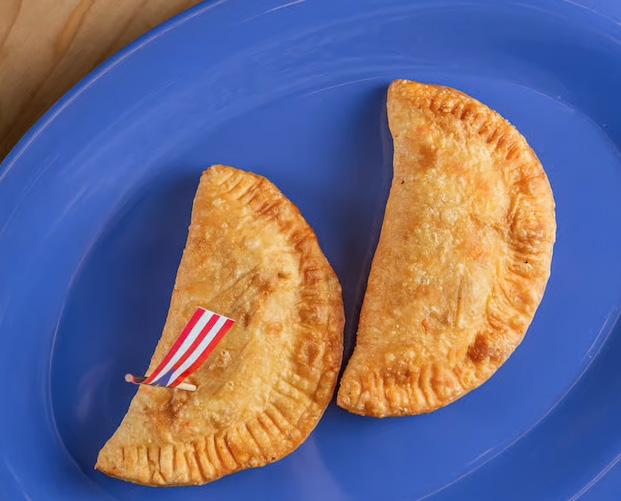
Key ingredients found on the island-inspired menu include plantains, yuca, rice and beans, tropical fruits, fresh fish, pork, chicken and steak. Wepa Café golden fries and mashes green plantains with garlic in its traditional mofongos, served with a choice of meat or shrimp. Green plantains are high in potassium, magnesium, fiber, vitamin C and vitamin B6, whereas sweet plantains have a higher sugar content, like bananas. Both plantains and yuca can be boiled, fried or roasted like potatoes.
Barbecued meats are popular at the restaurant and are a part of the island’s earliest history. The word “barbecue” comes from the ancient Taíno word “barabakoa,” meaning a raised framework for slow-roasting or smoking food over a fire. The indigenous Taíno culture predates Christopher Columbus. Cooking low and slow creates a delicious stick-to-your-ribs kind of meal.
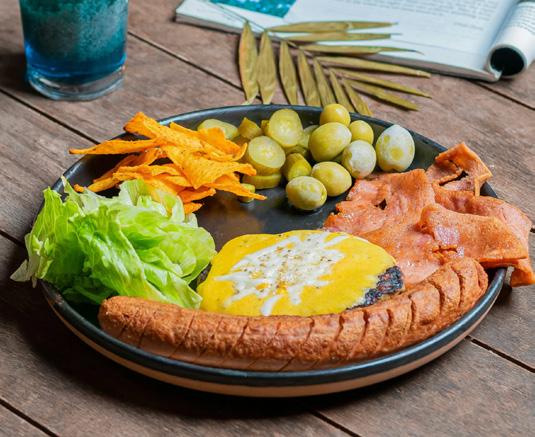

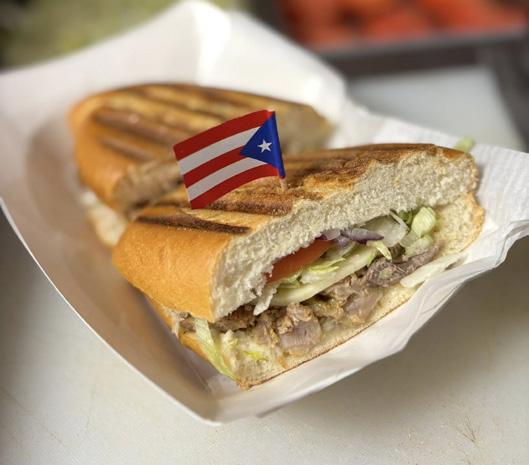
Popular items on Wepa’s menu are Taíno sandwiches, served on crispy tostones (plantains), made with roasted pork, chicken or steak. They’re flavorful, but not hot spicy. Try the ever-popular Cuban Taíno with savory roasted pork, honey ham and provolone cheese, topped with all the fixings and signature Taíno sauce (ketchup, mayo, garlic). Fresh bread can be subbed for plantains, if desired.
Don’t forget to try traditional drinks such as passion fruit juice, coco rico (coconut-flavored beverage), cola champagne (sweet, sparkling, creamy soda), or café con leche (coffee with steamed milk). The desserts (flan, rice pudding and coconut pudding) are the perfect ending to the island tour before we fly to Europe.
- 513 N. Earl Ave., Lafayette
The flight to Rome, including layovers, takes 12 to16 hours from the Caribbean. The trip is well worth it to visit one of the culinary capitals of the world. Fortunately, Italian cuisine has spread across the globe and is widely accessible. Greater Lafayette alone boasts more than 25 restaurants serving various versions of pizza. However, our featured pick specializes in a complete menu of authentic Italian specialties.
LA SCALA is a chef-owned family ristorante located in the gargoyle-adorned historic Ross Building on Main Street across from the Tippecanoe County Courthouse. It has been Lafayette’s premier Italian eatery for 25 years, winning the Journal and Courier’s vote for Best Italian Restaurant. The cozy interior features a deep shotgun layout, with tables lined up on both sides of the restaurant and open dining in the bar area. A spacious outdoor café is open during the warmer months. The humble beginnings in 2000 for Chef Francisco “Paco” and Kirsten Serrano, and their daughter, Lillian, have evolved and grown into a delicious and self-sufficient farm-to-table family enterprise.
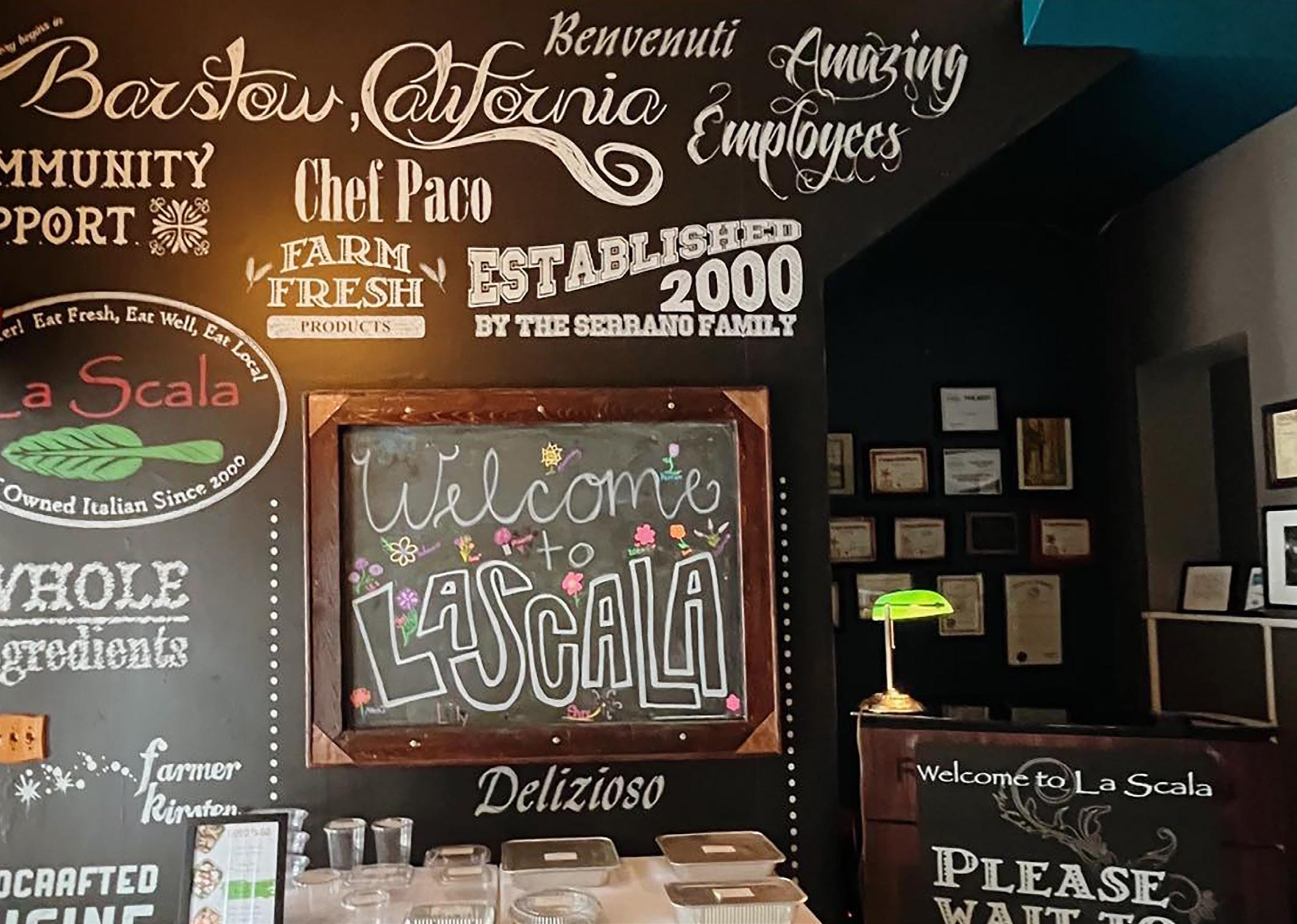

What’s special about La Scala? The extensive menu of mouthwatering authentic Italian dishes such as Calamari Friti (octopus with lemon and marinara) for starters; Sacchetti Napolitana (cheesefilled “beggar’s purse” pasta with tomato cream sauce) and Steak Pepperonata (a flat iron steak with Italian peppers, basil, tomato and linguine) for main dishes; and Bomba Exotica (gelato or sorbetto dipped in a chocolate shell and drizzled with chocolate sauce and whipped cream) or tiramisu for dessert please any palate. Gluten-free pastas are offered alongside traditional Italian favorites. La Scala’s full bar includes house-made limoncello and seasonal sips. If you’ve ever traveled to Italy, you know that each dish is made and served with pride and pleasure. Using fresh quality ingredients, the Italians have mastered the art of eating well and have one of the world’s healthiest cuisines. That mission to provide the same freshness to Greater Lafayette helped inspire another unique feature of La Scala. You’ll enjoy fresh, chemical-free, locally grown ingredients from the family’s Small Wonder Farm. The Serranos grow and supply fresh and seasonal produce for La Scala dishes and their innovative chef-prepared subscription meal service, Good to Go. The meal program delivers ready-made meals within Tippecanoe County for busy individuals or families looking for easy, nutritious, restaurant-quality meals at home — perfect as a gift for the cooking impaired. Downtown’s longest-running fine dining restaurant is open Thursday through Saturday evenings, starting at 5 p.m. Reservations are encouraged.
- 312 Main St., Lafayette
The trip from Italy to Greece is the shortest leg of our trip. The two-hour flight takes us to another ancient culture along the Mediterranean Sea, famous for its distinctive, delicious cuisine. Fresh vegetables, olive oil, cheeses and herbs give the food its unique flavor profile. A quicker way to experience the culture is to drive across town to one of the area’s best Greek restaurants in West Lafayette.
PARTHENON GREEK AMERICAN GRILL is a new restaurant concept for the 45-year-old Pitoukkas family-owned West Lafayette landmark. What’s new is offering traditional Greek favorites in a more contemporary, Greek-inspired atmosphere with quicker service to accommodate their customers’ busy lifestyles. It may be faster to get in and out, but there is no compromising on the four-generation family recipes or ingredients.

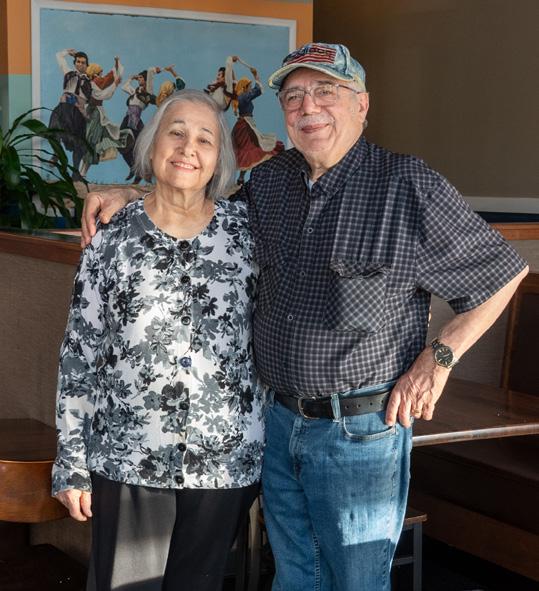
Opa! is a common expression used in Greece and surrounding areas to denote enthusiasm, joy, surprise or after making a mistake. In Greek culture, it can accompany the act of plate smashing at weddings or parties. At Parthenon, it’s exclaimed when a pan of hot saganaki (kefalograviera cheese) is set on fire before it’s brought to the table. By the way, it’s delicious and is served on fresh pita bread. Another signature dish is spanakopita, a homemade blend of seasoned spinach and feta hand-wrapped in flaky phyllo dough and baked. We would be remiss not to highlight the famous Gyro sandwich. Made from scratch in the kitchen from ground beef, lamb and Parthenon’s own blend of herbs and spices, the flavors will not disappoint. It’s wrapped in warm pita bread and adorned with onion and tomato slices and a dollop of homemade tsatsiki (cucumber yogurt) sauce. Complete your meal with Greek fries or rice pilaf and a fresh Athenian salad made with kalamata olives and feta cheese cubes.
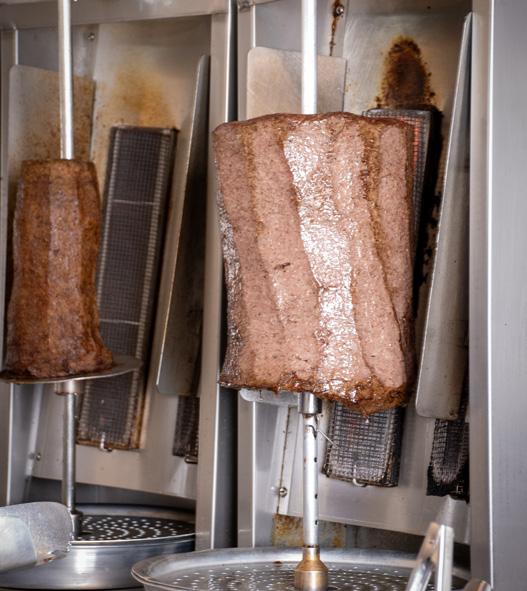

For dessert, dive into a classic baklava, sure to satisfy any sweet tooth with layers of honeyed nuts between layers of phyllo dough. Another option is a Greek wedding cookie, a rich buttery cookie with almonds drenched in powdered sugar. Parthenon caters special events and has a drive-thru, too. The Greeks still celebrate life in many Old World traditions, with lively music, dancing and sharing delicious meals with family and friends. If you’ve not tried Parthenon yet, feta late than never. Opa!
- 2060 Sagamore Parkway W., Suite M, West Lafayette
Now for the long-haul trip to Asia, taking 10 to15 hours, starting from Athens to New Delhi, India. There are 3,610 foreign-born residents from India living in Greater Lafayette, including students, who contribute to the community.
ADDA INDIAN CUISINE is located at Wabash Landing. Its flagship store is in Chicago, with West Lafayette as its second family-owned location with a mission to bring the flavors of India to the world. The chefs pride themselves on recreating traditional Indian foods while putting a twist on others to create a new taste sensation, raising a toast to the old and the new. The spices in Indian food are what make the dishes flavorful and memorable, including ginger, turmeric, curry, cumin, cloves, coriander, cardamom, cinnamon, mustard, fennel, chilies, garam masala, black pepper and more. On a spicy heat scale of 10, Indian food ranks between 5 and 10, says Chef Sid Savale. You’ll taste the heat of India.

In India, ADDA means “An everyday place or spot where friends gather.” Upon entering, you’ll be greeted with the soothing, burbling sounds of a fountain and the aroma of warm spices. The restaurant seats couples and larger groups who are gathering for an Indian food experience. There are many wonderful vegetarian dishes, including lentil soup and veg specialties like malai kofte (cheese and veggies in a white, creamy sauce). It pairs well with long-grain basmati rice. The menu features a wide selection of chicken, lamb and seafood dishes. A popular favorite is chicken tikka masala. Tikka means “bits” or “pieces” of the meat, vegetable or cheese used in a dish. Andhra lamb curry is a favorite slow-roasted lamb dish, rich in coriander, curry leaves and a complex blend of spices. Many of the dishes are cooked tandoori style―in clay pots after being marinated. Don’t forget the naan, the warm, leavened bread perfect for sopping up gravy or sauces.


Desserts are sweet puddings, pastries or ice cream to calm the taste buds after a spicy repast. Carrot halwa is a rich pudding made with grated carrots, cooked with milk, water, sugar, spices and ghee (clarified butter)―a popular sweet during winter and festive seasons. Experience Indian authenticity in every bite at ADDA.
- 332 E. State St., West Lafayette
A direct flight from the Indira Gandhi International Airport to Tokyo, Japan, takes only 8 hours. Greater Lafayette is home to 15,940 Asian residents, roughly 8.29% of the total population. Many come to Purdue University to pursue higher education and bring their ancient and evolving cuisine to the community.
SAKANAYA IZAKAYA’S dining experience transcends the ordinary. Cross the threshold, and you are transported to Japan with cool vibes and clean bamboo lines. The Name Tree greets you at the door, festooned with wooden ornaments hanging from red ribbons. Guests are encouraged to add their names or sentiments to an ornament and string it to the tree. The upscale interior features honeycombed, intimate seating for one or two couples, or tables for bigger parties. There is art in décor and art in every dish. Fresh. Colorful. Beautifully plated. Tasty. Healthy. Japanese fusion. It’s a delightful place to gather, share food, and celebrate little occasions. Like Happy Hour on Sunday-Thursday from 2-5 p.m. for special pricing on sushi rolls and festive cocktails.

Located close to our Greek friends in Market West, Sakanaya is one of the hottest new restaurants in the area. Several ingenious varieties of sushi, maki rolls, sashimi and yakitori are on the menu. One of Chef’s favorites is the Sakanaya Wagyu Roll, made of spicy shrimp, avocado, torched A5 wagyu, tobiko, masabo, green onion oil and beef tartare sauce. A great starter is the Dinosaur Egg, a large egg-shaped container filled with avocado, spicy tuna, cream cheese and shrimp. Entrees come with a house salad or miso soup and range from hearty sushi rice bowl selections from the sushi bar or culinary favorites like teriyaki chicken or curry katsu (panko-battered chicken with Japanese-style braised curry) from the kitchen. Everything’s almost too pretty to eat, but you’ll be sorry if you don’t.


But wait, there’s more. Sakanaya features delicious lunch specials from 11 a.m.-3 p.m. Theoretically, you could come for lunch and stay through Happy Hour. Japanese whiskey and beer, sake, shochu and handcrafted cocktails complete the dining experience. Every month, a unique seasonal cocktail is featured. Enjoy the taste and culinary artistry of authentic Japanese cuisine right here in Greater Lafayette.
- 2060 Sagamore Parkway W., Suite T, West Lafayette
The culinary quest has ended. Time to head back home. It takes 12 hours for a nonstop flight from Tokyo to Chicago, followed by a short United Express flight to the Purdue University Amelia Earhart Airport. Luckily for us, these global gastronomic destinations are right here for the tasting. ★
J.L. Hufford transformed its popular coffee counter into a thriving gourmet goods enterprise with global reach.
BY KAT BRAZ | PHOTOS BY CHRISTINE PETKOV
When Joe Hufford started J.L. Hufford Coffee and Tea Co. in 1991, Lafayette didn’t have a single espresso machine in sight.
“I remember visiting every coffee shop between Chicago and Indianapolis,” Hufford says. “There wasn’t a place around here to get an espresso or cappuccino. Maybe something on campus, but that was about it.”
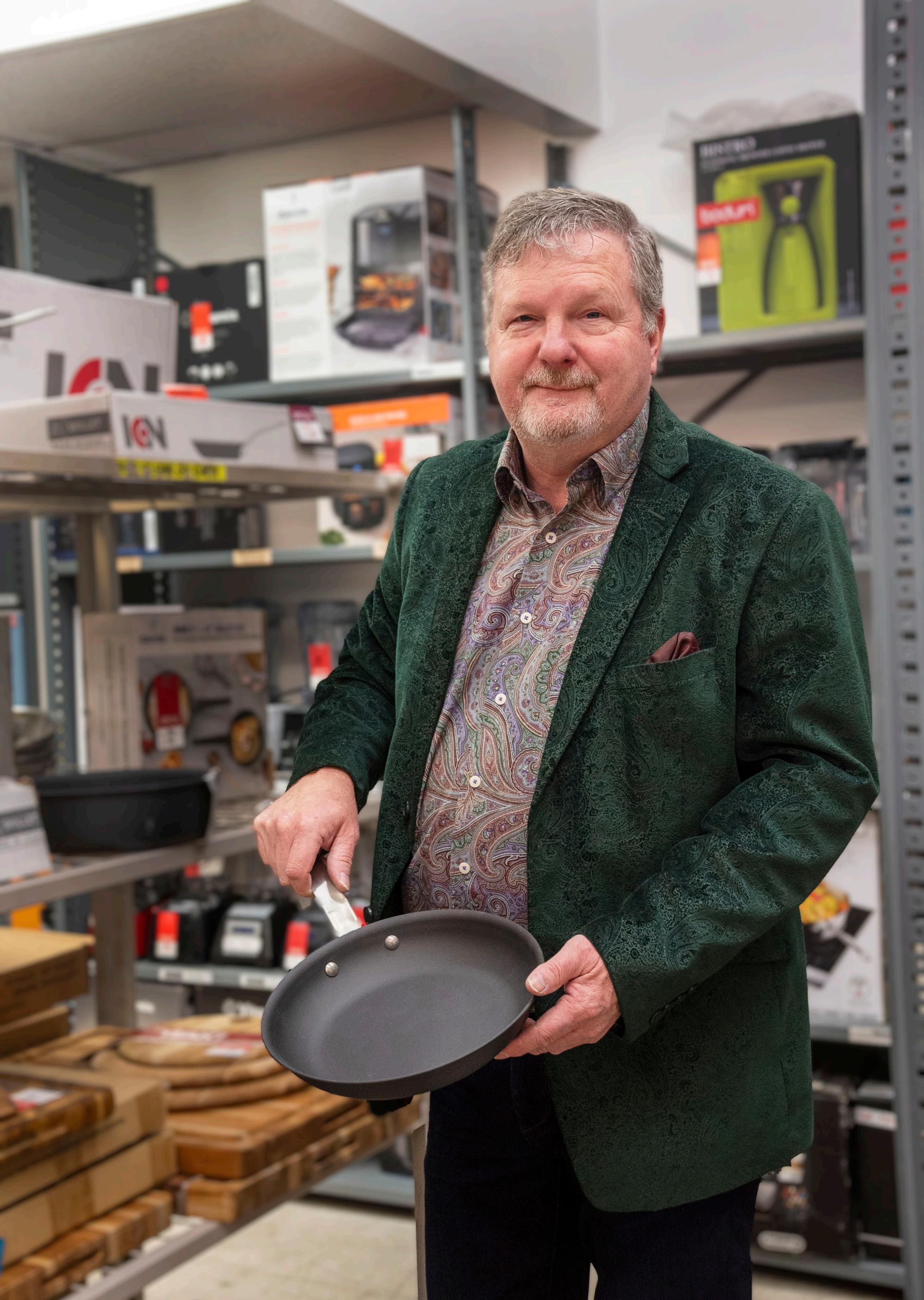
So, in his mid-20s, he took a leap. With no deep love for coffee but a lifelong itch to run his own business, Hufford opened a small coffee shop inside the Tippecanoe Mall. “I wish I had some romantic story about sipping espresso on the Seine and thinking I should bring this back to Lafayette,” he says. “But it was purely a business decision. Coffee’s the second-most-drunk beverage in the world. That sounded like good math to me.”
Hufford signed a six-month lease — just long enough to see if the idea could work. It did. This year marks the business’s 35th anniversary.
Learning the craft
When J.L. Hufford first opened, most customers didn’t even know what an espresso was. “People would come in and say, ‘I want one of them expressos,’” Hufford recalls. “We’d pour out this ounce-and-a-half shot and charge $3, and they’d look at us like we were crazy.”
Education became part of the sale. “We’d explain what an espresso was or turn it into a cappuccino so it looked like something worth three bucks,” he says. “It was a lot of trial and error.”
In those early years, J.L. Hufford was more gift shop than coffee counter, with shelves of mugs, teapots and coffee makers. Over time, the small counter in the back that sold drinks began generating the bulk of the revenue. “Eighty percent of our space
was devoted to stuff that made 20% of our sales,” he said. “That little coffee counter was doing 80% of the business.”
When the store moved to a new location in the mall, Hufford redesigned it around what customers actually wanted: convenience. “We realized people weren’t looking for a place to sit and linger,” he says. “It was more of a grab-and-go crowd — get a drink, head back to shopping.”
The top-selling drink today isn’t even brewed coffee. “Our No. 1 seller is what we call a Glacier,” Hufford says. “It’s a coffee smoothie — our version of a Frappuccino. Funny thing is, we didn’t even have a blender when we opened.”
Expanding online
While the coffee business thrived, Hufford noticed another shift happening — this time online. Long before e-commerce was mainstream, he saw potential in selling coffee beans to Purdue alumni and former customers who had moved away. But that first online experiment flopped. “We tried selling coffee online, thinking people would want to reorder once they left town,” he says. “That failed miserably. Too much competition.”
What didn’t fail was a niche he stumbled into by accident: high-end home espresso machines. “At the time, these were $1,000 to $2,500 coffee makers,” Hufford says. “They’re fully
automatic — push a button, and it grinds, brews and froths your cappuccino for you.”
He started with Jura, a Swiss brand, and quickly added others. Demand exploded. Within a few years, J.L. Hufford became one of the top three online retailers for premium home coffee makers in the United States.
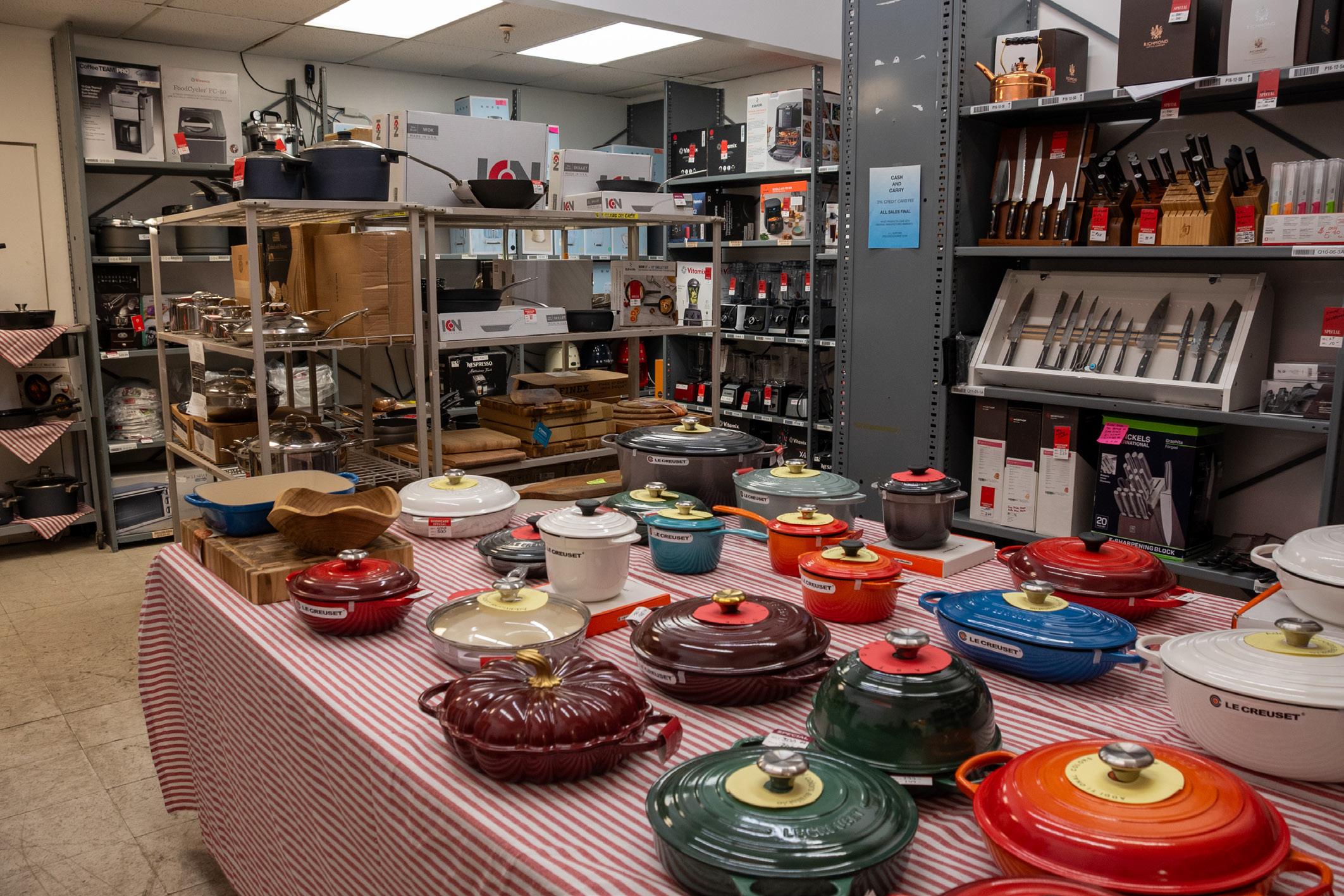
That success opened new doors. “We realized if someone’s willing to spend $2,500 on a coffee maker, they might also buy a $300 chef’s knife or a $500 Dutch oven,” Hufford says. “So we brought in Wüsthof knives, Le Creuset cookware, Vitamix blenders — all the big gourmet brands.”
Today, J.L. Hufford has grown far beyond its mall roots. The company operates out of a 45,000-square-foot warehouse across from the mall — once an RV dealership, now stacked floor to ceiling with kitchenware. “We have several million dollars’ worth of inventory,” Hufford says. “We ship about 100,000 packages a year through Amazon alone.”
Most customers have no idea one of North America’s largest gourmet kitchenware distributors operates quietly in Lafayette. “We’re a bit of a best-kept secret,” Hufford says. “We don’t sell retail anymore, so people don’t realize what’s happening just down the road.”

Change is constant
J.L. Hufford’s next chapter is already underway — the company has begun manufacturing cookware in its own facility. The company also has expanded into logistics, helping other businesses get their products into the U.S. market.
“We do the shipping, warehousing, even warranty repairs for other companies,” he says. “If you’re not adapting, you’re falling behind.”
It’s a philosophy that’s guided Hufford since his first espresso shot.
“I always say I’m a pirate, not a pioneer,” he says. “My best ideas are ones I steal from other successful people, from other industries. You don’t have to reinvent the wheel, just look for ways to make it roll better.”
For a business that began with a six-month lease and a small coffee counter at the back of the store, J.L. Hufford’s reach today is remarkable. From Lafayette, the company ships gourmet cookware and coffee equipment around the globe.
Still, Hufford insists his success rests not on products but on people. “I’ve got really good employees,” he says. “I take good care of them, and they take good care of me. Most of them treat the business like it’s their own. That’s what makes it work.”
And while J.L. Hufford’s product line has evolved from mugs to gourmet kitchen tools and cookware, the spirit behind it hasn’t changed. It’s still the story of an entrepreneur who saw opportunity where others didn’t — and kept adapting to meet it.
“The only thing constant is change,” Hufford says. “If I didn’t believe that, we’d still just be selling cups of coffee.” ★
‘Local’ offers entrepreneurs the opportunity to test their business chops
BY BRAD OPPENHEIM \ PHOTOS PROVIDED AND STOCK PHOTOGRAPHY
Downtown Lafayette boasts a vibrant and diverse retail scene, and now, an innovative pop-up opportunity is offering local entrepreneurs the chance to grow and elevate their small businesses during what can best be described as a trial basis.
Located on the southeast corner of Sixth and Main streets, Local, which is touted as a “downtown Lafayette pop-up experiment,” is offering two 500- to 600-square-foot white-box storefronts available to budding retailers, makers and creators where they can apply to rent the storefront on 30-day terms.
This effort allows business owners to run a physical storefront with less risk than committing to a long-term lease right away.
Dennis Carson, economic development director for the City of Lafayette, says the opportunity to purchase the building was presented to the city when the business that formerly occupied the space closed.
The vision for the space includes expanding amenities for the public and artists using the Long Center for the Performing Arts, which is right around the corner, allowing the addition of a larger public lobby and gathering spaces. Currently, Carson says the project is still a few years out, with no specific timeline.
“So, in the interim, this is a great use of the space and economic development initiative to encourage more Main Street businesses to grow downtown,” he says.
This isn’t the first time this concept has been introduced in Lafayette. Carson notes that the city already has been offering a comparable option at a storefront on Columbia Street between Sixth and Seventh streets, where two spaces have been made available to retailers on short-term leases of up to one year. Those spots have housed a spice and tea shop, a fashion designer, a collectibles shop and others.
“This program expands on that and adds other services and support that will help entrepreneurs for success,ˮ he says. “I’m excited to add more retail choices downtown and continue downtown’s positive momentum as a retail and tourist destination.”
With the City of Lafayette, the project is a collaboration between several entities, including the Downtown Lafayette Business Owners Association (DLBOA), MatchBOX Coworking Studio, Lafayette Urban Enterprise Association, The Heartland Concept, First Merchants Bank and the Indiana Economic Development Corporation.
Amanda Findlay is the executive director of MatchBOX, which serves as a coworking studio, makerspace and innovation hub designed for entrepreneurs, freelancers, creatives and small-business founders in Greater Lafayette.
“At MatchBOX, we’re constantly meeting creative innovators, so we know the demand for opportunities like Local exist,” she says.
“We looked at many models around the country in preparation for the launch of Local and were really impressed with some of the initiatives that others have successfully launched and operated.”
For those interested in renting a space, the first step is submitting an online application. From there, a small committee reviews those applications and helps make decisions about retail readiness and product market fit. Findlay says the plan is to rotate vendors on a monthly basis through June 2026.
As for choosing which retailers occupy the space, she says customer-facing businesses make sense, specifically in the north space with large windows facing Main Street.
“Home goods, packaged food, clothing collectives, experiential studios, art and craft pop-ups … there are so many options,” she says. “We’re looking at existing businesses with market track records (farmers market and pop-up vendors), online vendors looking to expand into physical spaces, and brand new concepts and collaborations testing the market for the first time.”
Entrepreneurs who are selected will be assigned a timeframe to operate the space, and once their timeframe comes, they will have a month to run their operations and gauge how their business models perform.
“It’s like a month-long market booth, or a very quick pop-up presence,” Findlay says. “But we think the short-term commitment will be a really insightful test for the retailers and help them decide if brick-and-mortar business ownership is the right path for them, long before they sign a 3- to 5-year lease or purchase commercial space.”
As for rates, the 30-day residency comes at a cost of $500, which includes the lease, basic utilities, access to shared furniture, business coaching and marketing support. Not included in the lease is general liability insurance, which vendors will be required to carry before moving in.
For multiple businesses looking to co-exist in the space during the same timeframe, partnerships are encouraged, but applicants must provide details on space-sharing arrangements and co-branding plans when filling out the application.
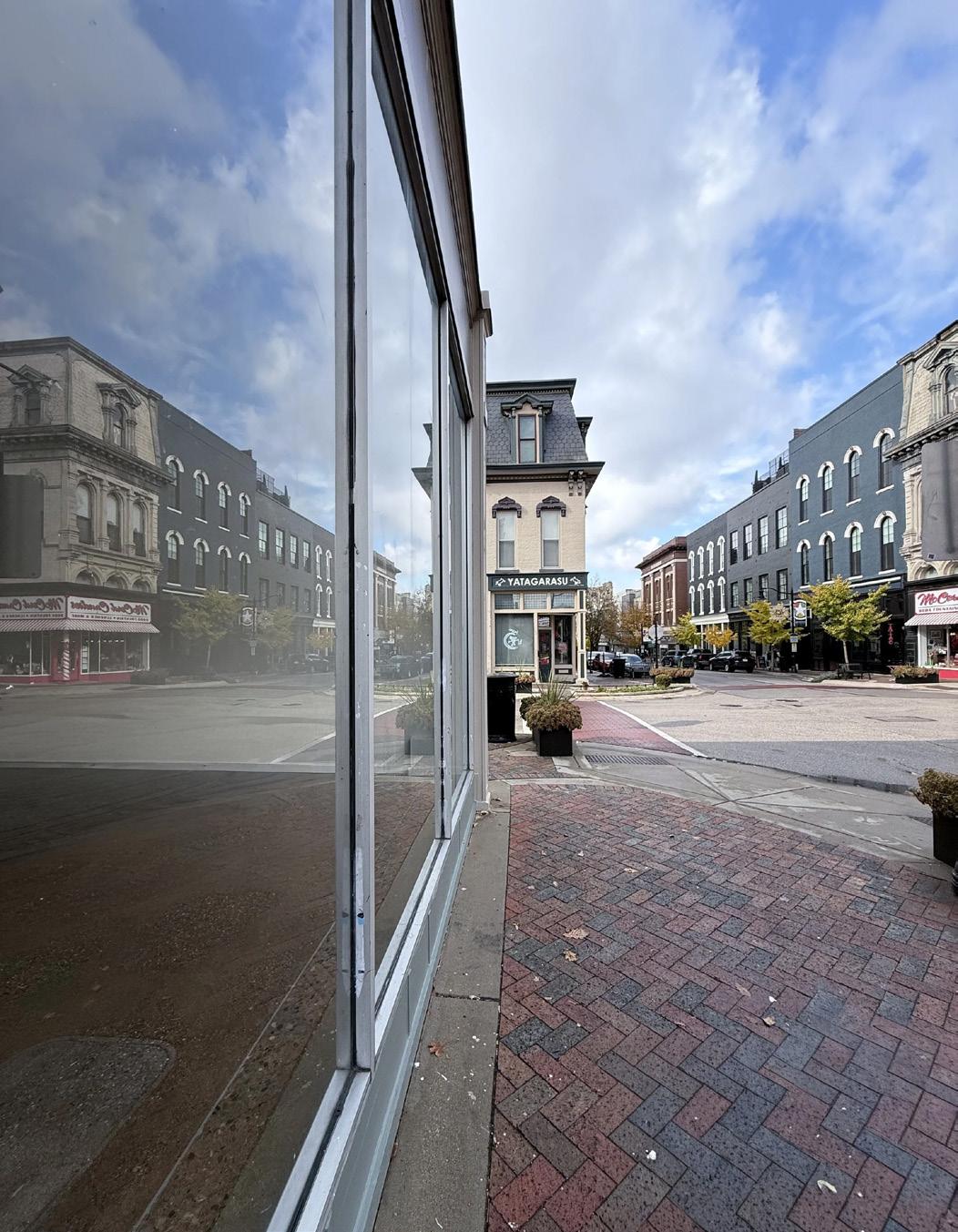
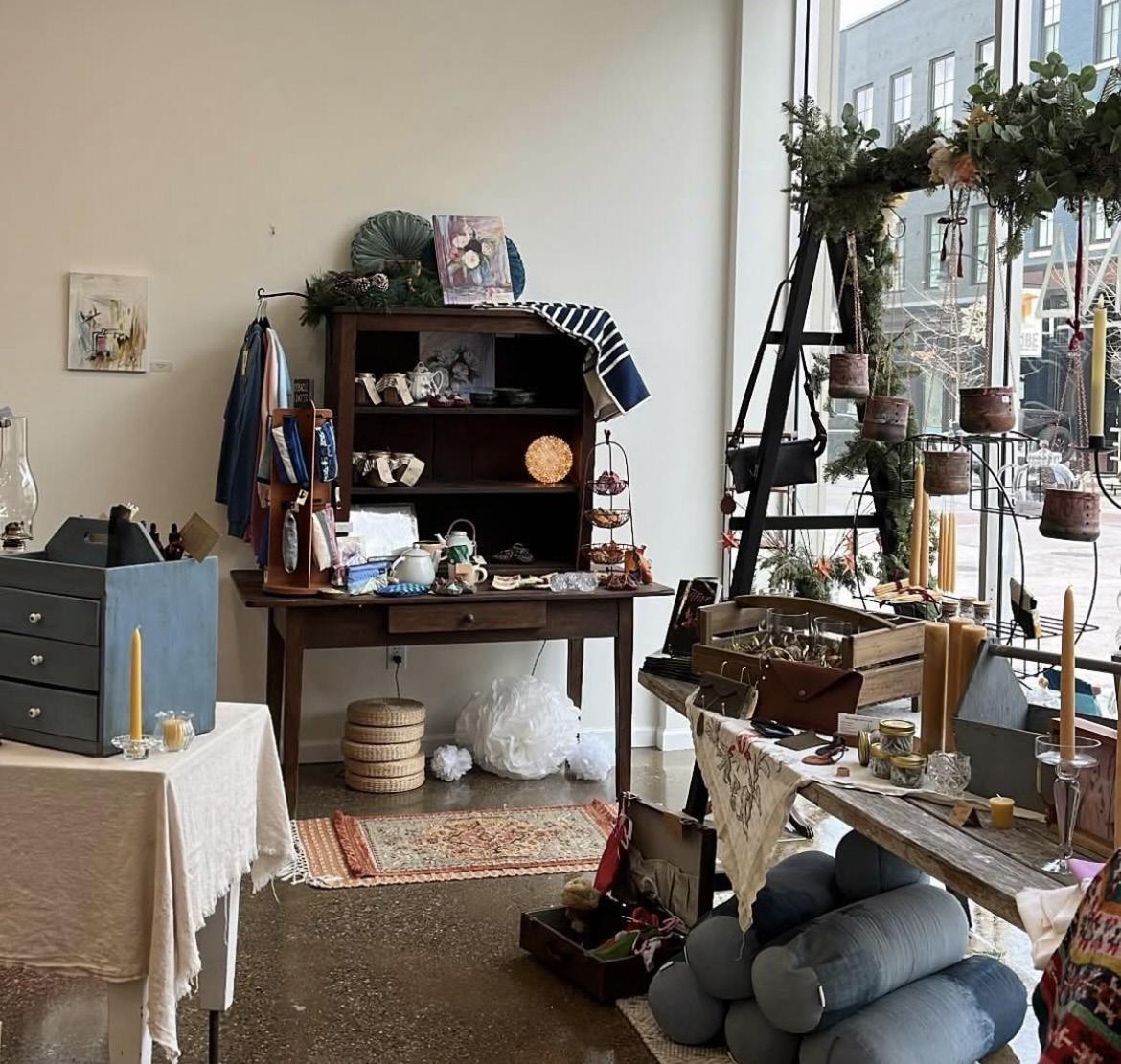
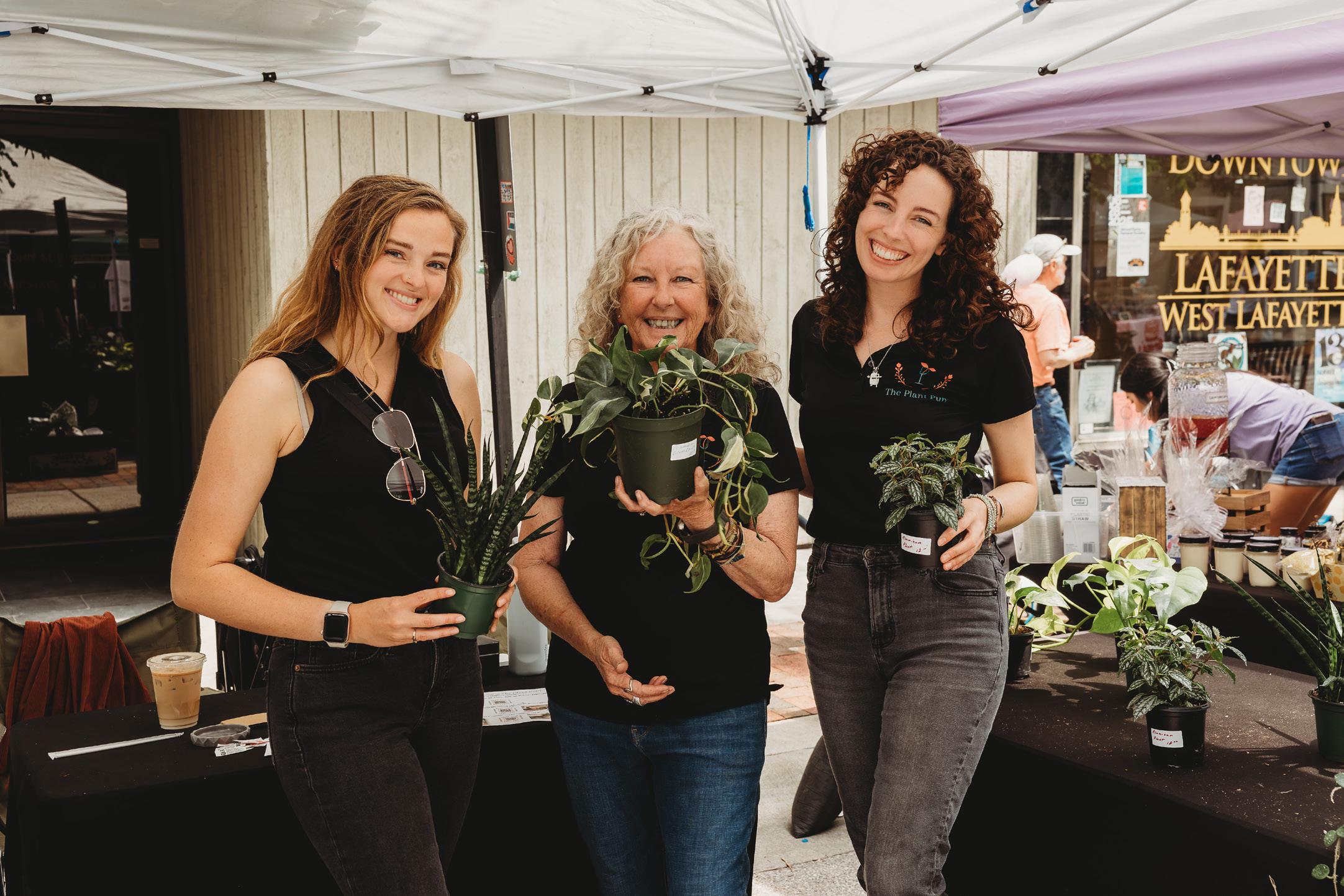
Entrepreneurs also will be provided with MatchBOX and DLBOA memberships through the duration of their lease, allowing them the opportunity to tap into acceleration programs, MatchBOX office hours, downtown business owner meetings and collaborations and more.
“Greater Lafayette has a thriving small business ecosystem, with numerous vendor-based events providing market-testing opportunities for entrepreneurs,” Findlay says.
She notes that popular events such as Summer on the Square, Merry Main Street, Monster Mash on the Wabash, Star City Nights and the MatchBOX Holiday Maker Market have proven significant vendor participation and consumer demand. Additionally, the Lafayette, West Lafayette and Purdue University farmers markets offer regular retail opportunities for small business owners.
“However, these events, while valuable, are often limited to single-day or weekly engagements and do not provide sustained exposure for vendors to refine their business models or cultivate a loyal customer base,” she says. “We’re calling this an experiment for a reason, and we’re looking forward to giving entrepreneurs the chance to test their concepts on our beautiful Main Street.”
The program will be assessed, determining the best course of action on how to best serve up-and-coming retailers here in Greater Lafayette.
“We’re looking at a few things to measure the success of this project,” Findlay says.
This includes revenue generated by the entrepreneurs in the spaces, number of businesses who either directly or indirectly operate from the spaces and number of community organizations that engage with the space.
“We’ve learned from MatchBOX that the proper metric for business ideas is never that 100% will become viable businesses,” she says. “Sometimes, innovators put their idea through the ringer and realize the product-market fit is off or they don’t actually enjoy running a brick and mortar or that isn’t how their customers like to interact with this.”
Findlay notes that the 30-day residency is particularly fast for this project, and while uncertain if this rapid turnover pace will continue, testing it to keep the corner of Sixth and Main fresh and exciting is important for the beginning phases of Local. ★
BY RADONNA FIORINI
PHOTOS BY CHRISTINE PETKOV AND PROVIDED
It’s been a little more than a year since the City of Lafayette first rented out the micro-retail incubator spaces at 619 Columbia Street in the Public Safety Center. A fashion designer and collectibles shop now occupy the two 306-square-foot spaces, and one of the first renters has moved to a downtown building six times bigger.
Lafayette’s Economic Development Director Dennis Carson calls that a success.
“It’s going really well, as far as I’m concerned,” Carson says. “We’ll continue doing this.”
The business incubator space contains two identical rooms that feature big windows and cement floors joined by a hallway with a restroom. It can be occupied by one or two businesses on a three-to-12month lease at an affordable rate that includes internet service and utilities. Almost any retail establishment could use the space except food service. The goal is to provide a small business space to try running a brick-and-mortar store without buying property or signing a long-term lease.
The concept helped Emily Colombo launch her local shop, A Pinch of Pepper and Spicery, in November 2023 as the first renter. She began curating and selling spices and tea online in the spring of ’23 and then took advantage of the micro-retail space to see if the business could be successful on the ground.
“(The space) definitely reduced the barrier to entry,” Colombo says. “I wouldn’t have started a brick- and-mortar this soon in my journey without it. I was happy to be the guinea pig.”
Colombo moved Pinch of Pepper to 101 North Sixth Street after the micro-retail lease ended and opened the new shop February 1. The shop jumped in size from about 300 square feet to 1,800 square feet with 1,100 square feet of retail space. She has increased her inventory, has room to store product and has an event room for cooking classes.
And her rent is more than five times higher than at the micro-retail space. While Colombo knew there would be some sticker shock when entering the downtown retail market, she was surprised that the city didn’t offer more training and support in transitioning to a bigger space.
“No matter what, the jump was going to be very stark, but there wasn’t really a bridge,” she says.
“Yes, it was a great opportunity but there’s a lot more to running a business than just the space. This is such a unique and innovative program and there could have been more support.”
Carson acknowledges there was a learning curve for everyone in opening the retail incubator space. He recognizes the challenges Colombo faced in moving to a more permanent location, while also being realistic about the city’s capacity to help.
“We might be able to help someone identify spaces available downtown,” if the business wants to stay in that area, he says. “But for other kinds of support, I would refer them elsewhere.”
Carson is pleased to see a burgeoning cooperation between business-related groups dedicated to attracting and helping retail owners succeed. The MatchBOX Co-Working Studio offers a business accelerator program that has courses and support for those starting out. Others, such as the Downtown Retailers Association and Greater Lafayette Commerce, are joining forces to encourage entrepreneurship in the city’s center, he says.
“It’s an evolution as we move along in time,” Carson says. “There are more programs coming online and more cooperation to support small business.”
And while Carson is not ready to reveal details, he says officials are considering creating another retail incubator in downtown Lafayette.
After having made the move, Colombo is pleased that the relocated Pinch of Pepper receives a lot more foot traffic. She already has hosted pasta-making and sourdough bread classes in her event room. One of her dreams is to begin hosting a Sunday supper club, collaborating with local caterers and inviting the community in. Her event room also is for rent to the public.
Sarah Harmon is a regular Pinch of Pepper customer who finds the new location makes it easy to stop in when she makes a farmers market run.
“I’m there at least once a month, but more frequently now that we head to the farmers market on Saturday mornings,” Harmon says.


“I love the new location! So much more room to take in all the fun product lines she carries, and there’s still room to grow, too. I think her community room is going to be such a gem and great addition to downtown as folks start to discover the space.”
Colombo has expanded her retail offerings and now has spices, dried beans and pasta, tinned fish, hot sauce, oils and vinegars, and lots of tea brands in both loose leaf and bagged. In keeping with her desire to be environmentally aware and health conscience, all tea bags are free of micro-plastics.
Because of Colombo’s collaborative spirit and desire to bring the community together, the shop features succulents for sale from a Lafayette grower, and you can often find other products from local retailers.
“I’m still in the early stages of what I want to do,” she says. “I want this to be a community gathering place where I can make a difference.”

The Retro Room
Back at the Columbia Street incubator space, the east side originally was rented by a vintage clothing store, Arondite Vintage, and owner Ella Seet still has some of her clothing and accessories at a couple of downtown shops and in Indianapolis.
Now occupying that space is a collectibles store called The Retro Room. Owners Steve and Mary Hinckley opened the shop on weekends in midJune and offer lots of vintage toys and collectible pop culture items from the 1980s and ʼ90s.
For about 25 years, the couple has been collecting toys, dolls, games and other items from the eras of their youth, says Steve Hinckley. They exhibited their collection at pop culture conventions and then opened booths in antique malls and pop-up markets as the number of vintage items grew.
“There are a lot of memories tied up in these things,” he says. “We enjoy the youthfulness of it and there is a real community around these collectibles. People kept asking where our shop was, and now we have a location to give them.”
While the focus of the store is on toys, the shop will sometimes feature other items such as books and vintage clothing that help create a time capsule from 30 and 40 years ago.


Iván Delfín LLC
And on the west side of the incubator space fashion designer Iván Delfín is busy making the little shop his own for the next year, setting up mannequins dressed in custom gowns and decorating the room in rich colors and Swarovski crystal lights.
Delfín lives in Indianapolis with his husband, Steven Flowers, and has a small workspace in their home. But Flowers, executive director of the Greater Lafayette Family Shelter, works in Lafayette and the couple wanted to be able to meet for lunch and spend more time together. So Delfín began looking for an affordable space to rent locally where he could sew and meet with clients for fittings and consultations.
“I appreciate this space, and I waited a year to get in here,” says Delfín. “It’s a good program to help a small business get started.”

Delfín also appreciates Lafayette’s small town feel after living for many years in large metropolitan areas. Although he was born and raised in Tijuana, Mexico, his parents also owned a home in southern California, so he lived in, and learned from, both cultures.
He says he knew very early on he wanted a career in fashion and started modeling, but he soon realized his favorite spot was behind the curtains. He earned a fashion design degree from University of the Californias International in Tijuana and scored an internship with a famous fashion house in Guadalajara, Mexico. He also worked there for a bit, learning many tricks of the trade.
Delfín then opened his own business designing and sewing wedding gowns and Quinceanera dresses for teen girls in the Hispanic tradition of celebrating their 15th birthday with a coming-of-age party. Business grew as many of the girls also hired him to create dresses for prom and eventually their wedding, and he hired five people to work in his studio.
He moved to Seattle in 2019 and hosted three runway shows, deciding to stay in the U.S. when the pandemic hit. His custom gowns, pant suits and party dresses were featured in a 2023 edition of Seattle Fashion Collective magazine, and he has continued to create since meeting Flowers, marrying, and moving to Indiana.
“It’s harder to find this kind of business in the U.S.,” Delfín says.
“There are lots more celebrations in Mexico that women have a custom gown made for. My customer is the woman who can’t find the quality and fit she wants in a store.”
And while Delfín recognizes that custom clothing is expensive, he contends that the finished product is worth the price.
“So much of the clothing (in top department stores) is low quality with cheap fabric,” he says.

“Women pay a lot for a dress and then discover it doesn’t fit them well or the lining is uneven, so they have it altered.”
By the time the process is finished, they’ve paid almost as much as they would have for a custom dress, designed to fit their body and their personality, he says.
Delfín is choosy about the fabrics he uses, often buying from importers in Los Angeles. The fabrics must be comfortable, breathable, soft and beautiful so the wearer can forget about the dress and move with confidence into any celebration, he says. He loves working in monochromatic colors, adding special touches that reveal the personality of the wearer and focus on movement and elegance.

After Delfín creates a gown, the owner can bring it back and he will deconstruct it and use the fabric to make a new piece for them, or he’s happy to buy the gown back and then rent it to someone else.
“Every woman should treat herself to at least one custom gown,” he says. “If you know of a special event coming up, just prepare in advance and save up to have the gown made. Clothes can help you free yourself and feel confident.”
Delfín takes care of each step of the process, from talking with a customer to discover their personality and hopes for the dress, to measuring and creating a pattern, to sewing and altering the gown for a perfect fit. And he will work within your budget, choosing less expensive fabrics if necessary. Much of his work is in alterations out of necessity, although designing and constructing a piece of clothing is the best part of his craft, he says.
Delfín is passionate and committed to helping people feel confident and comfortable in their clothing, so much so he is happy to consult with anyone who is unsure about their style or body type and will even advise them where to buy something off the rack if they don’t want to go the custom route.
“Find your personality, find your style and find yourself in your closet!” he says.
You can find Iván Delfín by making an appointment through his website, ivandelfinfashion.com, or calling or texting 206-550-6972.
BY BRAD OPPENHEIM
If you’re familiar with downtown Lafayette, you’re well aware of the variety of establishments to eat, drink and explore. To boost the experience even more, the city launched its first-ever Designated Outdoor Refreshment Area (DORA) during the summer of 2024, allowing visitors the freedom to stroll through a designated area of downtown while enjoying their favorite alcoholic drink from participating spots.
The current area, known as the Upper Main Street DORA, spans a single block along Main Street, from 10th to 11th streets, and includes East End Grill, Ripple & Company and The Cellar Wine Bistro.

“This pilot DORA was established in July 2024 at the request of these vendors, who encouraged the city to explore a DORA as a way to support downtown activation and encourage foot traffic,” says Myles Holtsclaw, senior community development manager at the City of Lafayette’s Economic Development Department. “While small and relatively quiet due to its limited size and number of participants, the DORA has been considered successful.”
Holtsclaw says the plan has always included expanding the designated area, but the pilot has served as an opportunity to identify any logistical or operational issues.

“Many downtown businesses expressed interest in participating from the start and have continued to show enthusiasm for expansion,” he says. “While the pilot area was intentionally limited, it served as a stepping stone toward broader inclusion.”
Now, a year later, the city is ready to roll out that expansion, encompassing a much larger portion creased foot traffic has the potential to boost business, not only leading to higher sales and greater visibility for those who sell alcohol, but the broader downtown community. It also makes it easier to include alcohol sales at events—while ensuring those sales benefit local businesses. of Main Street, stretching from Second Street east to 11th Street, including landmarks such as the courthouse square and the area that makes up the Lafayette Farmer’s Market.
“Many of the participating restaurants have limited waiting areas, so the DORA offers guests the option to grab a beverage and enjoy downtown while waiting for a table, improving the customer experience,” he says.
The DORA also is expected to help create a more welcoming and adaptable atmosphere downtown, making it easier for organizers to plan and host events. This added flexibility could allow for more events and more regular programming—further making the case for Lafayette’s reputation as a must-visit destination.
Holtsclaw says for businesses within the DORA footprint, increased foot traffic has the potential to boost business, not only leading to higher sales and greater visibility for those who sell alcohol, but the broader downtown community. It also makes it easier to include alcohol sales at events — while ensuring those sales benefit local businesses.alcohol
As for any concerns, Holtsclaw says some were raised by the public about potential issues such as increased litter, the area becoming a “party environment” and general safety. But following a smooth and issue-free rollout of the initial phase, no public comments were received during either of the readings for the proposed expansion.
“This suggests increased public comfort and confidence in the program’s responsible management,” Holtsclaw says.
Several businesses already are included in the application for the expansion, including Thieme & Wagner Brewery, located near North Seventh and Main streets.
A well-known name in Lafayette, the brewery was originally founded in 1863 by Frederick August Thieme and was located at the corner of Fourth and Union streets, according to the Tippecanoe County Historical Association. The brewery shuttered its doors due to Prohibition, but the family remained in the beer business.
Decades later, David Thieme and his father brought the brewery back to life—reviving the legacy at its current Main Street location.
“We have always believed in filling humanity’s need for socialization and have been blown away by the amount of friendships we’ve helped start and foster in our eight years on Main Street,” Thieme says.

When the pilot rolled out, Thieme says he was cautiously optimistic.
“I really wanted it to include all of downtown and have more structure in how it’s executed,” he says. “But I’m being told there are strides in that direction, which is great!”
He says the brewery has always benefited from being allowed to partake in carry out sales on the beer they brew, but it’ll be nice to now have the option for liquor and wine as well.
“I overall support it but feel currently there aren’t enough regulations to the types of alcohol that can be sold,” says Thieme. “It’d be nice to see the DORA rules on beer limited to beer made in Lafayette only or even Indiana only.”
Down the street near North Fifth and Main streets sits Generation NA, the first non-alcoholic bottle shop to open in the Midwest. Open just over three years now, the establishment specializes in non-alcoholic and functional drinks and different types of adaptogens and nootropics to help people boost energy, focus, sleep and relax, without the hangover.
Owner Rob Theodorow says when the original DORA concept was floated, he didn’t think too much of it since his business was located outside of the boundaries. But once plans for an expansion were up for discussion, and his business would now be located inside of that expanded boundary, he initially wasn’t thrilled.
“However, thinking about it more I feel it’s a great opportunity for us to be part of a mindful consumption effort,” Theodorow says. “Many of our customers still drink, and we are here to let them know they have options. We aren’t anti-alcohol, we are anti-alcohol being the only option for people. We provide a safe space from alcohol for the local sober community and have a unique setup allowing people to have the experience of a liquor store/bar/brewery, without being around alcohol.”
Theodorow says he does anticipate the new area to have an impact on his business.
“We have tables out front that are commonly used by our customers,” he says. “Now that we will be within the footprint I imagine these will also be used by patrons consuming alcohol, which makes it difficult to provide a fully sober/alcohol-free space for us in the community.”
Addressing his initial concerns, he says the city’s economic development team has been very helpful and are even working with Generation NA on signage promoting non-alcoholic options. He says there are pros and cons with everything, and as the expansion is officially put into place, both will be uncovered.
“We have worked hard over the past three to four years to provide something very unique and progressive for the city,” he says. “Our shop brings in a lot of traffic from outside of Lafayette, even outside of Indiana, and drives more business locally. I hope Lafayette realizes the potential we have here and will help us expand the brand deeper into the community and beyond.”
As far as a timeline, Holtsclaw says approval is pending from the Indiana Alcohol and Tobacco Commission, but as soon as they receive the green light, the expansion is ready to be implemented.
For more information regarding hours and guidelines, visit lafayette.in.gov/3641/Designated-Outdoor-Refreshment-Area-DORA ★


From pigeons to pigs, WoodHaven Rescue thrives to provide the best life for the forgotten
BY KEN THOMPSON
WoodHaven Rescue was Susan Slayton Whaley’s destiny from infancy. Her earliest memory of displaying love for all creatures great and small was picking up earthworms and putting them in her pockets.
“My mom would throw the baby jeans in the washing machine and have worms floating on top of the water,” says Whaley, who also remembers crying when her parents walked over an ant hill.
During a recent visit to the rural Tippecanoe County rescue, there were no earthworms or ants in sight. Goats, llamas, donkeys, mini horses, mini mules, peacocks, pheasants, guineas, dogs, cats and kittens, chickens, turkeys, rabbits, a goose and a steer provided the soundtrack on a cool afternoon. The animal population at WoodHaven ranges between 80 and 90 at any given time.
“We take in animals who are needing rescue or are extremely elderly — the animals no one else wants,” Whaley says. “The 4 Rs for the animals of WoodHaven are rescue, rehabilitate, rehome, retire. If we rescue, we want to rehabilitate. We want to rehome or adopt out. If they can’t be rehomed, we retire.”
WoodHaven first got its name from the farm in Tennessee that Whaley and her husband shared. A graduate of McCutcheon High School (1985) and Purdue University (1989), Whaley moved back to Lafayette in 2014 after her husband passed away.
“I lost my husband. I had to sell the business we had,” she says. “I brought with me all the rescue animals we had: dogs, cats and horses.”
During COVID, Whaley decided to pursue her dream of opening a non-profit animal rescue.
“Somewhere back in second grade, I wrote what I wanted to do when I grow up. I wanted to save animals,” Whaley says. “The timing was here. After selling the business and understanding the corporate world, what’s stopping me? The fact that I found this place with a lot of trees and a lot of woods, it just made sense to still call it WoodHaven.”
Whaley received the 501(c)(3) letter, given by the IRS for tax-exempt non-profit organizations, in 2022. While there have been sleepless nights worrying about the next vet bill, Whaley has been rescued by the animals who return her love.
“These animals do more for me than I will ever do for them,” she says. “After losing Gary … these animals are my reason to get up and get out every morning. Even on the days when I have my sinus trouble, I can still walk in the barn, and you feel the love. Every single animal on this property is grateful. All animals are wonderful.
“I may be a little biased, but I have had other people say the animals here are special. How they look at you, how they interact. Part of why I think that is we don’t allow our wants to be pushed on them. I want to love on this animal, but if this animal does not want to do that, we let them be animals. We let them tell us what they are comfortable with, and they give us back so much more.”
While Rescue is part of WoodHaven’s title, it is not a pet shelter.
“Every animal has a stall, a barn we can shut in. Otherwise, we won’t take them,” Whaley says. “I’ve had to turn people away. We are a rescue. We are not a rehoming service. Because you are tired (of the animal) and you don’t want to take care of it anymore, I’ll give you resources to try to find a home, but it’s not an urgent rescue. The exception is someone passed away unexpectedly and there was no place. If it was short term, we would try to help out if we could. But I don’t want to help someone else’s animal and hurt one of ours.”
A recent rescue brought 22 chickens from Ohio. Another rescue ended up with a place in Whaley’s home.
“We get a lot of calls from the sheriff’s department when shelters are full,” she says. “Elvis the dog, he was a case. The sheriff called and asked if we had an empty stall. He says unless we take him in they are going to euthanize him. When they brought Elvis out, he was laying in the back of a squad car. He had just given up.”
Elvis got his name from the hound dog eyes that gazed at Whaley as she took him from the squad car.
Every animal has a story. Here are a few. Three orphaned kittens were given the names Wilma, Barney and Betty from “The Flintstones.” We met Betty during a tour and discovered she loves to unexpectedly launch herself into your arms. Another cat, Gus, has scarred lungs from a respiratory infection as a kitten and breathes unusually, like a human with COPD or emphysema. Behavior issues mean Betty and Gus will spend the rest of their days roaming WoodHaven.
Rachel, Monica and Phoebe (“Friends”) were three llamas rescued from a breeding operation in Ohio. Rachel has since passed away but Monica, at age 32, and Phoebe, at 27, have well exceeded the average life expectancy of 15 years.
They were joined in June 2022 by Nightmare and Champagne, who Whaley says welcome extra love and attention. “They have settled in nicely with the other seniors, and we hope they will be able to live out their lives all together here.”
And then there’s Franklin the steer, named for President Franklin Delano Roo- sevelt, who also wore leg braces. Born with contracted tendons, Franklin was unable to stand or walk when he came to WoodHaven shortly after birth in 2021.

“I made his braces out of PVC pipe,” Whaley recalls.
After plenty of physical therapy got him on his feet, Franklin has become one of WoodHaven’s ambassadors.
“He’s a lifer here,” Whaley says. “We do a lot with him for educational purposes.”
Visitors to WoodHaven are greeted by Bandit and Coot, peafowl who don’t like to get out of the way but will beg for treats. The duo’s favorite treat is cat food.
Among the more than 30 bird residents is Homer, a failed racing pigeon. Homer traveled more than 350 miles from home to WoodHaven after flying the wrong direction.
After tracking down Homer’s owner from his leg band, the elderly owner asked if Homer could remain at WoodHaven.
A recent intake of a mama goat and her two babies from Michigan joins a population that are all CAE (Caprine Arthritis Encephalitis)-positive.
“We work to educate that CAE goats can have a very healthy long life. Some don’t,” Whaley says. “The equivalent if you had to think in human terms would be HIV. CAE can cause arthritis, hind leg paralysis, weakness and other neurological issues. Some goats, they can live their entire life and never have a sign. They are carriers.

“It’s a virus they are saying as high as 70 percent of all dairy goats in the U.S. have. Some farms and breeders will routinely test for it. There’s no vaccine, there’s no treatment, there’s no cure. If any flag positive, the breeders euthanize them.”
The mama goat and her two babies came from a breeder who pleaded with Whaley to take them in.
“She called me crying. ‘She’s the sweetest little doe and there’s two doelings. I don’t want to kill her.’ ”
Fortunately, a rescue from Michigan had to bring animals to Purdue University for a veterinarian visit, and it transported the goat family to WoodHaven.
The mother was already named Cinnamon, so Whaley named the babies Nutmeg and Ginger. She calls them “our Spice Girls.”
“Our hope is to adopt out the two babies,” Whaley says. “We may or may not adopt out the mom. If someone wants to take all three and it’s a good home, I would love that. But because she has issues so young, Cinnamon may end up being a lifer here. I know how to manage it. We do joint supplements, pain medication, anti-inflammatory medication.”
A tribute with a prominent place in the WoodHaven Barn is The Memorial Plaque, which honors WoodHaven’s departed animals. Time has allowed Whaley to remember them fondly.
“The goat we just lost, Hefty, was pretty special,” she says. “I went to a sale barn where there were CAE babies. He was one of the triplets, and no one wants a boy dairy goat. They were going to (cut his throat), let him bleed out and throw him in the dump- ster. The dumpster had great big Hefty trash bag stickers on it. I said we’re going to call you Hefty because you’re going to be strong and you’re going to come home.
“He was touch and go, touch and go. Then Hefty just thrived. We lost him a couple of months ago to cancer, but Hefty had 10 amazing years.”
Another recent loss was Henry, a pig who was the size of a football when Whaley brought him to WoodHaven. “He was much beloved by all who met him,” she says.
Because WoodHaven specializes in rescuing geriatric animals, there’s a higher than normal attrition rate.
“I don’t care if they are here only for a very short period of time,” Whaley says. “They will know love. I get emotional, and I do shed tears over every single animal.
“I always tell everyone the biggest gift we can give our animals is to take their pain and suffering and put it on yourself. I am willing to hurt, I am willing to cry and miss you horribly so you are not in pain any more. That is the only way. I have sat with so many animals when we said goodbye, and it’s peaceful. Everyone says, ‘I could never get an animal again. My heart would break.’ You know what I’ve found? Every time my heart breaks a little bit it’s like an earthquake. My heart opens and it makes it a little bigger. Now something else can fit in that break.”
Working 14 hours a day, seven days a week, Whaley couldn’t keep the rescue operating smoothly without volunteers and donors. Three regular Tuesday and Thursday morning volunteers are ladies in their 70s.
Sandy Schelle was WoodHaven’s first official volunteer and has been coming to the rescue for four years. Schelle is part of a group of retired women in their 70s. What keeps Schelle coming back?
“The love and appreciation you get from the farm,” Schelle says. “The joy of working and helping the family of animals have a better life.”

What does Schelle wish people knew more about WoodHaven?
“The love and care that is given to these animals who otherwise would have been forgotten,” she says.
No minimum commitment is required to volunteer. In addition to weekday shifts, there’s also help needed Saturdays and Sunday afternoons after church.
A veterinarian in Crawfordsville gives WoodHaven a discount for its services. A plaque inside the barn salutes Animal Advocates, people who have made a substantial donation in memory of a loved one or who in their obituary request gifts to WoodHaven Rescue Farm.
“Our biggest needs right now are money or materials/supplies and volunteers,” Whaley says.
“I’m very much aware that everybody is hurting financially right now, which is why we hold so many things like garage sales. We are thrilled with material donations. Things that don’t mean anything to you that you want to donate to our garage sale — someone might not have $5 to give to WoodHaven but they have $5 to give to this table that they need to make their life better. And that $5 comes back to WoodHaven.”
A two-day garage sale in March raised $9,774.04.
Visits to WoodHaven are by appointment only. Private tours are $200 for up to 10 people. Open house events are free, including the largest of the year on Oct. 18.
“My heart, my true comfort is being with them,” Whaley says. “The rest of the world goes away for me. It’s a beautiful thing. It’s something I’m so passionate about. I am so blessed to do this every day.”

WoodHaven Rescue Farm, Inc.
6310 S 900 E Lafayette 47905
931-205-8774
Email info@woodhavenrescue.com
Go to woodhavenrescue.com for more information about volunteering.
BY KAT BRAZ
In her final days of life, a woman rests in bed surrounded by loved ones. A trio of harmonic voices softly sing, filling the air with warmth and tenderness akin to a lullaby. The meditative repetition of lyrics exudes comfort and peace to all who listen.
You are not alone.
We are here beside you. You are not alone.
We are here now.
Founded in California in 2000, Threshold Choir celebrates its 25th anniversary this year. Through nearly 200 chapters worldwide, volunteers sing songs of comfort to people facing death, illness, grief or suffering. The local group, Greater Lafayette Threshold Singers, was initially formed in 2018 and formally launched as a Threshold Choir chapter the following year.
“It’s a special privilege to sing at the bedside of someone who is dying,” says Bridget Baker, director of the Greater Lafayette Threshold Singers. “Not only are we soothing the individual, but we are also supporting the family by helping them come to terms with the emotions they are feeling. Often, family members feel like they must be stoic in front of a loved one who is dying and they don’t really process their emotions. Once we start singing, we see family members begin to cry, to grasp their loved one’s hand or even climb into the bed and hold them. Those moments are so special because we witness their profound love for one another and we offer compassion for their grief.” Baker, who also serves as co-chair of the board for the international organization, is helping to organize a regional gathering in Lafayette in August. This event will be one of 25 regional gatherings in honor of the 25th anniversary of Threshold Choir.
Greater Lafayette Threshold Singers welcomes new members. Formal voice training is not required, but choir members should meet some vocal guidelines outlined on the organization’s website, thresholdchoir.org:
• Be able to carry a tune
• Be able to hold your own part while others sing harmony
• Be able to sing softly and blend your voice with others
• Be able to communicate kindness with your voice
• Be willing to use self-monitoring and accept peer feedback as we work together to bring the sweetest, most blended and graceful sound to our precious clients.
The local chapter of about a dozen singers meets weekly to rehearse in the chapel at Westminster Village in West Lafayette. Many of the clients the group has sung to are residents of Westminster, however Threshold Singers welcomes requests from individuals and families throughout Greater Lafayette. They’ve sung in hospitals, in homes and even at memorial services. Typically three singers come together to allow for harmonization, and they always sing a cappella. The repertoire of songs has been developed specifically for Threshold Choir chapters over the years.
“We describe the songs as adult lullabies,” Baker says. “Many have a spiritual component that can be interpreted through any religious lens, but they’re all written with calming rhythms and comforting words.”
During rehearsals, members take turns in the center of the circle, being sung to as if they were a client. The soft voices begin singing the melody in unison, then separate into harmonies as the lyrics layer over themselves, unlocking emotions within. Jack Albregts, a founding member of Greater Lafayette Threshold Singers, says choir members receive as much from singing as they give to others through their songs.
“It’s very fulfilling to sing at someone’s bedside,” Albregts says. “To be welcomed into that precious space — it’s a pleasure. It’s very per- sonal to us. They say hearing is the last of the senses to go. We want to give them comfort, and in doing so, it brings us so much joy.”
Learn More
To request Greater Lafayette Threshold Singers or learn more about joining the organization, contact director Bridget Baker at lafayette@thresholdchoir.org or 765-357-5217.
Blue Moon Rising
Ever been told that you can’t sing? Or carry a tune in a bucket? Denise Wilson begs to differ.
The founder of Blue Moon Rising has spent the past decade building a supportive and welcoming community to sing for the pure enjoyment of singing — no previous experience required.
A lifelong musician, Wilson played in the Tippecanoe Fife and Drum Corps as a teen. Performing music — mostly Celtic, French-Canadian and folk music — with Bon Jolais in the ’80s and ’90s and Traveler’s Dream for the past 25 years gave her confidence in her own voice.
“Over decades of performing, I had many conversations with audience members who told me they’d always wanted to sing but they’d been told by someone — often parents or teachers — that they have a bad voice,” Wilson says. “Coming from someone you respect, that’s a message people can carry for a lifetime.”
Searching for a way to help others feel comfortable and confident with their singing, she attended a two-week Community Choir Leadership Training that’s held in Victoria, British Columbia, annually. There, she learned how to create and lead a welcoming choir, one open to anyone who wants to participate. She founded Blue Moon Rising in 2015 and the choir is celebrating its 10th anniversary this year.
In April, 80 audience members packed into The Arts Federation for a relaxing and funfilled evening of community singing for Blue Moon Rising’s Spring Sing event. Throughout the evening, the audience was invited to join in singing familiar or easy-to-learn songs. Wilson primarily teaches using a call and response method, which makes it easier for singers who don’t read music to learn their parts. In Blue Moon Rising, the process of singing together is more important than perfecting music for a performance.
“For thousands of years, people came together to sing to express joy, celebration and grief; to accompany work tasks; and to enjoy the way music lifts the spirit as it was woven into daily life,” Wilson says. “Singing was for everyone, not just those with a good voice. The emphasis is on community.”
In selecting songs for Blue Moon Rising, Wilson draws from many oral traditions, such as South African freedom songs, African American spirituals, sea shanties and well-known folk songs. She also leans in to her love for traditional music from the 18th and 19th centuries.
Many of the songs fall into categories of songs for peace and hope or songs of resilience and justice. All foster a spirit of belonging and community. One group favorite is “Hold Everybody Up” by Melanie DeMore, a songwriter and vocal activist whom Wilson brought to town in November 2024 to lead a community concert and offer singing workshops for the public.
Just because you look like you and I look like me
It doesn’t mean we can’t be friends You’re not my enemy
We gotta hold everybody
We gotta hold everybody up
“There is so much more to a community choir than singing,” Wilson says. “Shy singers move past their fears. Friendships blossom as members connect before and after our practices. I am filled with awe when we sing a song of peace or unity and at the end, there is just a holy silence. Each of us feels such a deep gratitude from contributing to that beauty.”
Over the years, Blue Moon Rising has participated in numerous community events, including the LUM Community Thanksgiving Feast, Earth Day celebrations at the Celery Bog, community MLK Jr. Day celebrations and gatherings at the courthouse. The group performs at area senior living centers including Westminster Village, Friendship House and Joyful Journey. Wilson also periodically holds informal one-time sings at pubs and parks so individuals who are unable to commit to a full session in the choir can still share in the benefits of community singing.

“I’ve watched the healing power of song to build community, to lift people who are struggling, to build hope and resilience in hard times,” Wilson says. “Singing with others is good medicine for just about whatever ails you.” ★
Join Blue Moon Rising Blue Moon Rising is a community choir open to anyone who wants to sing. There are no auditions and all voices are welcome. Fifteen-week sessions are held in fall and spring with a membership fee of $165 per session. Scholarships are available and no one is turned away due to inability to pay. The next session begins August 19. Visit denisewilsonmusic. net/blue-moon-rising.
BY GREG LINDBERG
PHOTOS BY CHRISTINE PETKOV
The opening of Main Street Amusements in downtown Lafayette’s Arts & Market district in January 2012 brought a flurry of pinball machines in a single space, helping to ignite a passion and buyin for many locals to indulge. Dan St. John opened the space with his own passion for repairing these complex machines, which also helped to bring in a variety of older, rare machines mixed with brand new pop-culture themed games.
Lindsey Sickler of Lafayette had limited experience with pinball and arcades until 2022, when she ventured with her bowling league friends into the fun, hangout atmosphere of Market Square Lanes and North End Pub, which features more than 20 pinball machines. This led her group to continue to go to Market Square Lanes, but for pinball instead of bowling.
“Right away, I discovered how welcoming the pinball community at North End Pub is. Everyone was happy to help new players, whether it was tips on flipper skills or strategies for scoring more points,” Sickler says. “I learned about an international group called Belles and Chimes, which was created to encourage more women to get involved in pinball. At the time, there were chapters in Indianapolis and Fort Wayne, and I thought it would be great to bring something like that to Lafayette.”
In May 2023, Sickler did just that with the launch of the Lafayette Belles and Chimes chapter and has held monthly events since. Sickler emphasizes, “Our events are super laid-back and welcoming, especially for women who are brand new to pinball. We play together for about two hours, and it’s a great way to learn the game in a fun, supportive environment.”


Another local staple in the pinball community is Tommy Skinner, who became heavily invested in pinball after Main Street Amusements opened. Skinner says, “My uncle had an old EM (Electro-Mechanical) pinball machine in his house, and I grew up relatively poor at times, and I remember my parents not having 50 cents to give me to play an ‘Addams Family’ pinball machine at a local pizza place. It wasn’t a big deal but obviously something that stuck with me.”
Now Skinner competes and helps host regular tournaments and competitions at North End Pub. “Lafayette is very spoiled by our pinball scene, and you can’t really lose going to either North End Pub or Main Street Amusements,” Skinner says.
“I’m the operator at North End Pub, and I have a silent partner who helps me obtain games for the location, and really our community helps keep it going. Michael (Alexander), Brett (Heininger), and Dan St. John, who is the owner of Main Street Amusements, have all helped me work on the games at North End Pub to keep the spot up and running.” Skinner, Alexander and Heininger are members of the Lafayette Pinball League.
Discussing his favorite games, Skinner was quick to remind that the pinball community frowns upon calling these machines “cabinets” or “tables,” primarily due to their complexity. Conflicted on his favorite, he decides, “My favorite game is probably ‘Creature from the Black Lagoon.’ It is the first game that I really learned everything about and mastered the rules, but it is DMD era, essentially the ‘90s to 2019-ish in design.” (Dot Matrix Display — DMD — is a screen that can show characters, symbols or simple graphics on a pinball machine.)

But pinball isn’t all that Greater Lafayette has to offer. Jason and Barbara Whiteknight are co-owners of Game On Arcade & Bar. It opened last year in downtown Lafayette and features freeplay of more than 50 vintage arcade games for a flat fee of $20. The arcade also includes a party room for birthdays, concession-style food and a full bar.
Detailing the journey, Jason Whitenight says, “Our first venture was The Spinning Axe also located in downtown Lafayette. We believe in providing wholesome family fun where adults and kids alike can play and enjoy time together.” Whiteknight continues, “Additionally, we wanted to bring back the nostalgia of a retro arcade with some modern titles to the next generation.”
When asked his favorite games to play at Game On, Whiteknight says, “My favorite to play is ‘PowerPutt’ because I love mini golf. Barbara’s favorite is ‘BurgerTime’ and Skee Ball. The best game I’ve ever played is ‘Gauntlet 2.’ ” Their adoration for classic arcade games shows with their enthusiasm to bring families and friends a space to relax and enjoy the surrounding lights, sounds, joysticks and buttons.
Looking toward the future for Game On, Whiteknight adds, “We are currently working on a ‘Mario Kart 8’ tournament for this summer as well as monthly ‘Killer Queen’ tournaments. We will be adding cosplay and costuming events throughout the year with different themes, discounts and drink specials.”
All of these local arcade game enthusiasts make one thing clear: that gaming environments bring families and friends closer together. Sickler adds, “Pinball is also a great way to bridge generational gaps. In a world where video games and online gaming tend to dominate, pinball offers a nostalgic, hands-on experience that people of all ages can enjoy.”


Reminiscent of his pinball journey, Skinner adds, “Main Street Amusements has some amazing machines, especially ‘Big Bang Bar’ that make it an amazing location. Main Street Amusements offers weekend pinball and North End Pub offers pinball 7 days a week with weekly events on Thursday nights.”
Skinner continues to be excited and passionate about the pinball community but also with working with charities to create excellent fundraising events. “Every December we host a charity event that raises money for Sleep in Heavenly Peace. If you are only coming to one event for the year that is the one to be at. We put all the machines on free play for the day, and it’s just a donation to play. A lot of kids in our community have received a bed to sleep in thanks to the efforts of our community!”
Skinner knows his passion for pinball wouldn’t be possible if not for St. John’s efforts to bring such a vibrant establishment to the city. “If it wasn’t for Dan opening Main Street Amusements all those years ago, I never would have gotten into pinball, and North End Pub wouldn’t exist.”
St. John says, “To say that I’m surprised by the growth in pinball’s popularity over the past decade or so would be an understatement. When I was toying with the idea of opening Main Street Amusements my expectation was that it would be a flop, and that I would just end up with my own personal pinball place/man cave. And, actually, I would have been okay with that. To think that we’re still here 13-plus years later is pretty amazing. That’s the second longest I’ve ever held a job.”
Pinball facts (courtesy of Lindsey Sickler):
» Fort Wayne is home to Wizard World, which has a collection of more than 140 pinball machines ranging from classics to modern, and is an awesome place to check out if you are a pinball enthusiast.
» Chicago is considered the pinball capital of the world and many of the leading manufacturers are headquartered there.
» Pinball was outlawed in major American cities between the 1940s-1970s, as it was viewed as a form of gambling. In the 1970s, a pinball enthusiast demonstrated in court that pinball is not just luck, and rather requires a lot of skill, and was able to overturn the ban. (There’s a cool movie about this called “Pinball: The Man Who Saved the Game,” available on Hulu and Disney+)
Additional information:
Main Street Amusements, 642 Main St., Lafayette. Hours: Weekends only, Friday 7 .-11 p.m., Saturday 5 -11 p.m., and Sunday 7 -11 p.m., mainstreetamusements.wordpress.com
North End Pub, 2100 Elmwood Ave., Lafayette. Hours: Weekdays 5 p.m. to midnight; Saturday and Sundays noon to midnight.
Game On Arcade & Bar, 209 N. Fifth St., Lafayette. Hours: Wednesday and Thursday 3 p.m.-midnight, Friday 3 p.m.1 a.m.; Saturday 11 a.m.-1 a.m. and Sunday 11 a.m.-8 p.m.
Belles and Chimes meets on the second Sunday of each month at North End Pub (21+). Check them out on Facebook at Belles and Chimes Lafayette, IN or on Instagram @Belles.and.Chimes.Lafayette.IN

Singer celebrates Lafayette Bicentennial with musical memories
Audrey Johnson’s soaring, emotion-filled mezzo soprano causes eyes to mist up, as happened to a room full of people attending a program on the Underground Railroad in Lafayette when they joined her in “The Battle Hymn of the Republic.”
Her voice brings joy to the soul as it did when she performed “God Bless America” with the Lafayette Citizens Band at its Memorial Day concert in Columbian Park.
A classically trained opera singer with a master’s degree from the University of Houston’s award-winning opera program, Johnson marches to a different drummer.
Instead of pursuing a glittery stage career performing Verdi, Puccini or Mozart in foreign languages, she chooses a more intimate stage where she can perform American heritage tunes in English.
She’s particularly busy this Bicentennial year performing before clubs, school groups, at concerts, festivals and community events in Greater Lafayette and beyond.
As a student pursuing a career in opera, “the pinnacle is ‘the Met or bust,’ or some equivalent,” Johnson says. “I drank that Kool-Aid for a long time.”
While doing outreach performances as part of her artist’s residency with the Shreveport (Louisiana) Opera, however, she experienced an “aha moment” in a decidedly non-grand opera — “The Ugly Duckling” — that ultimately led to a change in her career path.
Johnson says it was what she saw in the eyes and faces and reactions of the young audience that opened her eyes to performing in a different, more intimate way. But it didn’t all come together until she spent time singing opera professionally in Austria and Germany. As much as she enjoyed those opportunities, she became unexpectedly homesick.
“I really did find this completely newfound appreciation for American culture,” Johnson says. “It took a physical ocean between me and the United States to become aware of that.”
She found herself tinkering with the idea of smaller shows that were more personal. Heartfelt American history instead of grand European themes. Lessons in leadership and moral character. “If you can learn morals from a duck or billy goat or a pig, how about from Frederick Douglass, from Abigail Adams, Susan B. Anthony, from actual Americans that have lived?” she says.

“I felt like I was called to do something with everything that I had been taught, and how I had been trained, but it wasn’t necessarily going to look like the career path I had envisioned.”
She worried that “I didn’t have what it takes. But of course, I did. I had been in this field forever. But still it was scary.”
Being scared, she found out, motivates her. Dipping her toe into genealogy waters, she discovered that her great, great, great, great grandfather was a Minute Man at Lexington, and that seemed like a sign she was on the right track. Lafayette entered the picture because her husband (at the time) was finishing degree work at Purdue University. Johnson felt this town could be home, finding it to be “really astounding. I really wonder if people that have lived here their whole lives know what a unique community they have here.”
In 2018 she started to develop one-woman theatrical shows under the banner of “American Heritage Through Song,” a combination of spoken history, photography and vintage songs cleverly focused on music as an instrument of social change.
“It’s my mission to be an ambassador for this music. That’s why I sing,” she says.
“And if I was going to ask them (audiences) to trust me, to go on this journey where we reflect on who we are as people, then I needed to have fun. I needed to provide an atmosphere where we could really do that.”

The story in each program not only features historical music but projections of historical images and song lyrics. Each encourages audience interaction.
Costumes and wigs were also necessary to create precisely the right era. Some period outfits she had made especially for her. Others were pieced together from finds at a going out of business sale at Midwest Rentals.
Among the programs that evolved:
• “We’ve Come a Long Way, Ladies,” a musical celebration of the 19th Amendment, was her first program. During Covid she video recorded it and marketed it that way.
• “A More Perfect Union” high lights the colonists’ transformation from loyal Britons to American patriots.
• “The Setting for Our Dreams,” is a musical celebration of early Lafayette history.
• “First Lady of the Air,” explores Amelia Earhart’s heroism, again through song.
• “Christmas in the Heartland,” blends religious and revolutionary sentiments during early American history.
Working with the Lifelong Arts Institute of the Indiana Arts Commission, she developed a special program for older adults called “Lest We Forget: Voices of American Women Yesterday and Today.” It takes her into a senior living facility such as Westminster Village a week before the performance where she teaches the songs to interested seniors.
“They (the seniors) co-lead the audience with me and they also write an original song using the melody from ‘My Country ’Tis of Thee’,” Johnson says. Typically, “they write about their experiences with women’s rights that younger generations may not have experienced so it bridges generations.”
The open arms the Greater Lafayette community and the Midwest have offered to her programs have impacted her. “People don’t know me, but they are supporting me. It’s amazing, I mean it really is,” she says.
“I just really feel honored. When something’s in your heart and you let it out into the world and somebody else grabs ahold of your hand and says ‘Let’s go,’ it’s special.” ★
If you want to hear vocal snippets from Audrey Johnson’s programs visit: oftheeising.com


July 11-12 Sydney Pollack Film Festival Long Center
July 11-Aug. 1 TAF Exhibit | Grand and Gone: Lost Buildings of Lafayette Michelle Wood-Voglund
July 12 Wabash Riverfest Tapawingo Park | 9 am-4 pm
July 18 Blues Legend Buddy Guy Loeb Stadium | Tickets longpac.org
Aug. 2 Lafayette’s Past and Future | Civic Theatre Youth Performance | Jeff HS
Aug. 15 TCHA Taste of the Past Dinner | 6 p.m.
Aug. 21-Dec. 28 Haan Museum | Hoosier Heritage on Canvas: Indiana Farms & Gardens
Sept. 6 General Marquis de Lafayette’s Birthday
Walk & Talk Tour | 11 am Historic South Street Tour Visit Lafayette200.com
TCHA Bicentennial Book Launch Visit Lafayette200.com
Sept. 9 Author, Selene Castrovilla, Visit Revolutionary Friends: General George Washington and the Marquis de Lafayette | TCPL Holman | 6:30 pm
Coach Barry Odom ready to write Purdue football’s next chapter
Coming off arguably its worst season since launching college football in 1887, Purdue needed a coach with experience turning a losing program into a winner.
Enter Barry Odom, who comes to Greater Lafayette after leading the University of Nevada, Las Vegas to the winningest two-year stretch since the Runnin’ Rebels became an NCAA Division I program.
Last season’s 10-3 record was UNLV’s best season in 40 years. In Odom’s first season on the Las Vegas campus, the Runnin’ Rebels were 9-5.
The five seasons before Odom’s arrival, UNLV had a combined 20 victories.
Odom is no stranger to Ross-Ade Stadium, guiding Missouri to a dramatic 40-37 victory against Purdue in 2018.
“I thought it was one of the greatest atmospheres I’ve gotten to coach in,” Odom says. “If you do it the right way, we will turn Ross-Ade into one of the greatest environments there is in college football.”
Other than the fact last season’s 1-11 record opened the door for Odom to replace Ryan Walters, the 38th football coach in Purdue history isn’t looking back.
“Fortunately, we get to play the games,” Odom says. “We don’t have to live on history or tradition.
Last year, I had nothing to do with. I also didn’t have anything to do with three years ago. All that we can look at is what have we done from the first day on the job together up to this point.
“If you prepare the right way, if you recruit the right way, if you coach the right way and a little luck falls in your favor, it doesn’t matter the logo of your opponent. Your opponent is yourself. We’re going to get into a numbing state of what preparation looks like. If we do it the right way, when we run out of Tiller Tunnel it won’t matter who is on the sideline. We’ll be ready to go play our best ball.”
Odom’s blueprint for success at UNLV included mining the transfer portal for talent. In his first season, 55 transfers joined the Runnin’ Rebels. Another 50 arrived in 2024.
Much of Purdue’s roster had departed for the transfer portal, including All-American safety Dillon Thieneman to Oregon, tight end Max Klare to Ohio State and defensive end Will Heldt to Clemson.
“I knew that it would be a complete, at some positions, roster change and overhaul,” Odom says. “I knew what we needed to do to put together a team for 2025. We were very deliberate about that. Our coaching staff did a nice job of identifying players they thought could come here and help us win, that fit what we were looking for.”
As of early June, Purdue has welcomed 55 transfers. It is possible the Boilermaker offensive and defensive starting lineups will each have eight or nine newcomers.
“There’s good and bad with everything,” Odom says. “I choose to look at the good side of things. There’s the positive side of having an opportunity to recruit young men to Purdue. We’re a high school recruiting team as well as very aggressive in the transfer portal market. I think there’s opportunities that you can provide some depth and experience on your team through that way of recruiting.
“Building a foundation with strong high school recruiting is also important. We’ve had a blend of both of those that I think will help our 2025 team.”
There are a few familiar names who chose to stay at Purdue. One of them, senior running back Devin Mockobee, has a good chance of becoming just the fourth player in Purdue history to rush for 3,000 career yards.
“I’m excited about having the chance to coach him,” Odom says. “Academically, socially and athletically – he checks the boxes. He’s all in. He gives great effort. Guys look to him as a leader, and we expect him to have a tremendous senior year.
“We can win with guys like Mockobee. We can win with guys like Ethan Trent [the brother of the late Purdue super fan Tyler Trent was given a scholarship this spring by Odom]. We can win with (Joey) Tanonas, because they care. Their work ethic is off the charts. They set the example in a lot of ways when there wasn’t an example.”
Born to be a coach
Odom was born Nov. 26, 1976, in Lawton, Oklahoma, and raised in Maysville –deep in the heart of Oklahoma Sooner football country.
“During that time the Oklahoma Sooners were in the heyday of (Barry) Switzer winning national championships or competing for one every year. Where I grew up was about an hour away from their campus. I was able to see them firsthand at a very early age.”
Like his Purdue counterpart, men’s basketball coach Matt Painter, Odom decided early in life he wanted to be a coach.
“I was lucky,” Odom says. “Starting in Pee Wee baseball all the way up through my senior year in high school in baseball, basketball, track and football, I had very influential coaches. I was fortunate to be in communities that supported extra-curricular activities. It was something I enjoyed, seeing how my coaches put teams together, the things it took to have a chance to be successful. It’s something I’ve always wanted to be a part of.”
Odom earned a scholarship to Missouri, where he was a four-year letter winner at linebacker from 1996-99. When Odom graduated, he was ranked among Missouri’s all-time top 10 tacklers with 362.
Odom was high on Purdue Athletic Director Mike Bobinski’s list of candidates to replace Walters, who was dismissed a day after the worst loss in school history, 66-0 at Indiana.
“When it was known that Purdue had made a change, there was contact with officials from Purdue and my representatives to see if there was mutual interest. There was,” Odom says. “We interviewed a couple of different occasions, had good phone conversations and it led to them offering the job.”
Besides the significant pay raise, a reported six-year contract worth at least $39 million, Odom had other reasons for wanting the Purdue job.

Boilermakers To Watch
►Devin Mockobee – Senior running back goes into season with 2,462 yards and 19 TDs.
►Ryan Browne – Quarterback threw for 297 yards and rushed for 118 in first career start at Illinois in 2024.
►George Burhenn – 2022 Indiana Mr. Football Tight End, missed most of 2024 with injury.
►Joey Tanona – Former four-star offensive tackle missed two years of football at Notre Dame after auto accident, came back to play 10 games in 2024 at Purdue.
►CJ Madden – The 6-4, 270-pound defensive end is one of the few returning players on defense.
►Jammarion Harkless – The 6-3, 340-pound defensive tackle showed promise as a freshman.
►Tony Grimes – Cornerback followed Odom from UNLV.
►Jalen St. John – Massive (6-5, 325) offensive lineman was second-team All-Mountain West at UNLV.
►Nitro Tuggle – Indiana native comes home after one season at Georgia. It’s hoped he becomes the No. 1 wide receiver on the team.
►Braydn Joiner – The 6-2, 328-pound guard made SEC All-Freshman Team a year ago at Auburn.
“The thing that I looked at here was No. 1, leadership from Mike Bobinski and (Purdue University President) Mung Chiang,” Odom says. “The alignment, the vision, the support, the fan base, the passion, the energy, the conference, geographic location. All of those things went into it. Every job or new beginning there’s going to be challenges. I would choose to look at it more as opportunities than challenges.”
In addition to a handful of assistant coaches, Odom also brought along seven players from UNLV, a handful of recruits who had been committed to the Runnin’ Rebels and a philosophy called “The Winning Edge.”
While serving as a graduate assistant at Missouri, Odom met the coach who would introduce him to the Winning Edge concept.
“Most of the things structurally in our program are a direct correlation of working for Gary Pinkel for the number of years that I did,” Odom says. “That’s something he ran when he was the head coach at Missouri. I know he did it at Toledo before then and at Washington when he was offensive coordinator and Don James was head coach.
“There’s been some adjustments over the years to what that looks like, but the belief and the foundation of what that program looks like from the attention to detail, the focus, the mental capacity that it takes and the physical strain to emulate a football play. It takes organization and it takes ability as a coaching staff to be able to make sure every drill is done effectively, efficiently and the right way to benefit your team. We are going to be great teachers to show the team what it needs to look like and the reasons why. It will be a foundation piece of our program forever.”
Odom makes his Purdue coaching debut Aug. 30 when Ball State comes to Ross-Ade Stadium. While fans acquaint themselves with the new names wearing gold and black, they should also expect a 180-degree difference in attitude and effort from a year ago.
“They’re going to see a team that is prepared, that is excited to play with energy and enthusiasm, a disciplined football team that plays extremely hard and creates an exciting atmosphere to watch winning football,” Odom says. “It’s our job to play winning football, and I know at the end of the year I will be judged on 12 opportunities, turning that into 13 and plus from there.
“I think we’re going to have an exciting roster. There will be a group of people who will have no idea when we take the field on Aug. 30 who one or two or maybe 15 specific guys are, but they are going to appreciate the brand of football they play. They’re going to become a household name. It’s a blank sheet of paper and we get to write our script.” ★
2025 Schedule
Aug. 30 vs. Ball State, noon (BTN)
Sept. 6 vs. Southern Illinois, 7:30 p.m. (BTN)
Sept. 13 vs. USC, 3:30 p.m. (CBS)
Sept. 20 at Notre Dame, 3:30 p.m. (NBC)
Oct. 4 vs. Illinois
Oct. 11 at Minnesota, 7 or 7:30 p.m.
Oct. 18 at Northwestern
Oct. 25 vs. Rutgers, noon
Nov. 1 at Michigan
Nov. 8 vs. Ohio State
Nov. 15 at Washington
Nov. 28 vs. Indiana, 7:30 p.m. (NBC)
(Note: times and TV for remaining games to be determined)

The current rage over old clothing, housewares, video games and collectibles begs the question: What is vintage?
The owners of several local vintage stores say there are agreed upon industry definitions of what is vintage and what is thrifted, although the word “thrift” appears in some vintage store names. They note that vintage has a very specific meaning in the fashion and collectibles world. Surprisingly, anything 20 years old or older is considered vintage. This means your favorite pair of jeans and threadbare college sweatshirt may have more value than just weekend comfort. True vintage denotes items 30 years old or older. Antique items must be at least 100 years old.
Vintage stores carry carefully curated items that generally are presented for sale in organized ways, resembling retail outlets selling new merchandise. Vintage stores generally are for-profit. Thrift stores most often are operated by non-profit organizations and generally are a mishmash of clothing, furniture, household goods, books and jewelry.
Vintage merchandise may be more expensive than thrift store items, partially because of the effort required to procure quality products and clean and present the merchandise in an attractive way. Vintage store owners often specialize in a specific era of clothing or collectibles, but most also have an array of time periods and products represented.
Some vintage store owners find merchandise at thrift stores and garage or estate sales, but they also happily purchase items that people bring into the store if it fits their business model. Most also have established relationships with other vintage dealers in the state and even across the country. Some have regular 40-hour-a-week jobs to support their vintage habits, while others are trying to make a go with just their stores.
Intrigued? Let’s go shopping!
Arondite Vintage
619 Columbia St., Lafayette
Generally open Fridays and Saturdays, noon to 6 p.m.
Follow arondite.vintage on Facebook and Instagram for current hours and specials. The shop will close April 30, but curated collections of Arondite clothing can be found online and at several downtown stores. Look for a collection of ‘90s and Y2K clothing, high-quality and natural fiber items and jewelry inside Urban Huntress at 525 Main St. Also, a collection of more retro/groovy/ kitschy vintage will be in the back mezzanine of McCord Candies. Collections also will be at shops in Indianapolis, at a booth in Sell It Here on Creasy Lane and at pop-up markets.
Rags to Riches
918 Main St., Lafayette
Generally open TuesdaySunday, noon to 8 p.m.
Follow ragsonmainvintage on Instagram for current hours and specials.
Vintage Vault
525 Wabash Ave., Lafayette Open Monday-Friday, noon to 10 p.m.
Saturday, noon to 11 p.m. Sunday, noon to 9 p.m.
Yette Thrifts
2415 Sagamore Parkway South, Lafayette, in the Tippecanoe Mall near the food court
Generally open Tuesday-Sunday, noon to 7 p.m.
Follow yette_thrifts_ on Instagram for current hours and specials.
Broken Glass Thrifts
516 Main St., Lafayette, on the second floor above Artists’ Own
Generally open Thursday-Sunday, 11 a.m. to 7 p.m.
Follow brokenglassthrifts on Facebook and Instagram for current hours and specials.
Greater Lafayette is becoming the hot spot for small, privately owned ice cream eateries. These businesses use locally sourced ice cream and ingredients to offer what big business chains cannot – love in every cone. Let’s explore a few of the newest shops on the block.
Every’s Ice Cream
Making its debut on Main Street in December 2024, Every’s Ice Cream is creating a buzz downtown with unique flavors to delight folks of every age. Banana Pudding, Bourbon Trail, Fruity Pebbles, Wow Now Brownie Cow and of course, Vanilla are a few of the featured flavors. All are made with 16% butterfat from JB’s Barnyard, a small dairy farm in Evansville, which began making and selling handcrafted ice cream in 2023.
Anna and Tanner Schwartz wanted to start a small family business in Lafayette. Together with Tanner’s parents, they purchased a storefront near Two Tulips, Tanner’s parents’ store. The younger Schwartzes utilize their talents in graphic design and development to create a unique, clean and inviting space that welcomes residents and visitors of every age downtown.
Partnering with JB’s Barnyard to ensure a fresh, high-quality product was their first step toward success. Offering rotating selections keeps it fresh. There are 22 everyday flavors and six rotating seasonal flavors.
In honor of Lafayette’s Bicentennial, Every’s is featuring a special concoction of French Vanilla ice cream (symbolizing our French connection), chocolate flakes (representing Indiana farmland), gold sprinkles (for Purdue), and served in a blue corn waffle cone (honoring Indiana agriculture). Another special offering is the affogato, its take on the Italian dessert made from gelato drowned in espresso. This treat is the perfect way to energize in the afternoon or complete a night on the town. Fresh espresso and drip coffee are available all day long. Lactose intolerant? Try dairyfree options made with coconut oil. Lactaid tablets are sold for those who are ice cream adventurers yet lactose intolerant. If you want to try several flavors, try a flight of three small dips served on a sectioned dish.
Another special aspect of Every’s Ice Cream is how it is embracing the downtown community. The shop is open during Mosey Down Main Street evenings, the East End Block Party and Summer on the Square. So far. Although there is limited inside seating, ice cream is the perfect on-the-go treat for people and pups. This small business has quickly become a favorite downtown destination for ice cream lovers.
Every’s Ice Cream
840 Main St., Lafayette Summer hours: Tuesday-Thursday, noon-9 p.m.; Friday-Saturday, noon10 p.m.; closed Monday

Pizza Uncommon
Speaking of gelato, if the Italian confection is what you’re craving, try the Uncommon Creamery’s ever-changing selection of mouth-watering delights. Pizza Uncommon already is renowned for its unusual and delicious pizza combinations. Adding sweet pairings of handcrafted gelato just made sense to Dave Long, a longtime resident of Greater Lafayette. The gelato is created in the flagship Westfield location, using cream and slow churning to make the rich, dense frozen favorite. The two West Lafayette locations feature five regular and two rotating gelato flavors to complement pizza or serve as a stand-alone treat. Indie Coffee Cold Brew gelato is a fan favorite, using local Indie Coffee Roasters’ cold brew to infuse the sweet, creamy base into the ultimate coffee experience. Thin Mint Girl Scout Cookie gelato is sourced locally (from a West Lafayette Girl Scout) to make a chocolatey, minty, crunchy, creamy combination. Salty Vanilla, plopped on top of any warm summer fruit dessert, makes your taste buds cry just thinking about it. Long is always cranking out new flavors, depending on his fancy, to keep it interesting. Dairy-free options are made with 100% vegan coconut milk. Dine in, dine out. Just come in and try a taste of summer.
Pizza Uncommon
103 W. State St., West Lafayette or 1522 Win Hentschel Blvd., West Lafayette. Summer hours: Monday-Saturday, 11:30 a.m.-9 p.m.; Sunday, noon-9 p.m.
Miss Sugar Dessert
Fun and funky. The West Lafayette campus location is unlike any traditional ice cream experience. You’re not just coming in for ice cream; you’re coming to see a show. All 15 Thai-style ice cream flavors are custom-made while you watch. Examples include Strawberry Lady, featuring strawberries and syrup; Piña Colada, with pineapple and coconut flakes; and Cheesecake Wonderland, which combines strawberries and cheesecake.
Step one: Co-owners Heng Li or Huanpeng Liu chop fresh ingredients that go into the mixture with precision, skill and speed on a freezing-cold stainless steel work surface. Next, they squeeze a healthy dose of liquid vanilla or chocolate-flavored ice cream base onto the table and rapidly mix it with metal spatulas back and forth as it thickens and takes shape. They spread it out for its final freeze, then shave the ice cream into artistic rolls and place them in a cup.
Step two of the process is picking out toppings to adorn the creation. Customers can choose up to three toppings, ranging from fresh fruit and cookies to gummy bears and popping boba, from the list of 28 options. But that’s not it.
Step three is adding a drizzle on top: chocolate syrup, caramel syrup, condensed milk or strawberry syrup.
Each generous serving takes about five minutes to create. It is great entertainment and a delicious treat.
Another unique ice cream alternative it offers is ice cream teas. The entrepreneurial owners make homemade ice cream drinks in-house featuring Matcha, Taro, Jasmine or Thai teas. These are only two of the beautiful and unique treats made by Miss Sugar Dessert. Come in for an unusual and tasty international experience.
Miss Sugar Dessert
107 N. Chauncey Ave., West Lafayette. Summer hours:
Wednesday-Monday, 11 a.m.-.10 p.m.; closed Tuesdays

West Side Scoops
Libby and Brad Schwartz realized their dream of owning a small business by opening West Side Scoops two and a half years ago. It has really taken off by offering customers a diverse menu of flavor combinations, including hard-packed dairy, non-dairy, no-sugar-added/ reduced-fat ice cream, yogurt, sherbet and sorbet options. The shop features quality Hershey’s ice cream and novelties. Although not made locally, Hershey’s Ice Cream has been around since 1894 with a sterling reputation. The Schwartzes add a hometown touch by incorporating Triple XXX root beer in regular or blended floats, as well as delicious cookies from Two Guys Bakery in Brookston for Ice Cream Sammies. Flavors include Oatmazing Super Berry Acai, a dairy-free dream of blended blueberries, elderberries and oat crumbles that leaves lasting, happy memories. Turtle Sundae is a guilty pleasure featuring chocolate, roasted pecans and creamy vanilla ice cream, all with zero added sugars and nonfat milk. With 64 delicious flavors to choose from, it isn’t easy to decide where to start scooping. Each flavor is thoughtfully crafted to ignite the taste buds and fulfill the Schwartzes’ mission of “providing a welcoming environment where our customers always leave full and feel like family.”
West Side Scoops is creating community excitement by taking ice cream on the road. You can arrange to have a traveling ice cream trailer appear at schools, weddings, parks, Purdue or special events. Back at the West Lafayette store, enjoy discounted daily specials and novelty items (like Sammies), or get healthy by adding protein powder to your milkshake. Head to the spacious, clean shop in West Lafayette’s growing north end to enjoy an unforgettable taste sensation. ★
West Side Scoops
2060 Sagamore Parkway W., Suite J, West Lafayette. Summer hours: Monday-Sunday, 1 p.m.-10 p.m.
Hats off to the oldies but goodies
Greater Lafayette is fortunate to be home to so many local, family-owned ice cream establishments that have been serving up sweetness for decades. We can’t help but recognize our older beloved ice cream shops: Original Frozen Custard (1932), Budge’s Drive-In (1942), Igloo Frozen Custard (1998), and Silver Dipper (2001). It’s great to know that the community loyally supports old favorites but also enthusiastically encourages the newest cones on the block.
On a sunny afternoon in late spring, children scramble up boulders and shimmy down chutes built into a hillside, while others squeal with delight as they spin on a merry-go-round. Teenagers launch kayaks into a pond stocked with fish, while would-be anglers cast lines from the shore. Under a picnic shelter, one family grills up kebabs for lunch, while another decorates for a birthday party, with sparkly streamers billowing in the breeze. And, at the heart of it all, a historic one-room schoolhouse brimming with vintage artifacts and hands-on displays stands as an enduring example of community activism, partnership and perseverance.
Welcome to Cason Family Park, a nearly 30-acre greenspace now open at 2500 Cumberland Ave. in West Lafayette, near U.S. 231 – the city’s first new park in more than three decades. In addition to the meticulously preserved Morris Schoolhouse, as it is called, the nearly $18 million recreation area includes five playgrounds, multiple picnic shelters, an outdoor performance pavilion, about 3 miles of paved and unpaved trails, a fishing pond and a boathouse with canoes and kayaks for rent.
The park’s name pays tribute to the family that owned some of the surrounding land. In 2016, Lynn Cason, a custodian of the property since 1964, donated 13.6 acres to the West Lafayette Parks Foundation. It was that gift that spurred the creation of the Cason Family Park as it exists today.
At the park’s grand opening on May 22, Lynn and Carolyn Cason and about 25 other Cason family members celebrated with hundreds of West Lafayette residents and local government officials.
Taking it all in, Cason admitted that the completed park far exceeds the hopes he harbored back in 2016.
“My vision at that time was to have a few trails, a few teeter-tots and maybe a picnic shelter or two,” he said. “Well, look around. What a wonderful place it’s turned out to be. It’s unimaginable to me what this has become.”
Grand-opening organizers also honored many others who were instrumental in the park’s creation, including the architects, engineers and construction workers who sculpted a 25-foot promontory and a four-acre, 14-foot-deep pond out of a flat-as-a-pancake cornfield; the city government staff and officials who shepherded the project; members of the West Lafayette Redevelopment Commission, who used tax increment financing (TIF) revenues to cover the $17.7 million price tag; and especially the team of dedicated volunteers who dreamed up the idea of a park nearly a decade ago, and who saw it through to the end.

“Here you are seeing lots of partnership to make this property happen today,” said West Lafayette Mayor Erin Easter in her opening remarks, “and lots of commitment and leadership and connection.”
“Cason Family Park has been a long time in the making, and it represents the best of what a community can do when it works together,” said West Lafayette Parks Superintendent Kathryn Lozano. “It was a true community activity from the very beginning.”
‘A true community activity’
Indeed, the genesis of Cason Family Park goes back to well before the groundbreaking ceremony in September 2023 and even long before Lynn Cason gifted 13.6 acres.
The origins of the park can be traced back more than a decade, to the time West Lafayette resident Sue Eiler first noticed the Morris Schoolhouse near the corner of Cumberland Avenue and the new U.S. 231 highway.
The one-room brick building, originally known as Wabash Township School No. 5, was built in 1879, one of 108 one-room schoolhouses around Tippecanoe County at that time. It remained open for nearly 40 years, until school consolidation forced it to close in 1916. For generations, the structure languished in obscurity on property owned by the Cason family. Since the 1960s, Lynn Cason had been maintaining the building for use as a storage shed and corn crib – but outside of his family, no one seemed to know about the building, or care.
That changed in 2013 with the opening of the new 231 bypass, a five-mile stretch of the U.S. highway that routed traffic across fields and farms west of West Lafayette. Suddenly, hundreds of drivers on their daily commutes were passing within a stone’s throw of the forlorn little building, wondering what it was and what would happen to it.
More than most, Eiler recognized the structure’s historical significance. Several years earlier, she had written an in-depth paper for a literary club about Tippecanoe County’s one-room schoolhouses, and she was steeped in statistics and stories she had unearthed with help from the Tippecanoe County Historical Association.
In 2014, Eiler was alarmed to learn that a 23-acre parcel of Cason family land – the land on which the Morris Schoolhouse stood – had been sold to Franciscan Health. (The Franciscan Orthoindy Surgery Center is expected to be completed later in 2025.) Unless it could be moved by spring 2017, the Morris Schoolhouse would be demolished.
“I didn’t think much about it until I was driving by the location where it is now, and Franciscan had put up the sign saying, ‘Building for the Future,’ ” Eiler recalls. So, she took up a crusade to save the building.
“It was just a natural [thing] to say we ought to save it,” Eiler says.
With support from then West Lafayette Mayor John Dennis, Eiler convened a committee of interested, involved community members to save the Morris Schoolhouse. In one of the first acts of her campaign, Eiler connected with Lynn Cason and pulled him into the project, as well. As the building’s longtime caretaker, he was as invested as anyone in its future. The volunteers busied themselves with the work of appealing to local preservation organizations, raising funds, applying for grants, researching relocation sites, liaising with city government and considering the logistics of moving a 140-year-old brick building. But the deadline was looming, and still the committee had no viable site for relocation – until Cason casually offered to donate an adjacent tract of his family land and suggested that it could be turned into a kind of living history park. Eiler vividly remembers that pivotal moment.
“I think even at that point I didn’t appreciate how significant it was,” she says. That was kind of the start. We had land, so then we had the city’s support, for sure.”
Moving history
In March 2017, the schoolhouse was moved 900 feet across a soybean field to its current location. Then, with Eiler and Cason leading the charge, the volunteer committee spent the next few years painstakingly restoring the building to its former glory. They replaced windows, replastered walls, refinished the original floors and furnished the space with period desks, antique wall charts, shelves of classic books and primers, and even a vintage potbelly stove and a hand-sewn 38-star American flag. The public was offered a preview of the mostly completed building during a couple of open house events in 2019. But while work on the schoolhouse was progressing, plans for the park that would surround it stalled when estimates came in at about one and a half times the $8 million budget – for a space that would have included a small retention pond and a single playground.
“It was just going to be a little park – 15 acres. It would have been nice, but it was too expensive,” Lozano says. And as they worked on whittling down the project, it got to a point where Lozano and Larry Oates, West Lafayette Redevelopment Commission president, just couldn’t get excited about it anymore. “We kept cutting and cutting and cutting and cutting [until] it just wasn’t the park that West Lafayette deserves,” Lozano says.
“Larry Oates looked at me and said, ‘Do you want to do this?’ And I said, “I don’t really want to do it anymore,’ ” she recalls. “And he said, ‘Let’s wait.’ And I said, ‘Okay.’ And you know, that’s a hard decision to make, because we’d already said we were doing it.” In the meantime, Eiler tracked down Bob Maier, whose family owned an adjacent 14-acre tract of farmland to the east along Cumberland Avenue, and, over many phone calls and conversations, planted the idea of selling it to the city.
“That was really a shot in the dark, to find the people who own it and convince them to talk to you and tell them what you’re doing, and get back in touch with them, and then get back in touch with them, and then get back in touch with them… And then to kind of build a relationship,” Eiler says.
After Eiler greased the wheel, the city was able to purchase the additional 14 acres, add it to the existing acreage gifted by Cason and double the size of the planned park. In June 2023, the redevelopment commission approved a new budget, committing to spending $17.7 million in TIF funds on the project. And finally, after a groundbreaking ceremony in September of that year, work on the new park began in earnest.
A space for everyone
Today, the beautifully restored schoolhouse is the centerpiece of the sprawling Cason Family Park, and it will play a major role in the park’s programming, with scheduled activities and volunteer docents on hand at certain times, Lozano says. Outside the schoolhouse, an outdoor classroom offers space for special events and talks.
The park paths already connect to the 27 miles of paved paths in West Lafayette’s trail system, and plans are in the works to connect directly to the Celery Bog Nature Area’s paved Cattail Trail to the south, as well, making for an easy two-for-one fieldtrip combo for local school groups.
Throughout the rest of the park, in addition to the fishing pond, boat house and amphitheater, a variety of play spaces appeal to children of all ages and their families, including one playground crowned with magnificent owl-shaped play structures, another playground topped with a multi-level rocket-shaped jungle gym, a toddler playground with a water table, and a whimsical mushroom-hut play area tucked into the woods.
“This is a once-in-a-lifetime thing for a community,” Lozano says. “A big, new park like this doesn’t happen very often. We’re very lucky to have this happen.”
“We are not just preserving history, we are creating new opportunities for community connection, outdoor recreation and shared memories,” Mayor Easter remarked on opening day. “This park is a place where generations will gather to play, to learn, to celebrate and reflect on all the blessings of our community. It is a space that belongs to everyone in West Lafayette.”
Lafayette Gingerbread
(Modern adaptation of 18th century original)
• ½ cup unsalted butter, softened
• ½ cup plus 2 T. packed dark brown sugar
• 1 cup molasses
• Scant 2¾ cups sifted all purpose flour
• 1 T. ground ginger
• 1 tsp. cinnamon
• ½ tsp. ground cloves
• ¼ tsp. ground allspice
• 2 large eggs plus 2 egg whites, lightly beaten
• ¼ cup fresh orange juice
• 1 T. freshly grated orange zest
Preheat the oven to 350 degrees. Butter a 9-inch square cake pan.
In the bowl of an electric mixer, or in a large bowl beating by hand, combine the butter and brown sugar, and beat until light and fluffy. Add the molasses and continue to beat until well combined. Sift the flour with the ginger, cinnamon, cloves and allspice. Alternately add the eggs and flour to the butter mixture, beating very well after each addition.
Add the orange juice and zest. Continue beating for several minutes until the batter is smooth and light.
Pour the batter into the prepared pan and bake for 35-45 minutes or until a toothpick comes out clean. Set the cake on a rack to cool completely in the pan before slicing.
Chicken and Rice Lafayette
(from Mount Vernon)
• One whole chicken, 3½ to 4 pounds, cut into pieces
• 1 T. unsalted butter
• 1 T. vegetable oil
• 1 cup chicken stock
• 1 cup long grain rice
• 4 cups water (1 quart)
• 1 T. unsalted butter
• 3 eggs
• ½ tsp. nutmeg
• Salt and freshly ground pepper
Preheat oven to 325 degrees. Rinse chicken pieces and pat dry. Season generously with salt and pepper. Heat butter and oil in a large heavy skillet over medium high heat until golden and fragrant. Arrange the chicken pieces skin side down in a single layer in the skillet. Fry until chicken is browned on the bottom about 5 minutes. Turn the chicken with tongs and brown on the second side about 5 minutes more. Remove the chicken to a Dutch oven along with any juices. Pour in one cup of hot chicken stock.
Meanwhile, bring one quart of salted water to a boil. Add the rice to the boiling water, and cook for 6 to 7 minutes so that the rice is cooked but not too dry. Drain well and return to the pot. Add 1 tablespoon butter to the hot rice. Beat eggs with salt, pepper and nutmeg. Beat a small amount of the hot rice mixture into the egg mixture and then slowly add the egg mixture to the rice, beating well and being careful not to curdle the eggs. When combined well, pour rice over chicken and cover the pot.
Cook in a 325 degree oven for 45 minutes. Season to taste.
Escalopes de Veau Lafayette
(from James Beard)
• 4 large veal scallops, lightly pounded
• Salt and pepper to taste
• Flour as needed
• 5 to 6 T. butter
• 2 tomatoes, peeled, seeded and sliced
• 1 small avocado, cut in crosswise slices
• Grated Parmesan cheese as needed
• ¼ cup port wine
• ½ cup veal, beef or chicken stock
Preheat broiler.
Season veal scallops with salt and pepper, dust them lightly with flour, and sauté them quickly on both sides in 4 tablespoons butter until golden brown. Remove to a hot ovenproof serving dish, but do not drain the pan.
Arrange four rows of the tomato and avocado slices on a baking sheet, overlapping them alternately, season with salt and pepper and sprinkle liberally with grated Parmesan cheese. Put under the broiler just until the cheese colors. Arrange a row of slices lengthwise down the center of each veal scallop. Dust with a little more Parmesan, and brown lightly under the broiler. Meanwhile, add port wine and stock to the cooking pan and bring to a boil over high heat, scraping with a wooden spoon to remove the brown glaze from the bottom. Let this sauce cook down and reduce, then blend in the remaining 1 to 2 tablespoon butter and pour the sauce around the veal. Yield: 4 servings
A CITY’S HISTORY IS THE STORIES OF ITS PEOPLE. Stories of their dreams that became reality. In 2025, Lafayette celebrates 200 years of history, of stories, past … present … and future. A citywide birthday for its people, the dreamers and doers of every era, every decade, every day — every innovative moment of belonging.
Walk & Talk Tour | A Photographic History of Downtown | Visit Lafayette200.com
The hoopla, the joy, the pride. Because a city’s history is its people. A city’s history is you!
AUGUST Walk & Talk Tour | Visit Lafayette200.com
Aug. 2 Lafayette’s Past and Future Civic Theatre Youth Performance | Jeff HS
Aug. 21-Dec. 28 Haan Museum | Hoosier Heritage on Canvas: Indiana Farms & Gardens
SEPTEMBER Walk & Talk Tour | Visit Lafayette200.com
TCHA Bicentennial Book Launch Visit Lafayette200.com
Sept. 6 General Marquis de Lafayette’s Birthday
Sept. 12-Oct. 26 Bicentennial Corn Maze Exploration Acres
Sept. 21 Afternoon Tea at Haan Museum | 2-4 pm
OCTOBER Walk & Talk Tour | Visit Lafayette200.com
Oct. 11-12 Feast of the Hunter’s Moon
Oct. 19 Duncan Hall Family Game Day | 2-4 pm
Nov. 8 Lafayette Symphany Orchestra 75th Anniversary | Long Center
Nov. 28-Dec. 8 Holidays at the Haan
Dec. 6 Christmas Parade Christmases Past, Present, Future
An annual cultural exchange honoring a sister city agreement between Greater Lafayette and Ota City, Japan, will take place August 5-14. Around one dozen middle and high school students and two chaperones are expected to visit Tippecanoe County, continuing a tradition started in 1998, the first year Ota City sent students to Greater Lafayette.
“The sister city relationship was formalized in 1993,” says Collin Huffines, economic development manager for Greater Lafayette Commerce and program coordinator for the sister city student exchange. “The impetus for establishing the relationship with Ota City was the opening of the Subaru plant in Tippecanoe County in 1989. At the time, Subaru was headquartered in Ota City and although the headquarters has since relocated to Tokyo, the company’s main manufacturing presence remains in Ota City.”
Huffines was part of the Greater Lafayette cohort of 11 students and two chaperones who traveled to Ota City for the student exchange in July 2024. During their visit, students participated in a diverse range of activities, including visits to local police and fire stations, a traditional tea ceremony, meetings with local officials and tours of Subaru’s main manufacturing facility, the Museum of Kanayama Castle Ruin and city hall. They also experienced the Kegon Falls and the summer festival. Participants stay with host families, providing for a more immersive experience and broadening the cultural exchange.
“My host family drove me to the drop off point every morning — that was my first experience in a Smart car,” Huffines says. “Ota City has more urban density than Greater Lafayette, so their streets are smaller, and therefore their vehicles are a lot smaller than what we’re used to. People avoid driving as much as possible. They spend more time walking and biking. Whereas for people who live here, especially in subdivisions, that might not be practical.”
The American students who visited Japan learned to observe cultural norms, such as using chopsticks, taking shoes off at the door or carrying around a hand towel because public restrooms don’t typically provide paper towels or hand dryers.
“I had never used chopsticks prior to my first visit to Ota City,” Huffines says. “The Japanese use chopsticks at every meal. My host family recognized early on that I did not have experience using chopsticks, so they’d always get a fork out for me, but I wanted to try and learn. By the end of the week they were pleasantly surprised with how capable I became.”
This year, it’s Greater Lafayette’s turn to show the students from Nippon the best of our community, and Huffines is looking for families willing to host visiting students. Activities are planned during the weekdays, so host families are expected to provide transportation for students in the morning and late afternoon as well as provide dinner and breakfast. On the weekend, host families are encouraged to explore local attractions or introduce students to their favorite places in Greater Lafayette.
“Staying with host families is an important part of the program because it allows students to participate in American family life,” Huffines says. “They would not get the same cultural experience staying in a hotel.”
Recruiting volunteer host families also helps reduce the cost of the trip for participating students. Funding for the student exchange program also is provided by Tippecanoe County, the cities of Lafayette and West Lafayette, Duke Energy, Subaru of Indiana Automotive and Wintek.
Greater Lafayette Commerce organizes the weekday activities, which in past years have included meeting with the mayors of Lafayette and West Lafayette as well as the Tippecanoe County commissioners, touring Purdue’s campus, the Subaru plant and Cook Biotech and, of course, local delicacies such as the Original Frozen Custard and Arni’s pizza.
“In 2023, the Japanese students were playing Rock, Paper, Scissors to figure out who would have to finish the last few slices of pizza,” Huffines says. “They were obviously stuffed, but one of the chaperones explained that the Japanese aren’t big fans of leftovers. If something is served at the table, you finish it. These are the types of moments where you learn little things that you could never pick up from a textbook.”
Interested in hosting?
Contact Collin Huffines, program coordinator, at chuffines@greaterlafayettecommerce.com
All host family applicants will be subject to a background check.
BY KEN THOMPSON
Even during the coldest days of winter in Greater Lafayette, local golfers were looking forward to making the first tee time of spring.
The biggest changes have taken place at Purdue’s Birck Boilermaker Golf Complex, which has emerged from the Cherry Lane realignment project to provide even more amenities for the golfer who likes the challenges of the Ackerman-Allen and Kampen-Cosler courses.
►Birck Boilermaker Golf Complex
This year’s home of the 2025 Dye Junior Invitational and the 49th Boys and Girls Junior PGA Championship will welcome golfers and their guests with upgraded dining options.
Boilerhouse Prime opened in March for dinner service only inside the Pete Dye Clubhouse. Boilerhouse Prime touts itself as a premier steakhouse with curated fine dining. The menu features USDA Prime, Linz Heritage, American Wagyu and A5 Japanese Wagyu cuts of beef. Boilerhouse Prime also boasts a unique-to-Lafayette raw bar alongside premium seafood and a curated selection of classic cocktails, rare wines and exclusive bourbons.
More casual dining is available in the Clubhouse Bar & Grill, which will have multiple TVs carrying sporting events.
The Birck Boilermaker Golf Complex offers membership options ranging from full ($3,150 a year) to $1,800 for Purdue students. Among the perks are a dedicated member practice area and overnight bag storage. Further details are available at purduegolf.com.
Booking tee times at Ackerman-Allen or Kampen-Cosler is now possible through the Noteefy app. Noteefy allows golfers to set playing preferences by days, time range and number of players. The app will then send notifications when the preferred tee time becomes available.
The Pete Dye Clubhouse honors the legendary golf course designer who oversaw the creation of Ackerman-Allen and Kampen-Cosler. Ackerman-Allen is a par-72 championship golf course featuring large bentgrass greens and fairways. The rolling hills, tree-lined fairways, white sand bunkers and a handful of water hazards will challenge even the most experienced golfer.
Kampen-Cosler has a 4.5-star rating on Golf Digest’s “Places to Play” and is one of the nation’s top collegiate courses. Few golf courses in Indiana are rated more difficult in Indiana than Kampen-Cosler. That’s because the course is lined with vast sand bunkers, native grasslands, ponds and a natural celery bog. Get through those obstacles and large bentgrass greens await.
►Coyote Crossing
The semi-private club is hoping its Coyote Crossing app will make it easier for guests to book tee times and sign up for events. The app allows golfers to set preferences and receive text/email alerts when the requested tee times become available.
Demand is high for the Hale Irwin-designed course that will celebrate its 25th anniversary on June 7. Golf Week has ranked Coyote Crossing the sixth-best course in Indiana. Built on the rolling terrain around Burnett Creek and within the Winding Creek neighborhood, Coyote Crossing follows Irwin’s mandate of maintaining much of the wildlife, native prairies, wetlands and forests. It’s this natural setting that challenges golfers.
Although it’s been a semi-private course since 2017, Coyote Crossing is open to the public. Each hole has five sets of tees. The par-72 layout is 6,839 yards from the exhibition markers to 4,881 yards from the forward tees.
Monthly and annual memberships are available without initiation fees, monthly minimums or long waiting lists. More information is available at coyotecrossinggolf.com.
►The Ravines
Created from a family farm that has been in the Ade family for nearly 150 years, The Ravines offers 18 holes of golf for reasonable prices: $38 with a cart Monday through Friday. Saturday-Sunday and holiday rates are $45 with a cart.
Memberships also are offered from a “25 Play Card” to Platinum Member, which allows unlimited play. For more information, contact the pro shop at 765-583-1550.
The Ravines was designed by Duane Dammeyer of Quality Golf and Construction in Greenwood. The goal was to provide an enjoyable experience for golfers of all skill levels. Two distinctly different 9-hole layouts keep The Ravines a new experience during every visit.
The course features bentgrass fairways, tees and greens. Sand, water and ravine hazards provide challenges for golfers of all ages.
Amenities include a large driving range and practice facility, a snack bar and a clubhouse that is available for weddings, company outings and other large events.
►Lafayette Country Club
Greater Lafayette’s oldest golf course is also the most visible. Drivers heading north and south along S. Ninth Street can watch members play the wooded 9-hole course.
The members-only course is open weather permitting during winter hours (Labor Day to Memorial Day). Water hazards and sand bunkers line the bentgrass fairways leading up to bentgrass greens.
Amenities include a fine dining facility open to casual and formal dining, a full-service bar in the lounge and multiple TVs. A swimming pool and two outdoor lighted tennis courts also are available to members.
Membership information can be obtained at Lafayettecountryclub.net.
►Battle Ground Golf Course
Another of Greater Lafayette’s scenic courses, Battle Ground resides on 160 acres near Prophetstown State Park.
Battle Ground is designed to be fair to every golfer. Wide bentgrass fairways provide multiple target lines. Sizable greens and large surrounding areas allow an array of shots to be played from close range. Longer hitters will be challenged by thick rough and strategically placed bunkers. Water hazards also come into play on three holes.
Four sets of tees play from 5,100 yards in length at the front to nearly 7,100 at the back.
Amenities include a full practice facility featuring a putting green, a short game arena and a practice tee equipped with five target greens.
Rates are reasonable, with 18 holes and a cart for $35 Monday through Thursday, and $45 Friday through Sunday and holidays. Nine-hole rates with cart are $25 and $29, respectively. Nine-hole walking rates are $18 Monday through Thursday and $22 Friday-Sunday and holidays.
The driving range is open seven days a week. A half bucket of balls is $8, with a full bucket going for $15.
Memberships are available, ranging from $2,195 annually for adults ages 36-59 to $1,295 for Twilight (after 4 p.m.) golfers. For more information, call the pro shop at 765-567-2178 or email Clubhouse@golfbattleground.com.
BY BRAD OPPENHEIM
It’s spring, and many of us are champing at the bit to get out and enjoy the great outdoors. With that in mind, some exciting new projects and updates are taking shape throughout Greater Lafayette’s parks.
During your next visit to Lafayette’s Columbian Park Zoo, you’ll have a hard time missing the brand new 6,500-square-foot Commissary Building. Construction on the state-of-the-art facility wrapped up earlier this year and will pave the way for the zoo to continue providing high-quality care to its animals as new exhibits are constructed and new animal species make their debut in the Star City.
Lafayette Parks and Recreation
Superintendent Claudine Laufman says the new addition stems from a master plan developed many years ago, which serves as a critical role to the zoo.
“The beautiful new Commissary Building serves as the primary diet preparation area and feed storage space for the zoo,” Laufman says. “Our dedicated animal care staff has worked for years out of a small kitchen located in the Animal House building.”

Laufman says while the old kitchen was functional, it was no longer practical as the zoo continued to grow. The new building features a spacious area for food prep, state-of-the-art appliances, large walk-in fridge and freezers, extensive dry-food storage and indoor animal holding areas.
“The new kitchen alone is approximately 275 square feet — not including the walk-in fridge and freezer and additional dry-food storage space — compared to the former kitchen, which was about 85 square feet,” Laufman says.
While the building is not accessible to the general public, Laufman notes that its impact will still be evident to visitors over the next few years, leading to greater efficiencies in diet preparation and feed storage. “As we continue implementing the zoo’s original master plan with new animal exhibits in the future, the Commissary will continue to support the zoo’s growth and enable us to care for new species in a way that wasn’t available previously,” she explains.
As for financing of the new facility, Laufman says the majority of this project has been paid for through tax increment financing (TIF) along with additional private gifts facilitated through the Lafayette Parks Foundation, Inc.
“This is such a dramatic improvement to our existing facilities that we will be able to better support and serve our growing zoo as we continue to work on our master plan,” Laufman says. “The new building enables our animal care staff to operate more efficiently with enough room for staff, volunteers and interns to be working simultaneously in the same location. Having a food prep and storage facility of this caliber helps Colum- bian Park Zoo continue to provide high-quality care for its animal residents.” A dedication ceremony for the building was held in March.
New exhibits
Additionally, Laufman says the parks department is looking forward to wrapping up the design phase of its new primate and eagle exhibits.
“We are hopeful that the primate construction project will go out to bid early this summer with the goal of an early fall groundbreaking,” she says. “The eagle project is not far behind and we anticipate a similar timeline.”
The new primate exhibit will showcase four displays, featuring species such as spider monkeys, gibbons, lemurs and a fourth species yet to be decided. It also will include spacious indoor holding areas.
The current bald eagle exhibit was constructed more than 17 years ago, and the planned upgrade replaces that exhibit. Visitors will notice improved viewing opportunities and amenities.
“We are always excited to enhance the visitor experience while providing high-quality care of our animal residents at the zoo, and we know that our community is going to love these new additions,” says Laufman.
New in West Lafayette
On the other side of the Wabash, the West Lafayette Parks and Recreation Department is gearing up for exciting updates of its own, including the grand opening of Cason Family Park, marking the city’s 16th park and the newest to open since the 1980s.
Thanks to a generous donation of a 14-acre parcel of land from community member Lynn Cason, the regional park will occupy nearly 30 acres of retired farmland and old growth forest along Cumberland Road near U.S. 231.
“This effort not only preserves the iconic Morris Schoolhouse but also honors the dedication of community members like Sue Eiler, whose dedication was key in saving and restoring the beloved one-room schoolhouse,” says West Lafayette Parks and Recreation Superintendent Kathy Lozano. “Cason Family Park’s development reflects years of collaboration between city leaders, residents and advocates committed to protecting and celebrating West Lafayette’s green spaces and history.”
Some of the park’s amenities will include a 4.2-acre recreational pond, which offers an accessible fishing pier and kayak launch, playgrounds for children of all ages, the historic Morris Schoolhouse, which will be utilized as an outdoor classroom and interactive learning space, nearly 3.5 miles of paved and unpaved trails, and an event pavilion. The new trails within the park will connect to pre-existing trails along Cumberland Avenue and U.S. 231, and in the near future through the woods to the Celery Bog.
“Cason Family Park will be the first park in West Lafayette to offer water sports such as fishing, kayaking, canoeing and water boarding,” Lozano says. “It is also uniquely set up to offer entertainment on the lawn and educational field trips full of Indiana history.”
The public is invited to join the ribbon-cutting ceremony on May 22, where a variety of activities will be held, including a fishing derby, boating, music, food and more. Additional details will be available soon.
“This new gem in our parks system reflects a beautiful blend of nature, history and community spirit,” Lozano says.
After nearly four decades without a new park, Cason Family Park’s status as the city’s newest park is expected to be short lived, as Lozano says plans are already in the works to open the city’s 17th park. A name still has yet to be decided upon, but the park is slated to open sometime in 2025-26 near the intersection of Navajo and Salisbury streets.
At Lommel Park, a five-acre park in the Bar Barry Heights neighborhood, Lozano says there are plans to install an additional restroom.
Riffey family shares love of flowers at farmers markets
BY CAROL BANGERT
PHOTOS BY CHRISTINE PETKOV
A visit to Rhoda Riffey’s family farm yields endless delights for the senses — a riot of color in meticulous rows; the perfume of summer blooms with hints of sweet and spice; and the buzz of bees providing a soothing soundtrack.
A mainstay at Greater Lafayette’s farmers markets for more than a decade, Rhoda & Girls — daughters Addie, Beth and Gina — offers a celebration of the summer’s most beautiful and fragrant blooms. Greater Lafayette Magazine toured the operation outside Rossville last August to see first-hand how the family consistently provides flowers from the first day of the markets in May until the first fall freeze in September or October.
Riffey, along with daughter Addie, husband, Kevin, and family dog, Mazie, accompanied us to the flower beds, where we were immediately greeted with dahlias standing in stunning rows next to fiery celosia and fields of proud sunflowers. Perennials included colorful spikes of veronica, Joe pye, sedum, purple and pink dara, silver artemisia, white and purple lisianthus.
Joining the color parade were snapdragons, marigolds, zinnias, coreopsis, gomphrena and other annuals, each adding their own bit of interest and identity to the flamboyant display.
The natural beauty of the Riffey property belies the hard work and planning that make the business a success – beginning with meticulous hand seeding in the still-dark days of March, then long, hot hours of weeding, watering, deadheading, more planting and selecting flowers for the market and other vendors. A large walk-in cooler set at 38 degrees holds the flowers cut and bundled for retail, wholesale and the farmers markets.
Here, Rhoda Riffey talks about her love of flowers and plans she and her girls have for the upcoming farmers market season.
Question: What sparked your interest in growing flowers as a business? Have you always been a gardener?
Visiting a friend in Pennsylvania, Kevin and I were intrigued by her sunflower patch. She sold sunflowers wholesale and provided me with product information and inspiration.
Question: Rhoda & Girls is obviously a family affair. Describe the involvement of your daughters and other family members.
Raising, designing and marketing flowers is a way of life for my daughters. Although the business aspect has grown — our four daughters were backpacked to the patch from infancy. I am thankful that Kevin and my enthusiasm has spread and all of us play an essential role on the farm.
Question: Detail a typical garden day for you in, say, mid-June.
Harvesting begins at daybreak. Especially as the humidity and heat rises, we attempt to cut all flowers in the cool of the day. We cut and bundle all ripened blooms, immediately hydrate them, and place them in the cooler to await delivery or pick up. Then we weed, plant, lay black plastic, adjust drip lines, mulch, etc. We try to complete most in-sun labor by lunch. Often evening finds us back in the patch — harvesting sunflowers, tying up dahlias or weeding the celosia.
Question: On the first day of Greater Lafayette’s farmers markets, what should customers expect to see in your bouquets?
May is a wonderful season! At our first markets you’ll find bountiful specialty tulips, puffy white vibernum, purple poky allium, tall pastel larkspur, brilliant snapdragons, stately bells-of-Ireland, green bupleurum, sweet dianthus, blue bachelor buttons, and gorgeous bright ranunculus.
Question: I’m going to put you on the spot. Name your top five blooms (I think in our conversations you’ve said there actually are eight?), and why you love them.
Hmmm … my top five blooms. Every season I pick and am reminded why I love the varieties available. I’ll try to narrow it to five, so here goes (no particular order): ranunculus, dahlias, lisianthus, sunflowers and peonies. But how can I leave out zinnias, bells-of-Ireland, snapdragons, celosia, cosmos, tulips, straw flower, glads …?
Question: Any never-again flowers you’ve tried? Why did they not live up to your expectations?
Many flowers have only lasted one season in our patch. Growing is exhausting, and if a variety isn’t hardy in our growing zone or has a short vase life, we cull it. An example: sweet peas are a popular bloom, but it takes up space and requires a cool spring. We grew it for one season.
Question: Sunflowers play a starring role in your summer bunches. How do you keep them in bloom consistently throughout the summer?
We grow thousands of sunflowers … Kevin stagger plants them so they’re available until our season ends with frost.
Question: How do you deal with pests – deer, insects, lack of rain!
Deer — I’ve collected hair from our neighbor hairdresser and mulched with it. (It works until the first rain.) We use snow fence around our tulips. We spray pesticides when needed. Battery-operated apparatuses are used to repel moles and voles. We definitely donate some plants and blooms to wildlife, grudgingly.

Drip irrigation hydrates a large percentage of our flowers.
Question: It’s often difficult for customers to pick just one bouquet at your farmers market stall, because your arrangements are always so eye-catching. How did you learn the art of arranging flowers? You clearly have an eye for color, texture and variety.
The farmers market is the highlight of our work week! We love putting together bouquets with the blooms we’ve handled from seeds. Arranging evolves from experience, practice and hard work. We are excited about what we do and enjoy sharing with our customers. The flowers speak for themselves.
Question: In your 12 years at the markets, have you seen a shift in what customers are looking for in your bouquets? Do people ever have requests?
Trends shift and experience educates. So, yes, demand changes at market. For instance, we sell a large quantity of paper-sleeved bouquets, and we didn’t offer them five years ago. People often request specific flowers or sizes of arrangements. We usually have preorders for special events. Overall, customers like to look at our varieties and pick what strikes them. (Editor’s note: many of the bouquets sold by Rhoda & Girls are in vases or jars purchased at Goodwill or yard sales.)
Question: On the last market day in October (or the first freeze) what can customers expect to find in your bouquets?
At the end of season our main focals are dahlias, sunflowers, lisianthus and celosia. Fall brings rusty amaranthus and quirky seed pods. At our last market you’ll find hot colors versus the soft pastels of spring.
Question: Is the plan for Rhoda & Girls to be continued by your daughters once you’re ready to hang up the garden apron? Do your daughters want to keep the business going?
I can’t predict the future for In Season Flowers. But we plan to keep planting and hope you all come see us at the Lafayette farmers market!
Question: Where can flower lovers find your blooms on days when the market is closed?
We do special orders during the off season. Our contact is my cell: 765-404-7860. ★
Greater Lafayette Farmers Markets: When and where
Lafayette Farmer’s Market
8 a.m.-12:30 p.m. Saturdays, May through October
The market season opens Saturday, May 3, and runs Saturdays until October 25. The market sets up on Fifth Street between Columbia Street and mid-block between Main and Ferry. This year the market will extend onto Main Street between Fourth and Sixth streets. The market will also introduce a food truck court featuring six food trucks.
Brittany Matthews, director of chamber operations at Greater Lafayette Commerce, “The market is expecting 100 vendors this year, more than 25 of which are new vendors, and featuring more than 20 produce vendors.”
Purdue Farmers’ Market
11 a.m.-3 p.m. Thursdays, May through October
The Purdue farmers market is held on the Memorial Mall on Purdue’s campus each Thursday, starting May 1; it runs through October 30. This market is a concession-heavy market that allows for students, faculty and staff to have alternative lunch options in a unique outdoor setting. The Purdue farmers market saw record vendor enrollment at 35 season vendors in 2024, and that number is expected again this season.
West Lafayette Farmers’ Market
3:30-7:30 p.m. Wednesdays, May through October
This year marks the 20th anniversary of the West Lafayette market, and market manager Amanda Jeffries says to look for giveaways, prizes and incentives throughout the season. The market is held Wednesdays, starting May 7, at Cumberland Park in West Lafayette, with more than 50 vendors.
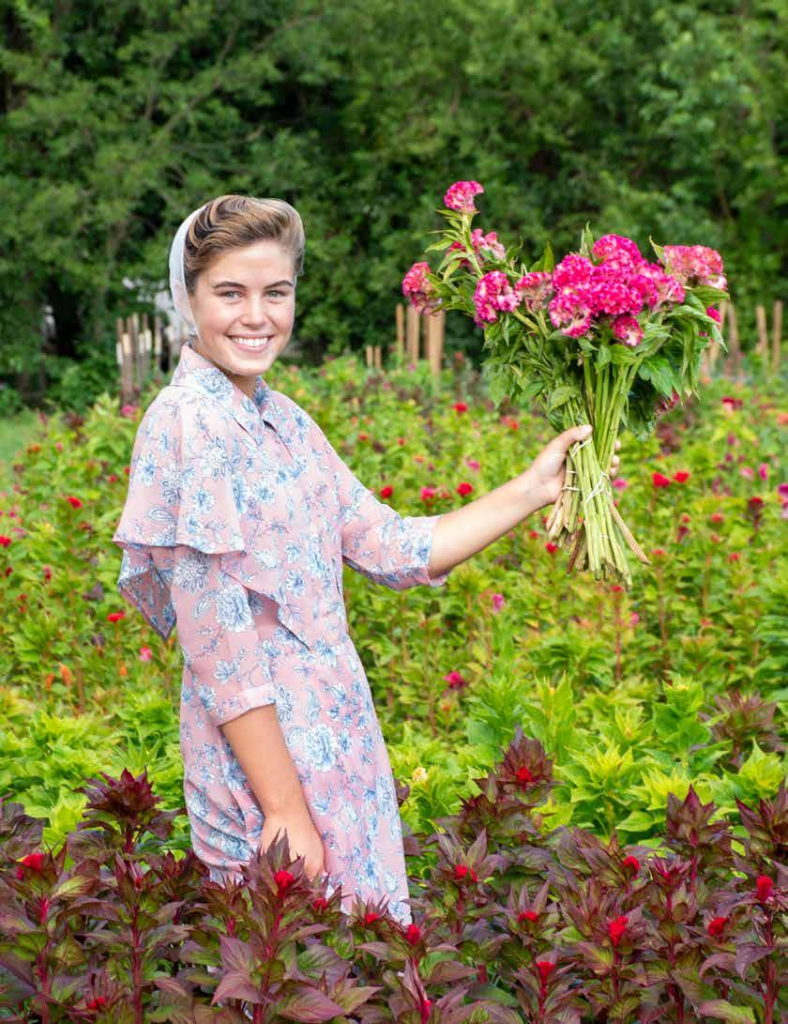
BY RADDNNA FIORINI
PHOTOS BY CLAIRE PETKOV
If clothes make the man, or woman, then current trends point to a wave of shoppers returning to their roots and stepping out in the clothes of generations past, choosing apparel that has stood the test of time.
Several locally owned vintage stores have popped up in Lafayette in the last two years, most of them downtown. The young store owners cite sustainability, quality and a disdain for fast fashion as motivating reasons for opening their businesses. Nostalgia also plays a big role for both owners and their customers.
Ella Seet, owner of Arondite Vintage on Columbia Street, has collected costume pieces and interesting clothing since she was a teenager involved in theater. She had a career as a stage actor in New York and worked in fashion merchandising in Chicago, all the while gathering beautiful clothing with a past.
About nine years ago, after moving to the Indianapolis area, she began selling some of her collection on the internet and eventually sold clothing, shoes, purses and costume jewelry at area pop-up markets. In 2023 she opened a store in Lafayette, convinced that college students would be interested in vintage apparel, she says.

Seet’s shop is in the City of Lafayette’s business incubator space at 619 Columbia St., where colorful dresses, pants and jackets from the 1980s, ’90s and what she describes as Y2K (early 2000s) vie for space with silk scarves, hats and shoes, along with a large collection of costume jewelry. Tucked in with items from the last 30 years are even older pieces, such as a pair of bright orange patent leather pumps from the ’60s.
While some people find the thought of wearing other people’s clothes “icky,” Seet believes everyone makes a statement with what they choose to wear, and where they choose to shop.
“I really want to help people understand that we’re connected to everything, and certainly to what we put on our bodies,” she says. “There is an energy attached to what we wear.” She expounded on that idea in a recent Facebook post:
“Vintage goods are not like new goods. They carry history and the hard lessons learned from it, they carry the hopes and triumphs of their previous owners, the inspiration of their designers, and the satisfaction of the people who made them, often by hand. They are alive with possibility. Perhaps for obvious reasons, I find the energy of new items, especially mass-produced ones, to be dull in comparison.”
And many younger people are entranced with the styles, and ethos, of the past. College students make up many of Seet’s customers.
I’m encouraged by the enthusiasm younger people have for history,” she says. “They grew up with technology and are eager for a time before. And they often are thinking about what we can do to improve our lives and the lives of others.”
While some of Seet’s carefully curated inventory comes from folks who walk in off the street bearing items from their grandmother’s closet, much of it comes from others in the vintage world with whom she has cultivated relationships. She gathers clothing and jewelry from across the country and even from international connections, and loves connecting customers with a special piece that has been waiting for them.
Cody Easter and Kaylee McCandless take the hunt for vintage clothes seriously. Their Main Street shop Rags to Riches is populated with apparel curated from Indiana, but they’ve also gone on cross-country buying trips. The couple opened their store in July 2023, after collecting vintage wares and deciding that finding new homes for old things would be their passionate pursuit.

The couple, who hail from the region and whose families had connections back to their middle school days, are committed to sustainability and promoting environmentally friendly ways of living, says Easter. Decrying the “billions of pounds of clothing” that end up in landfills every year, they search down country roads and out-of-the-way homesteads to bring home vintage gold.
Rags to Riches features lots of Purdue shirts, sweatshirts, jackets, plus concert and band shirts, sweaters, hats and other pop-culture themed apparel. Easter and McCandless are true “pickers,” driving through the country and stopping at farmhouses unannounced, offering to buy from the homeowners. After patrons began asking for western-style shirts, they went picking in several western states, coming home with about 200 pearl-snap shirts for the shop.
Both came from large families and say they grew up with hand-me-downs so have always seen the value in previously worn clothing. Easter points out that the fabric and construction of t-shirts from the ’90s and before is far more durable and comfortable than new clothing being sold today.
“We want to keep clothes alive for as long as we can,” he says. “The older pieces are often from natural fibers and each era has its own feel and fit. We encourage people to find their own era and what complements their body. We can help them do that.”
All clothing that comes into the shop is cleaned on site. Some of the apparel is distressed and carries the wear and tear of a lifetime of use, but Easter believes these pieces have a charm of their own, and some patrons are looking for that kind of authenticity in their wardrobe, he says.
But it’s not just vintage clothing shoppers are seeking. Jordan Taylor and Michael Jaeger offer older video games and consoles, collectible cards and toys, and even VHS tapes and CDs at Vintage Vault, their shop on Wabash Avenue. And the store also fosters community by being a meeting place for gamers.
Taylor opened the shop in August 2023 primarily with clothing, shoes and toys because his private collection had grown large.
“I’ve always had a knack for finding vintage clothes and selling things online,” he says. “I wanted a place that sold vintage but was also a place to hang out and have an experience.”
Jaeger’s private collection of video games and vintage toys also had expanded, and the two men saw an opportunity to combine their efforts, so Jaeger joined Vintage Vault in 2024.

“There’s certainly a nostalgia factor,” Jaeger says. “With vintage even certain smells transport you to your grandpa’s house. I can’t wait to see what comes in the door and then see who comes in and buys it.”
The men search flea markets and thrift stores for merchandise, buy from people who bring things to the shop, and even trade and barter store merchandise to fill the shelves. Vintage Vault specializes in streetwear, sports jerseys and Purdue gear, along with gaming merchandise and collectibles.
Lauren, Dustin and Viktor Miller, who hail from near Lebanon, were recent shoppers at the store, looking for Pokémon cards. All three are collectors and enjoy visiting different brick-and-mortar, locally owned stores in the region.
“It’s fun to see the video games I played as a kid; a real blast from the past,” says Lauren Miller. “I was also surprised by the clothing. I just realized I have money hanging in my closet at home!”
Vintage Vault hosts Pokémon tournaments every other Saturday and encourages people to stop by in the evenings to hang out and connect over games and conversation.
The newest downtown vintage store opened in February, also focusing on sportswear and pop culture. Broken Glass Thrifts, located on the second floor above Artists’ Own on Main Street, is the second store started by Austin Smith and Caleb Kennell. The young men began their vintage enterprise in Rossville after recognizing there were no retail outlets there catering to younger people.
“We’re excited to be in Lafayette now with the college students and the way the downtown is really booming,” says Smith. “Trends from the 1970s through the ʼ90s are coming back and people are interested in second-hand clothing, like the baggy pants that have come back in style.”
The store features a plethora of sports-themed shirts and jackets along with posters, VHS tapes and vinyl. Vintage pop culture is also represented with concert tour t-shirts and memorabilia. Smith acknowledges that vintage merchandise can be expensive, but he says Broken Glass Thrifts is committed to keeping prices affordable while finding new homes for much-loved older apparel.
You don’t have to go downtown to find the classics. Even the local home of fast fashion hosts a vintage store, Yette Thrifts, located at Tippecanoe Mall. Keaton Schreckengast and Brooke Bradford opened the store in August 2023, after Schreckengast’s hobby of collecting ramped up during the pandemic.
“I needed something to do with it, and I love to meet people,” he says. “It’s a lot of fun growing a small business,” adding that he finds merchandise at garage sales, thrift stores and just by offering to buy clothing off someone’s back.
A lot of people are looking for apparel from the ʼ90s because of the nostalgia factor and quality of fabrics, he says. But some of his most prized finds are from much longer ago. His grandmother gave him her senior cords (corduroy pants that were hand-decorated to commemorate a high school or college student’s senior year) from the 1960s, and Schreckengast has since been on the hunt for more, since each pair is unique and tells a story about the original owner.
Yette Thrifts also has a collection of sports memorabilia and artwork, from football to NASCAR merchandise. Carhartt and denim jackets are popular along with wind breakers and jogging suits.
And, by the way, the store name is derived from the last five letters of Schreckengast’s hometown, not from the name of a mythical hairy creature. This playful spirit, love for people and a longing for times past is emblematic of all these store owners. When you stop by to shop, plan to stay awhile and chew the fat about the good old days.
BY GREG LINDBERG
For more than a decade now, the DRT Summit has brought together community members, organizations and civic and business leaders to explore issues of diversity, inclusion and connections.
“The DRT Summit is now in its 12th year and has been a biennial tradition since 2003,” says Steph Rambo, Summit Committee co-chair. “The theme of each Summit differs from year to year but traditionally brings in a speaker that has enriched the community’s knowledge and offered an opportunity for community networking and skill-building.”
The theme of this year’s event is a spotlight on the empathetic traits in harnessing a strong culture of inclusion. Guest speaker Kwame Christian, Esq., M.A., will incorporate this message and lead the discussion on how various conflicts can confidently be challenged and embraced through compassion.
The DRT Summit in Lafayette is dedicated to fostering diversity, equity and inclusion within the community. Launched in 2003 following a community visioning project called Vision 2020, the first Summit was held in April of that year. This led to the establishment of the DRT Summit. Since then, the DRT has met monthly, and organizers have held the Summit every two years, marking its 10th Summit in 2021.

The DRT operates as a committee under Greater Lafayette Commerce, providing leadership and promoting strategies to achieve a culture that values diversity. Its mission focuses on encouraging access, equity and respect for all, addressing conditions of prejudice and discrimination within the community.
This year’s committee consists of Steph Rambo; Katy Travis, Summit Committee co-chair; and Ebony Barrett, DRT Steering Committee Liaison. Every team member works to provide an engaging and impactful event full of problem solving techniques to better enhance communication between all constituents throughout Greater Lafayette.
Barrett says, “Every Summit has had a different flavor to it. This is what makes the DRT Summit so special. We truly are inviting people from all walks of life to lead, participate and discuss what is most important when we think about cultivating a culture of inclusion in the Greater Lafayette community.”
She continues, “The main takeaway is connection. Attendees can meet others to connect their passion and work. There is information and resource sharing ultimately resulting in collaboration. We have seen spinoffs of groups that continue their conversations and move into action.”
This year’s DRT Summit is scheduled for Thursday, April 24. The event aims to bring together business leaders, nonprofit leaders, community volunteers and advocates to create spaces where every voice is heard, respected and valued. Featured speaker Kwame Christian will set the tone by inspiring attendees to embrace compassionate curiosity and engage in meaningful conversations about diversity and inclusion.
Christian is a renowned author, business lawyer and the CEO of the American Negotiation Institute (ANI). His TEDx-Dayton talk gained viral attention, paving the way for the release of his best-selling book, “Finding Confidence in Conflict: How to Negotiate Anything and Live Your Best Life,” in 2018. In addition to his writing, Kwame contributes regularly to Forbes and hosts the globally popular podcast Negotiate Anything, which has surpassed five million downloads. Under his leadership, ANI has helped numerous Fortune 500 companies master negotiation techniques to drive corporate success.
Christian’s accomplishments have been widely recognized. He received the John Glenn College of Public Affairs Young Alumni Achievement Award in 2020 and the Moritz College of Law Outstanding Recent Alumnus Award in 2021 — making him the only person in The Ohio State University’s history to earn consecutive alumni awards from both the law school and the Master of Public Affairs program. Rambo says of the Summit, “We are fortunate to live in a community where our leaders appreciate the rich diversity of Greater Lafayette and actively engage in meaningful conversations to create a stronger, more inclusive future.”
When looking at future summits, Rambo says the committee would like to see, “the meaningful connections and initiatives made at the 2025 Summit build, and for future summits to support those gains.”
Learning objectives for the 2025 Summit include developing skills for respectful communication, gaining practical tools to foster inclusive environments, understanding the importance of compassionate curiosity, overcoming the fear of misspeaking and empowering leaders to inspire positive change. The event also offers donation options to make it more accessible, supporting student-priced tickets and providing financial assistance to those in need.
Rambo says this year’s Summit will draw in community partners, such as the United Way, that will be able to use the Summit to build on initiatives and conversations those organizations are already having. Through these summits and ongoing initiatives, the DRT and Greater Lafayette Commerce continue to work toward inclusion by encouraging access, equity and respect for all members of the Greater Lafayette community.
For more information, go to greaterlafayettecommerce.com. ★
BY KAT BRAZ
PHOTOS PROVIDED
The historic Purdue Memorial Union, built in 1924 as a memorial to students who served in World War I, has stood faithfully while generations of Boilermakers, visitors and residents whirl by. The Union Club Hotel was added in 1929 and began as a small 60-room affair to meet the need for guest lodging. Even after several additions, the iconic landmarks look basically the same on the outside as they did 100 years ago. Here lies the rub, nay, the sweet surprise. What was old inside is now made new in every way, every excellent way, that it bears a revisiting.
The Union Club Hotel
at Purdue University is part of Marriott’s distinctive Autograph Collection. Only 200 independently owned boutique hotels in the world carry that distinction, which denotes being the best in upscale, luxurious accommodations. It is the first student-run hotel in Marriot’s Autograph Collection. Famed hotelier Bruce White, former Purdue trustee and founder and chairman of the industry-leading hotel company White Lodging, gifted $30 million to Purdue in 2018 to launch the modernization of the historic property, which reopened in 2020. His gift transformed the Union Club Hotel into a world-class destination, while also providing a learning laboratory environment with training and internships for Purdue hospitality students.
The décor in the guest rooms, lobby and restaurants in the redesigned hotel’s interior reflects the spirit of Purdue’s legacy of innovation and celebrated alumni. Classy, curated collections of Purdue memorabilia and symbolism, the black and gold color scheme, and historic books and photographs stimulate the senses, while the signature scent throughout adds another sensory layer to the experience. The beautiful furnishings and surroundings send welcoming messages to guests who unmistakably know they have arrived in Boilermaker Country.
Voted as 2024’s Travel and Leisure Magazine Top 500 Hotels in the World by readers’ ranking, the Union Club was the only university hotel that made the list. Only 200 winners came from the United States; it was the only one in Indiana on the list. The four-star hotel’s 182 rooms fill quickly during sports and commencement weekends. However, you can still enjoy the Union Club Hotel’s excellent restaurants and new spa facilities without an overnight stay.
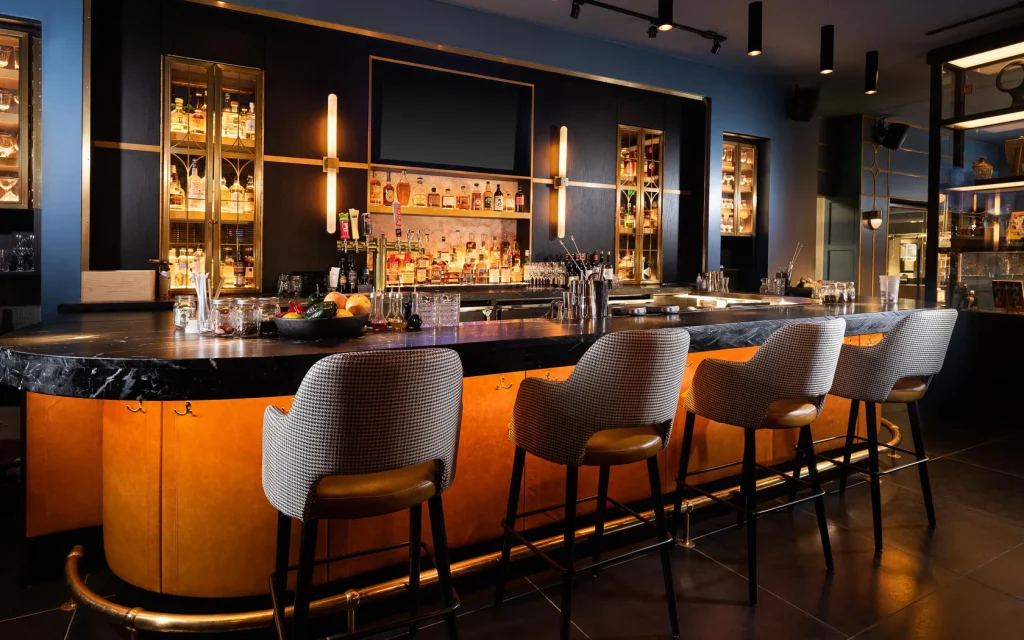

8Eleven Modern Bistro
A stellar tribute to space flight and its command pilot and Purdue alumnus Neil Armstrong, the 8Eleven was named after two of his NASA space missions, Gemini 8 and Apollo 11. Star-studded seasonal ingredients inspire the restaurant’s delicious American and French favorites. The drinks menu includes an impressive collection of premium and reserve list spirits, wines by the region, and seasonal cocktails. Enjoy breakfast, lunch, brunch, dinner or dessert for a memorable dining experience created by Executive Chef Jack Mahoney. 8Eleven is the ultimate dining destination for celebrating special occasions, to wow clients or job candidates or to indulge in dining and customer service excellence. Reservations recommended. For hours and reservations: 8elevenbistro.com
Boiler Up Bar
Treat yourself to Purdue’s most refined cocktail lounge. Boiler Up Bar honors treasured traditions and iconic alumni in a relaxing, sophisticated atmosphere. Enjoy a rotating selection of draft and local craft beers, small-batch bourbons and whiskeys or classic cocktails. The Signature Old Fashioned is a fan favorite. Nosh on tastefully prepared appetizers and drinks before or after the game or with friends after work. Open daily: 11 a.m.-12 a.m.
Leaps Coffee
Surpassing coffee chain establishments by leaps and bounds, Leaps Coffee is all about connecting with its customers through delicious coffees, teas, smoothies, made-in-house pastries and sweet treats. Talented baristas brew beautiful morning and afternoon respites every day in the Union Club Hotel. Enjoy Free Cookie Thursday with the purchase of a drink, or a half-priced pastry from 5-6 p.m. every day with a beverage purchase. Open daily: 7 a.m.-6 p.m. ★
Discover the hidden gems throughout the Union Club Hotel and Purdue Memorial Union. Bowling, e-sport gaming and restaurants abound. See the events calendar to attend cooking classes, concerts, films and much more. Purdue hospitality extends beyond the campus to touch all who visit its treasures. For more details visit: union.purdue.edu/events
BY GREG LINDBERG
PHOTOS PROVIDED
Since 1993, Greater Lafayette Commerce has been selecting Small Business of the Year winners, and this year Express Employment Professionals was selected due to its prominence and success within the Greater Lafayette community for the 2024 year. Notably, Express Employment Professionals originally won Small Business of the Month in August 2023.
The success in 2024 can be attributed to the exceedingly passionate staff and leadership of owner Chuck Fish and director of operations Katie Westfall. The local effort of the company can be credited to meeting the goals and fulfilling the company’s mission statement:
“Our mission is to honor the unique value of every applicant, associate, and client, fostering an environment that enhances the quality of life and business success for all.”
In response to winning Small Business of the Year, Westfall says, “We were truly excited and honored to receive the notification. It brought a deep sense of satisfaction and accomplishment, knowing that we were meeting the needs of our community and making a positive impact in the Greater Lafayette area.”
Fish and Westfall state that several key changes in the organization helped improve service, including enhancing recruitment and training processes to ensure that Express Employment Professionals consistently matched the right talent with the right clients. It also has invested in new advanced technology that has helped the business to “streamline communication, improve efficiency and better track performance,” according to Westfall.


Westfall adds that improvements also have occurred that focus on fostering a culture of collaboration and accountability. This effort has promoted continuous improvement, making sure the team stays motivated and united with the needs of the clients.
These various changes have permitted Express Employment Professionals to provide exceptional service and generate a meaningful impact in the community. Westfall adds, “Express Employment Professionals of Lafayette plays a vital role in supporting the Greater Lafayette community by connecting businesses with reliable, skilled talent and providing job opportunities to individuals.”
One main goal of the staffing agency has been to fill the gap between employers’ needs and the skills of those seeking jobs. These employment solutions allow Express Employment Professionals to contribute to all local businesses and permit candidates to build a career that is impactful and meaningful to them.
“We are committed to improving the overall quality of life in the Greater Lafayette area by fostering a strong workforce, promoting community development and being a trusted partner to both employers and job seekers,” Westfall says.
The company’s future goals include expanding the reach throughout Greater Lafayette to assist even more businesses and job seekers. Westfall emphasizes they also want to skillfully maintain their commitment to personalized, high-quality service.
With technological advances that will continue to improve the recruitment process, Express Employment Professionals can better ensure connections with top talent that will be given the most appropriate opportunities based on their skills and background. With the addition of expanding to more specialized markets, Westfall says their main goal is to “continue being a trusted partner in driving local economic growth and helping individuals build successful careers.”
Westfall and Fish are grateful to Greater Lafayette Commerce for awarding the company Small Business of the Year.
“This recognition is an honor, and we are incredibly thankful for the opportunity to contribute to the growth and success of our community,” Westfall says. “We are proud to be part of such a vibrant and supportive network of local businesses, and we look forward to continuing our work to make a positive impact in the Greater Lafayette area. Thank you for your continued support and partnership.” ★
Express Employment Professionals has been operating globally since 1983 but started providing job placement and work solutions in Greater Lafayette in 2002. The Lafayette branch is located at 2200 Scott St., Lafayette. Call Express Employment Professionals at 765-449-5200 for pricing, hours and directions.
BY CINDY GERLACH
PHOTOS BY CHRSTINE PETKOV
Every community has its landmarks, those businesses that define them. For West Lafayette, Bruno’s Pizza is one of those institutions. For nearly 70 years, the name Bruno’s has meant pizza, Bruno Dough, beer and Swiss favorites with a local twist.
But it’s more than a restaurant. Bruno’s is a sense of place. Bruno’s is, first and foremost, about family. It’s about community, about nostalgia. And Bruno’s wants everyone to share in that feeling.
The West Lafayette pizza place is an institution. Bruno Itin, Sr. opened the original Bruno’s Swiss Inn in 1955 at the corner of what is now State Street and North River Road. Expansion of that intersection back in the late ’90s forced the demolition of the original building, with a replacement opening across the way at Brown Street and Howard Avenue.
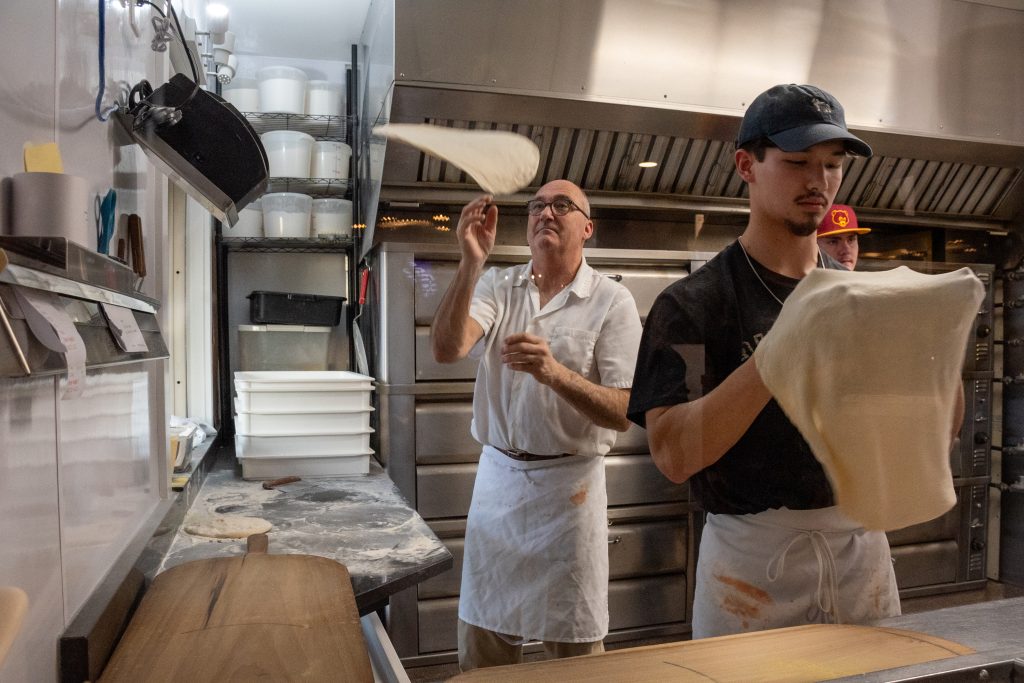
Now, with that space being ceded to plans by an Indianapolis developer, it’s moved on to yet a third iteration of the Swiss-inspired pizza chalet, this time at 2512 Covington St. in West Lafayette, next door to Brokerage Brewery.
And full restaurant operations have been handed down to a new generation of the Itin family, with Bruno Itin, Jr.’s daughters Holly Beattie, Krista Rodriguez and Angela McDonald taking the helm.
For the sisters, who grew up immersed in the atmosphere of Bruno’s, it’s the natural place for them to land. Because for the sisters, Bruno’s is all about a family legacy.
When Bruno’s closed its doors in February 2024, the sisters really thought that this second closing of the doors might be it.
“There was a real moment in time where it felt like a real possibility that Bruno’s might be done,” Beattie says. “It still gives me chills even thinking about that. Because I remember those feelings and that last day of working and thinking this is the last pizza that we’re going to make.
“Change is hard. Those last weeks at 212 [Brown St.] were really difficult. We knew what was happening and there were tears. You could just feel a sense of sadness. And I think that moving into this transition, there was always this feeling of, how can we ever recreate that? And in some ways, you can’t. There are just some things in life that cannot be recreated. But they can be honored.”
“We never gave up hope, though,” Rodriguez chimes in.
The family was open to a new location. But so many pieces had to fall into place to find something suitable. They were alerted to the possibility on Covington Street, but it took some time for the deal to come together.
“We had been looking for a place,” Beattie recalls. “But the right thing had not come up. And it seemed like every road wasn’t the right road. And the last thing we wanted to do was get into something … you can’t force these things. We closed on a Wednesday, and on Friday got the call.
“The space had possibilities. We could add a pizza kitchen. There were weeks of ‘Can it fit? Can we get our pizza oven in there? Can we make it functional?’ And we did.”
“We wanted to find something that would be a good fit for Bruno’s,” Rodriguez says. “There are certainly a lot of options around town. But we really wanted the neighborhood feel. Something unique, something a little bit different, personal, something that would be easily accessible for the community, with parking. Proximity to where people live and work. So, we’re really excited about being here.”
It’s been fun, they say, recreating a beloved eatery in a new location. There are, naturally, challenges. They brought over as much from the old place as possible – tables and chairs, light fixtures, memorabilia, stained glass — even the pizza ovens. But as anyone who has ever moved can attest, not everything fit just right, so there have been adjustments.

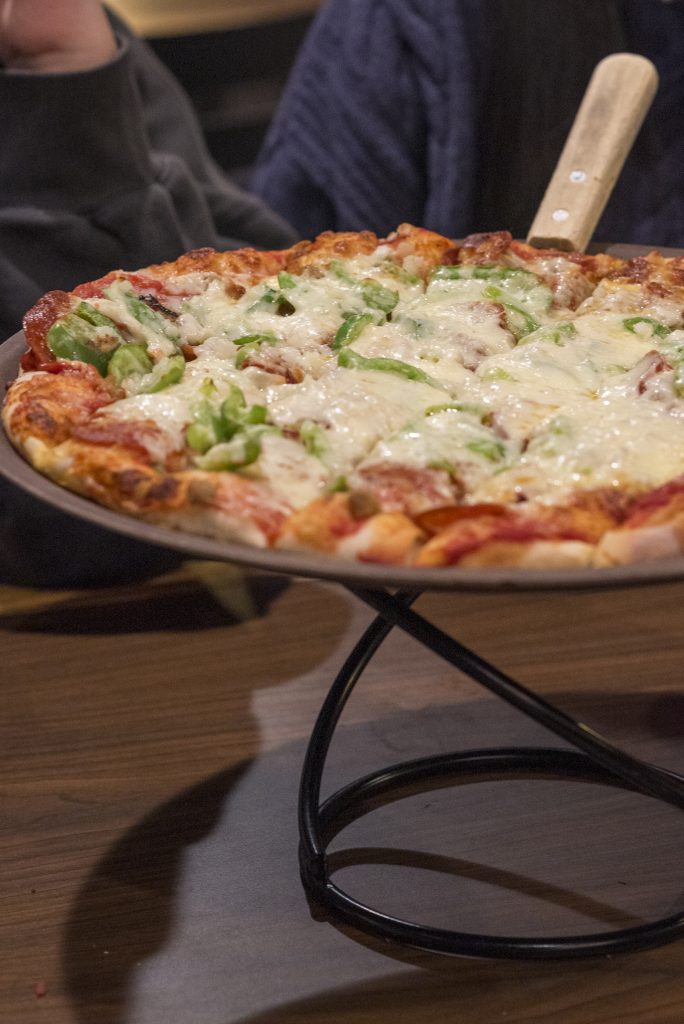
One of the biggest challenges is the dining room. The former dining room seated 275 people; the current one now seats only about 50. Only a portion of Bruno’s famed sports memorabilia collection is on display.
“The size is the biggest difference,” Beattie says. “A lot of people in the community could come to Bruno’s and there was always a table. There was this welcoming feeling of ‘bring the team, bring the family, there’s room for everyone.’ And we still have that, just on a smaller scale.”
They have worked to come up with creative solutions. The foyer is not large enough to accommodate dozens of people waiting to pick up a pizza. The answer? Send them next door to sit at Brokerage Brewery and have a beer while they wait; a text message lets them know when the pizza is ready. Or they can get their pizza to go and eat it at Brokerage.
“So many people say they can walk up or maybe they live close by and they’ll order a pizza for carry-out and go next door and enjoy a beverage while they wait for it,” Rodriguez says. “It’s been so much fun to see people enjoying themselves.”
It’s been a fun collaboration, they say, establishing a partnership with Brokerage. The two local, family-owned businesses blend well together. And Brokerage has even crafted a Bruno’s Swiss lager.
“It was released on our opening day,” Rodriguez says. “We also serve it on draft. Switzerland is near and dear to our heart and our history. It’s kind of fun to see that merge together.”
And Bruno’s responded in kind, adding a Brokerage pizza to its menu, featuring pulled pork, red onions and a beer cheese drizzle.
“It has gone over really well,” Rodriguez says. “It’s just one other nice way that we complement each other.”
The Itin sisters feel as if they’re home again. With the support of their dad and familiar employees, they can look out at the restaurant on any given night, regular customers at the tables, and feel comfortable with the transition.
“We’ve been so fortunate to have employees return that worked with our grandfather at the original location,” Rodriguez says. “So, they’ve been with Bruno’s over 40 years. And many others, 20-plus years. It was incredible, on opening night, to look around and see all these employees who’ve been around, who really we grew up with. They’ve been around our whole life. It really does feel like a team.”

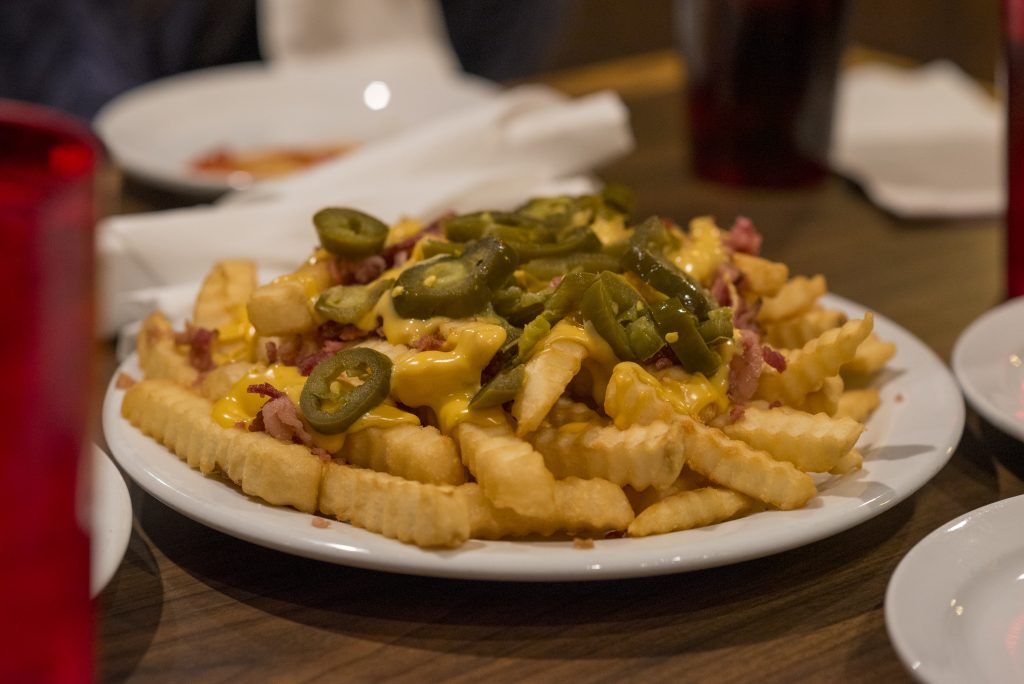
Management has passed to the younger group. And they could not be happier — even if working at the family restaurant was not always in their plans.
“When my own children were little, I left and did some different things, but there was always a part of me that had hoped to be in this position someday,” Rodriguez says.
McDonald adds, “I tried to find something else, but I just kept coming back.”
Recreating the magic of Bruno’s has brought the sisters great satisfaction. Running a restaurant is hard work — that’s undeniable, they say. But the rewards make it worthwhile. Seeing happy families — generation upon generation — enjoying themselves in a new place that still feels familiar brings them joy.
“I enjoy what I do and it’s great to be able to do it with family,” Rodriguez says. “And to get back to seeing all our regular customers that we’ve missed while we were closed.”
The feedback from customers has made it clear, too, that this new version of the restaurant is wanted. And they’re pleased to be able to bring it back to life.
“It’s always been such a special place, not just for our family but for our customers and the community,” Beattie says. “And that’s one of my favorite things, hearing from customers, whether it’s their first date or an anniversary dinner or a birthday celebration, even end-of-life celebrations, that people choose to spend their time at Bruno’s. It just makes it so special.
“It makes it feel like it’s not work. It’s just something we really enjoy.” ★
BY AMY LONG
PHOTOS BY CHRISTINE PETKOV
As a Purdue University student in the 1950s, Avrum Gray was so busy with mechanical engineering classes that he had very little time for the arts and humanities.
“I think I must have had two, maybe three, liberal arts courses in four years,” says Gray, who graduated with an ME degree in 1956. “You were immersed in engineering. That’s the way it was.”
Today, nearly seven decades after his graduation from Purdue, a high-profile gift from Gray to the university’s College of Liberal Arts – a collection of 74 bronze sculptures by the French impressionist Edgar Degas – has the potential to change the way students across colleges, disciplines and majors engage with the arts on campus.

The gift, which was announced by Purdue in February 2023, is valued at more than $21 million, with a market value of as much as $52 million and represents the largest gift in the history of the College of Liberal Arts. It immediately elevated the profile of Purdue Galleries, which is now one of the world’s premiere repositories of Degas’ artwork.
The collection – which includes “La Petite Danseuse de Quatorze Ans (Little Dancer, Aged Fourteen),” one of the artist’s most iconic works – went on view to the public in September in a new, specially designed gallery in the Purdue Memorial Union. The opening was accompanied by much fanfare and even international publicity, as it is believed to be the only complete collection of Degas sculptures currently on display anywhere in the world.
“This would be a significant contribution to most museums or collections. And for us, it’s a game-changer,” said Arne Flaten, head of Purdue’s Patti and Rusty Rueff School of Design, Art, and Performance and professor of art history, in September, when the exhibition opened. That it has been given to Purdue University – an institution known for its STEM programs, and the only Big Ten institution without an art museum – is particularly notable.
“Art at Purdue will thrive as an essential dimension of a leading institution of higher learning,” Purdue President Mung Chiang said in a statement. “The visionary generosity from Av Gray brings the largest collection of Degas sculptures to our campus, and we are truly excited about the transformational impact to the creation of beauty by Boilermakers.”
Edgar Degas, 1834-1917
A French impressionist artist active in the late 19th century, Degas is renowned for his depictions of modern urban life – including ballet classes, dance performances and horse races. Though he is known primarily for his pastel drawings and oil paintings, Degas also created 150 small wax, clay and plaster sculptures – representations of dancers and horses and studies of the human body – that were discovered in his studio after his death in 1917. In Degas’ lifetime, only the sculpture called “Little Dancer” was ever displayed. The rest of the figures were working models that, like some artists’ rough sketches, were never intended to be viewed by
the public.
“Scholars think that he was making this set of sculptures to inform his two-dimensional work,” says Erika Kvam, Purdue Galleries director and head curator. In forming the sculptures, the artist could study movement or musculature before he ever put his brush to canvas, and by posing them he could observe the play of light and shadow over the lines and curves.
After his death, Degas’ heirs elected to commission bronzes of 74 of these sculptures – choosing the figures that were most complete or most representative of his work. Starting in 1919, a limited edition of 22 sets were cast by the Hébrard Foundry in Paris. One of those sets is now in the collection of the Metropolitan Museum in New York.
Decades later, in the 1990s, the plaster casts for the sculptures were rediscovered, and 29 more sets were produced by the Valsuani Foundry in France, and it is one of these sets that was eventually purchased by the collector Avrum Gray.
‘I got the bug’
After graduating from Purdue in 1956, Gray served as a second lieutenant in the United States Army before returning home to Glencoe, Illinois, to begin a job in automotive manufacturing – a career that lasted 25 years. A second career as an executive in money management and venture capitalism lasted another 25 years.
“I was sort of a workaholic,” Gray says.
Through the years, Gray maintained a relationship with his alma mater. In 2006, Gray and his wife established the Avrum and Joyce Gray Directorship in Purdue’s Burton D. Morgan Center for Entrepreneurship. In 2019, Gray was honored with Purdue’s Outstanding Mechanical Engineer Award.
Gray began building his art collection not long after his graduation from Purdue, as a young professional.
“I got the bug and was able to act on it,” says Gray, who had an eye for impressionist and early modern artwork, including works by Picasso, Monet and Kandinsky. “What I could afford were works on paper, so I found ones I liked, and I bought them.”
About 15 years ago, Gray purchased a complete set of Degas bronze sculptures through an art dealer. He displayed a few pieces, including “Little Dancer,” in his home, and kept the rest in storage.
“I mean, where do you put 74 pieces?” Gray chuckles. “Believe me, my house wasn’t big enough.”
Now, at age 89, Gray is taking care to ensure that his art collection will be cared for and accessible to future generations. He chose Purdue as the beneficiary of the Degas sculptures because he felt confident that they would have more impact on campus than at a renowned art museum.
“One of the difficulties with many of the museums – including the Art Institute [of Chicago], which I’m familiar with – is they have so much art, but they only have so many walls,” Gray says. “And in their sub-sub-basements, or wherever they keep their extra stuff, they’ve got enough art to fill up two or three institutions.
“I wanted the art to be seen,” Gray continues. “To me, art should be enjoyed by people. And to have it go to some place that’ll put it in the basement and take it out every five years or something – that just didn’t feel right to me.”
Discussions with Purdue officials about the gift began in earnest in 2021. As the two parties worked to finalize the arrangement, Gray made it clear that he wanted to keep the collection intact, and that he would love to see the sculptures displayed together. Although in policy and practice, museums and other institutions do not usually accept gifts with conditions, university administrators and faculty members involved in the talks took his wishes into consideration.
“Av said, ‘I would really love to see this collection all together, all at once, even just for a week, even just for a day. That’s really important to me,’ ” Kvam recalls. At his home, “he had never been able to get it all out, to have it on display for a length of time. So that was kind of the guiding principle.”
An earthquake during the eclipse during the blue moon
From the beginning, Kvam says, Purdue administrators were on board, offering resources and support as Purdue Galleries prepared to receive and display the collection.
“We could not have been more supported by both the college and the President’s office,” Kvam says.
Without a dedicated art museum, Purdue had no existing gallery space ready to display the Degas collection. Various campus locations were considered for the exhibition, but, according to Kvam, Purdue President Chiang insisted that they use a space on the second floor of the Purdue Memorial Union – arguably the most visible and accessible building on campus.
“Essentially he said, ‘No, we’re not going to put this in some random building on campus. I want this in the Union. You can have the Sagamore Room,’ ” she recalls.
Kvam describes the opportunity to transform what was once a dark, wood-paneled faculty dining room into a light-filled showcase for celebrated artwork as a once-in-a-lifetime opportunity.
“This sort of planning is not something that happens in one’s museum career. This is something like an earthquake happening during an eclipse during the blue moon, to be able to design the space around a collection of this caliber,” says Kvam, who, along with assistant professor of interior design Laura Bittner, was given “an incredibly healthy budget” to dream up a gallery space, from the tiles on the floor to the overhead lighting. “There was no road map. There was no person I could call and say, ‘Can you tell me how you did this?’ because it’s just not something that happens all that often.”
The Degas exhibition opened to the public on Sept. 18 in Room 231 of the Purdue Memorial Union, with the iconic “Little Dancer,” standing 39 inches high and wearing a sleeveless bodice and cloth tutu, prominently displayed near the entrance. The other sculptures – representing different themes found in Degas’ work, including dancers, bathers and horses – are arrayed in custom-designed cases at various heights throughout the gallery, so that they can be visible at once from a single vantage point.
Closer inspection reveals scratches from the artist’s tools, pinch marks from his fingers, and the wire armature undergirding the figures and makes it clear that Degas’ original sculptures were all in different stages of completion. Three sculptures arranged in the same display case, for instance, show dancers in identical poses: limbs stretched, muscles taught. But while one sculpture is very rough and almost rudimentary, the second and third are subsequently more polished, with details more finely rendered, as if the artist was practicing, reworking and refining his process with each attempt.
“This is, to our knowledge, the only display of all 74 of his sculptures all together in a single gallery. And that is extraordinary in and of itself,” Kvam says. “But I think that the fact that it is so accessible to our visitors – it’s in the PMU, right upstairs from the atrium and the big map – tells them how much importance is placed on this collection.”
“You can go to the Guggenheim and there will be a handful of these kinds of things on display, and you can go to other places for a few of them, but you really don’t ever get to see all of them anywhere. And this is the only complete collection of them in the Western Hemisphere,” Flaten says. “So, this was a really sort of exciting opportunity for a place like Purdue University to really double down on doing it right.”
‘Leaps and bounds’
Indeed, the exhibition has attracted a lot of attention to the university and helps to put Purdue on the map not just as an excellent engineering and STEM-based school, but also as a destination for arts and culture.
“A lot of people come here thinking about Neil Armstrong and Amelia Earhart, and now there are other reasons to think about Purdue,” Flaten says.
In November, Kate Saragosa traveled from Melrose, Mass., to West Lafayette for Fall Family Weekend. Her son, Adam, enrolled as a freshman earlier in the fall and plans to major in statistics. The weekend’s busy schedule included a football game, campus tours and dinners out, but Saragosa made sure also to fit in a visit to the Degas exhibition, which she learned about in a “Purdue News Weekly” newsletter.
“I was very excited, because I’ve always been a huge Degas fan,” says Saragosa, who then posted about the exhibition on social media. “I was excited to tell friends that Purdue has this Degas exhibit. It definitely is a special, unique addition that they’re very lucky to have. It’s something to add to the pride of Purdue.”
Flaten emphasizes that the exhibition is not the end-all, but rather a step in the right direction. The Degas collection, while exciting and ground-breaking on its own, also helps to boost awareness and increase visibility of Purdue’s other arts and culture programs and offerings.
“Purdue has been playing catch-up in the arts, and I don’t think that Purdue’s mission should ever be to sacrifice one for the other,” Flaten says. “Purdue is big enough and strong enough and so well known that you don’t have to give up on one to be excellent in the other. And that’s sort of where we’re moving right now – to be excellent in all these areas.”
Abby Zickmund, a 2023 Purdue graduate in visual communication design, visited the Degas exhibition in November. To her, the collection represents a shift in priorities at Purdue.
“Purdue dominates the world of STEM in many areas. As an art student, or any student not in STEM, it was easy to feel left behind,” Zickmund says. “The Degas Collection on display puts the studio arts and technology program and the College of Liberal Arts on display. The hard efforts and brilliant teachers in the college will not easily be forgotten after this successful collection and gallery opening.”
Some are hopeful that the Degas acquisition takes the university one step closer to realizing the dream of a university art museum.
“The Degas collection helps us move in that direction,” Flaten says. “In and of itself, it’s terrific as it is. But the implications of where it could lead us down the road, if we’re patient and we’re focused, could be really exciting.”
“Basically, this collection deserves to be in a museum,” Kvam says. “I think that it has put Purdue Galleries and our permanent collection on the radar of more people than we have ever been on before. Therefore, we are leaps and bounds closer to possibly having a museum than we have been before. I am hopeful that enough people are recognizing that, firstly, Purdue is the only Big Ten institution without a museum, and secondly, that this is actually a possibility for us. Hopefully we will be considered when the next building is being planned or strategic plan is being drawn up.”
For the time being, though, any talk about a Purdue University art museum is merely hope and speculation. And any realization of that dream would be years in the future. In the meantime, the Degas exhibition will be on view in the Purdue Memorial Union through at least the end of the year. Although Purdue Galleries’ lease on the space expires in December, Kvam says she is “cautiously optimistic” that funding will come through to keep the exhibition there indefinitely. If not, she says, she is considering options for relocating the collection.
“It’s such a beautiful space and so much time and money and energy was put into making that happen. It would be hard for me to imagine that that’s going away anytime soon,” Flaten says.
‘You still have to fail’

The fact that the Degas collection does not have a permanent home on campus does not mean that it doesn’t belong at Purdue, Kvam stresses. As the recipient of a renowned collection of Degas sculpture, the university was an unconventional choice. At the same time, it’s a very natural fit, she says.
“It is surprising that it is here, but it is quite obviously beneficial to this particular campus. I think that it may have had an impact at someplace like the art institute or the Met. But because it’s so unexpected here, it actually has a greater impact in the lives of our campus and our community.”
Flaten suggests that there are many different ways that students can engage with the artwork within their majors. Kinesiology majors can study the musculature and movement of the dancers. Chemistry students can analyze the make-up of the bronze medium. Computer science students can practice 3D modeling of the figures. “Hopefully there will be an opportunity to start slowly, bringing in other parts of the campus to collaborate on different ways that these can be used and studied and catalogued,” he says.
If nothing else, the collection can inspire all scholars to think like artists, Kvam says. The exhibition reveals just how much study and effort and practice and failure go into the act of creation.
“A lot of people just kind of assume that artwork is either there, or it’s not; you are either an artist, or you’re not; you’re creative, or you just don’t have that. And the fact of the matter is that even if you are a world-renowned artist, you still have to practice and practice and practice. And you still have to fail. And you still have to figure out why you failed. And you still have to go through and learn.”
And, in the words of the donor, Avrum Gray: “You’ve got to broaden your education. For Purdue students to see a different side of the world by seeing art – I think it’s the right thing.” ★
BY KEN THOMPSON
PHOTOS PROVIDED
As Greater Lafayette grows, so does the need for affordable housing.
A handful of projects are underway to alleviate that necessity. Some repurpose land that once was home to a high school and a hospital. Another will bring new life to a historic block in downtown Lafayette. A fourth project will reside in the heart of southside Lafayette business and recreational areas.
Anvil 26 Apartments
After sitting unused for several years, a parcel located at the former Home Hospital site on S. 26th Street has been tapped as the location for the latest venture from Iron Men Properties.
“This site is perfectly located in the heart of the healthy east side of Lafayette with access to Columbian Park, Murdock Park and the businesses and retail outlets along State Road 26,” says Joe Blake, co-owner of Iron Men Properties. “The mission of Iron Men Properties is to look for opportunities to invest in ways that will benefit communities and encourage additional investment.”

Anvil 26 will have 79 units with a mix of studio, one-bedroom and two bed/two bath apartments. A garage will be provided under the apartments in addition to street-level parking behind the apartments.
Blake says prices for the units are yet to be established but he promises the rates will be similar to other new apartment projects in Lafayette.
“We expect that this property will appeal to Purdue and Ivy Tech students as well as senior citizens looking to downsize,” Blake says. “The building will be a nice place to live – nice finishes, great location, attentive management – an overall pleasant home.”
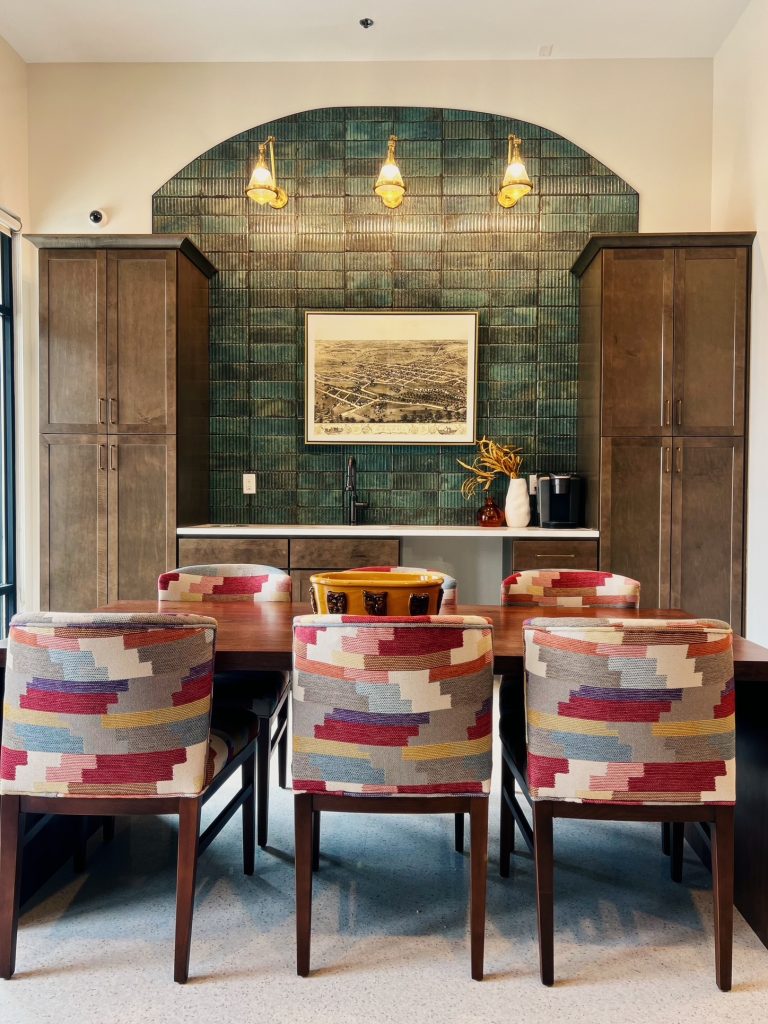
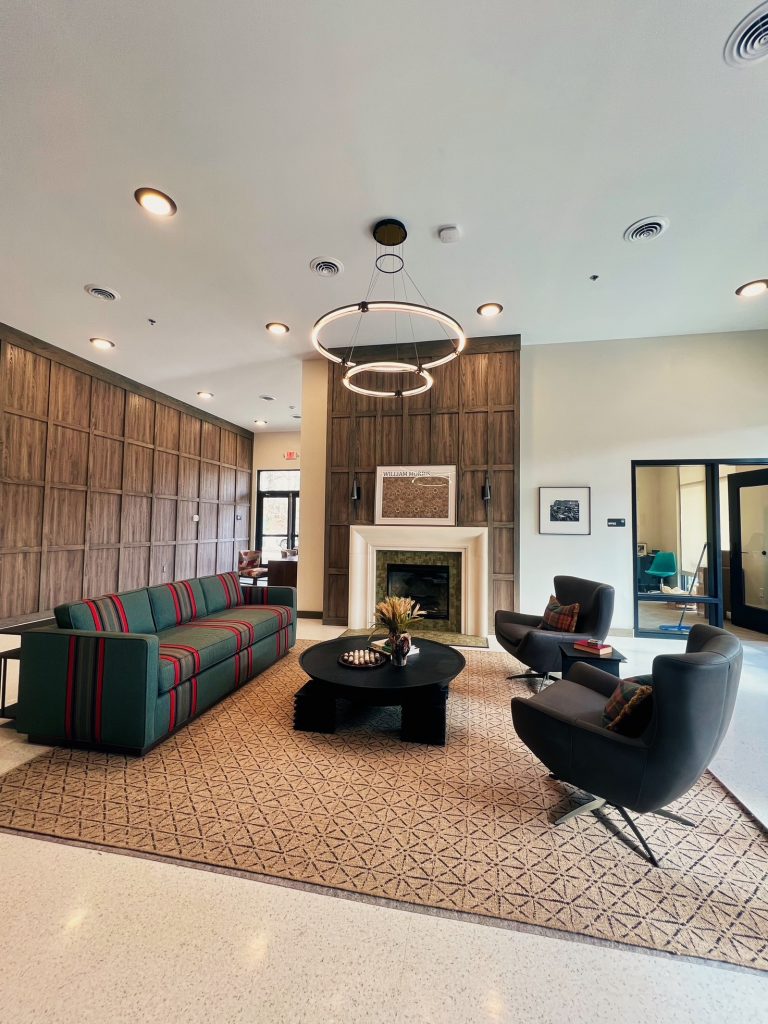
Blake says the plan is for construction to begin this winter with a projected completion date of spring/summer 2026.
“We want to add something to this corner that will be a source of pride for the community for decades to come,” he says. “I hope that we have the privilege of doing many more projects in Lafayette.”
The Jeffersonian
The Jefferson Historic District will be the site of another apartment building from Homestead Resources, which developed the Historic Jeff Senior Centre Apartments on the former high school site off N. Ninth Street.
“The Jeffersonian was an extension of our affordable housing in the community and increased the number of multi-family apartment rental units we could provide to seniors in the community,” says Morgan Hoover, associate executive director, philanthropy and marketing for Homestead Resources. “Through tax credits, philanthropic investment and government and corporate partnerships we were able to bring another 50 affordable rental units to the Greater Lafayette community.

“The neighborhood leadership is extremely strong in the historic Jeff neighborhood. They have in-depth knowledge of the neighborhood needs and a vision for what the neighbors want and desire in their community. We are honored to be a partner in the historic Jeff neighborhood’s community development and revitalization efforts.”
Seniors 55 and over along with residents who have disabilities are The Jeffersonian’s target audience.
“There is a shortage of affordable housing in the community, and one of the vulnerable populations in our community is seniors,” Hoover says. “We want to make sure seniors have the opportunity to live in a safe and affordable community that meets their needs to age in place and be connected to community amenities that improve their quality of life.”
One- and two-bedroom layouts will be made available in a smoke-free environment. Free parking will be available for residents and their caregivers.
Construction is underway with a targeted completion date of December 2025.
The old Jefferson High School may be gone but the Jeffersonian will celebrate the school’s athletic legacy with a showcase of donated Jeff sports memorabilia that will be collected throughout the next year. The gymnasium was home to three state championship basketball teams before a new high school was opened on S. 18th Street in 1969.
Anyone interested in donating sports memorabilia should contact Homestead Resources by email, marketing@homestead-resources.org.
John Purdue Block
Easily the most visible of the new housing projects, the John Purdue Block Apartments are under construction between the two bridges over the Wabash River on Second Street.

The project, a joint venture of Barrett & Stokely, Inc., and Third Street Ventures, LLC, “will set a new standard for luxury multifamily living in Indiana,” according to CEO Bryan Barrett of Barrett & Stokely.
Plans call for a blend of modern architecture and historic preservation for the six story, mixed-use structure. The John Purdue Block will offer 157 multifamily units, commercial space and residential amenities that include a pool overlooking the Wabash River and a 161-car parking garage.
The apartments will feature oversized windows, private balconies, premium finishes and high ceilings.
“The John Purdue Block development is a shining example of how public and private partnerships can shape the future of our city,” Lafayette Mayor Tony Roswarski says. “This project not only enhances the downtown landscape but also reinforces our commitment to sustainable economic growth. The demand for downtown living and commercial space continues to be attractive for many individuals and businesses.”
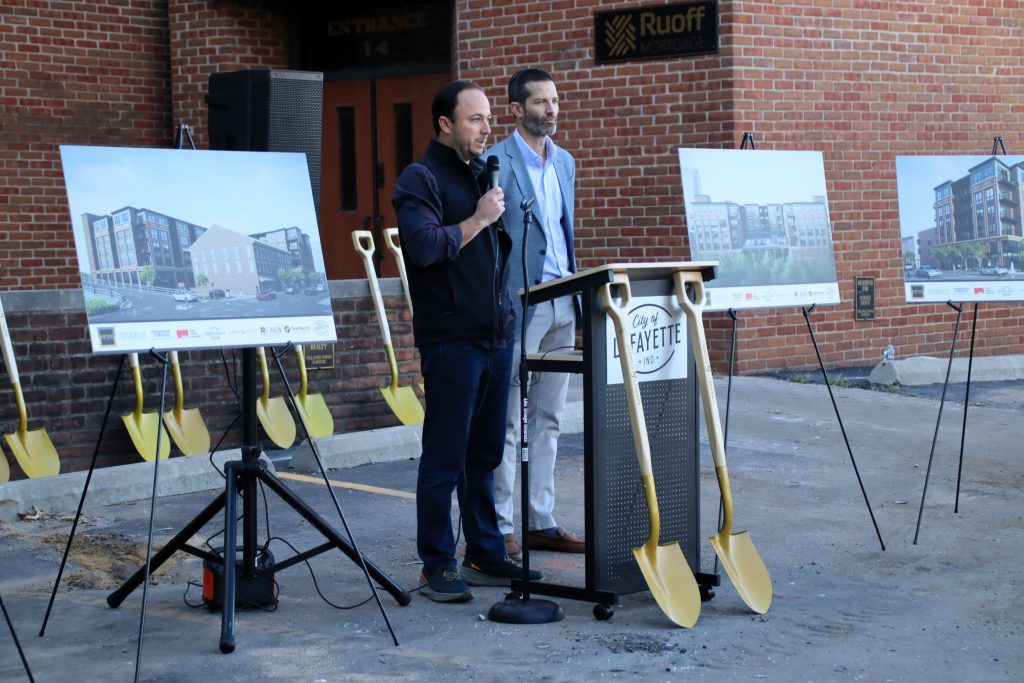
The project cost is estimated to be more than $56 million, with approximately $6 million funded through tax increment financing from the John Purdue Block Allocation Area.
Anticipated completion date is June 30, 2026.
Snowy Owl Commons
The project coming to Twyckenham Blvd. will offer 50 two-bedroom, two-bathroom units complete with an attached garage and in-unit washers and dryers.
Designed to meet the affordable housing needs of people 55 and over, Snowy Owl rents will range from $443 to $950 a month for tenants earning 30 to 80 percent Area Median Income.

Amenities will include a community building, pickleball courts and raised gardens. A trail will connect to Twyckenham Trail, which provides access to the nearby grocery store and dog park.
Snowy Owl Commons is a partnership between Area IV Development, Inc., and Keller Development, Inc. The project is expected to be completed by November 2025. Elva James, executive director for Area IV, says there is a waiting list of 250 individuals for this project. James says she hopes to send out flyers to those on the waiting list around June. Processing applications and leasing is expected to begin in August.
Snowy Owl was made possible through mixed funding opportunities to include five home units for seniors 62 and older as well as 10 units for special needs residents. Other funding is coming from the State of Indiana Development Funds, Federal Home Loan Bank of Indianapolis, Low-Income Housing Tax Credits and City of Lafayette HOME funds. Readiness funds will assist with infrastructure development.
James says it is the corporate mission of Area IV Development, Inc., to provide affordable housing and community economic development projects that benefit low-income persons, older adults, persons with intellectual disabilities and other special needs populations who reside in mid-northwestern Indiana. ★
BY BRAD OPPENHEIM
PHOTOS BY CHRISTINE PETKOV
After several years in the making, the cities of Lafayette and West Lafayette are jointly celebrating an addition to Greater Lafayette’s expansive trail network.
As part of the Wabash River Enhancement Corp.’s (WREC) ongoing commitment in promoting outdoor recreation and conservation in Greater Lafayette, the Lafayette portion of the Sagamore Parkway Trail, linking to the newly built West Lafayette portion, officially opened in October 2024. The new trail offers users multimodal connections to and from parks, neighborhoods, existing trail networks and business and retail destinations.
Planning for the trail, which spans 1.5 miles between the two cities, began in 2016 following the replacement of the Sagamore Parkway eastbound bridge over the Wabash River. The new bridge added a protected sidewalk for pedestrians to safely cross.
Stretching 0.9 miles in Lafayette and 0.6 miles in West Lafayette, the trail has connections to additional paths in both cities. It’s designed for hiking, biking and nature walks, and some of its amenities include scenic overlooks, wildlife viewing areas, rest areas and accessibility to individuals of all abilities. It not only offers a space for physical activity and relaxation, but also serves as a vital connector to the Wabash River, encouraging an appreciation for the natural environment that surrounds it.
“The trail’s prominent location has also increased public awareness, reinforcing our commitment to expanding and improving our trail system,” says Myles Holtsclaw, senior community development manager at the City of Lafayette’s Economic Development Department.

As for funding, West Lafayette City Engineer Natalia Bartos says the West Lafayette portion cost roughly $6 million, of which 20% was funded by West Lafayette’s Redevelopment Commission and 80% was funded by the Indiana Department of Transportation. On the Lafayette side, officials used a $2.7 million grant from Indiana’s Next Level Trails program to help build the trail. Administered by the Indiana Department of Natural Resources, the $180 million program is the largest infusion of trails funding in state history.
“The Sagamore Parkway Trail is a game changer for the Greater Lafayette trail network,” Holtsclaw says. “Before its completion, there was no continuous loop connecting Lafayette and West Lafayette. Cyclists could use the John T. Myers Pedestrian Bridge for a safe, bike-friendly crossing but had to either turn back or use one of the less bike-friendly bridges designed for vehicular traffic. The Sagamore Parkway Trail now resolves this problem by offering cyclists the option to cross the river at either the pedestrian bridge or the Sagamore Parkway Trail, seamlessly connecting to existing trail networks.”
As far as feedback from the Greater Lafayette community, it’s been overwhelmingly positive.
“Its strategic location has generated significant attention, and there was a great deal of excitement leading up to its completion,” he says. “Since the trail only officially opened at the end of October, there hasn’t been much time for people to fully experience it yet. However, we’re hopeful that by next spring we will see a surge in activity along this trail and the connecting routes.”
Bartos says, “Our (West Lafayette) engineering department has received positive feedback. Users appreciate the scenery and cycling opportunities.”
According to West Lafayette officials, a parking lot will be constructed at nearly the halfway point of the trail, as part of the WREC – READI 1.0 Wabash River Greenway Project. Individuals will be able to access the start of the West Lafayette portion near the Goodwill store on Sagamore Parkway W, and a halfway point via road access off the Sagamore Parkway westbound ramp.
Michelle Brantley, director of communications for the City of West Lafayette, says the trail will be open 24/7, but individuals should always keep safety in mind. In 2025, there are plans to install solar lighting along the West Lafayette portion of the trail, improving visibility and safety for trail-goers in low-lit areas. These lights will be installed on the tops of existing fence posts along the trail.
As for future expansions, according to DNR, these projects are the first of multiple-funded trail projects, expected to create an eight-mile looped section of the Wabash River Greenway connecting the communities, county and Purdue University to each other; Prophetstown State Park, and seven local, municipal and county parks.
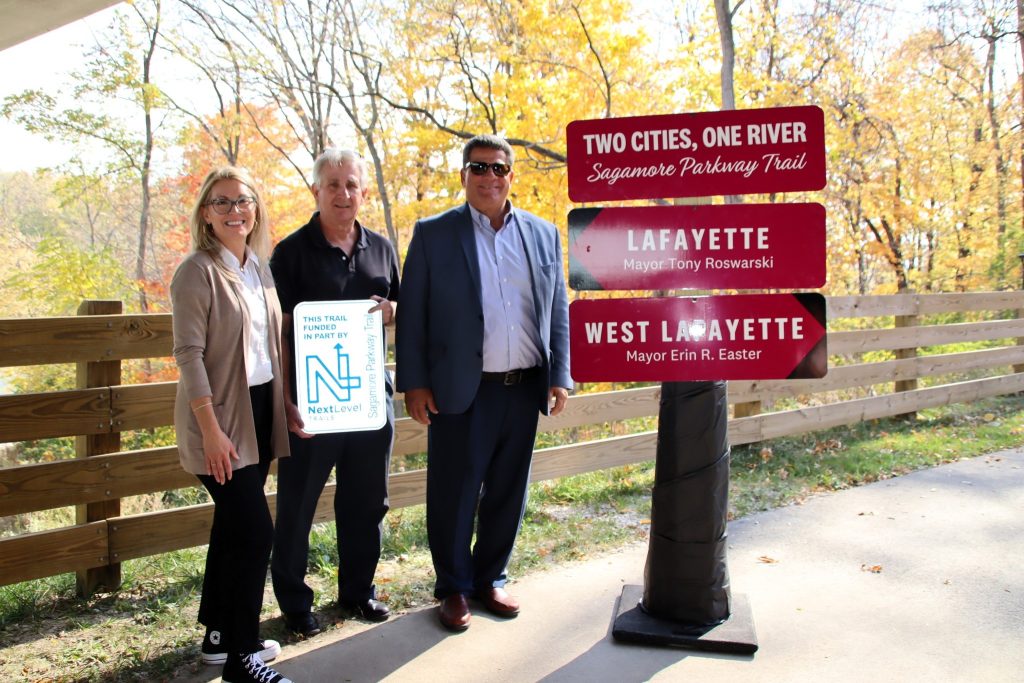
Officials on the West Lafayette side say there are plans to connect the trail to Soldiers Home Road with construction beginning as early as 2028.
“West Lafayette’s trail system has approximately 37 miles of paved trails and 15 miles of footpaths, and we’re always expanding,” says West Lafayette Parks and Recreation Superintendent Kathy Lozano.
If you have yet to experience Greater Lafayette’s vast trail system, officials on both side of the river encourage you to take advantage of what the community has to offer.
“The Greater Lafayette trail system is an excellent resource for both cyclists and pedestrians,” Holtsclaw says. “If you haven’t yet explored the trails, now is the perfect time to start.”
“West Lafayette offers an extensive trail network that provides numerous benefits for residents and visitors alike,” Brantley says. “Engaging with these trails can enhance physical health, mental well-being and connection to the community. To get started, I encourage residents and visitors to plan their visit by identifying a nearby trail that aligns with their interests and fitness level. Many trails have multiple access points and varying lengths to accommodate different preferences.”
Brantley also encourages individuals to join group activities such as organized walks, runs or biking events, making the experience more enjoyable and opening the opportunity to make connections with others who enjoy utilizing the trails.
Holtsclaw says with the right preparation, winter can be one of the best times to explore the trail systems, but he wants users to be mindful and follow proper trail etiquette to maintain a safe and enjoyable experience.
“Always stay on the right side of the trail, except when passing other users, he reminds. “Before overtaking someone, make sure to communicate your intentions by calling out or ringing a bell. Be mindful to yield to slower trail users and uphill traffic. And remember the simple rule: “Wheels Yield to Heels” — cyclists should always give priority to pedestrians and other non-wheel users on the trail.” ★
An interactive look at the entire trail network throughout Greater Lafayette may be found here.