
BY BRAD OPPENHEIM
PHOTOS BY CHRISTINE PETKOV
After several years in the making, the cities of Lafayette and West Lafayette are jointly celebrating an addition to Greater Lafayette’s expansive trail network.
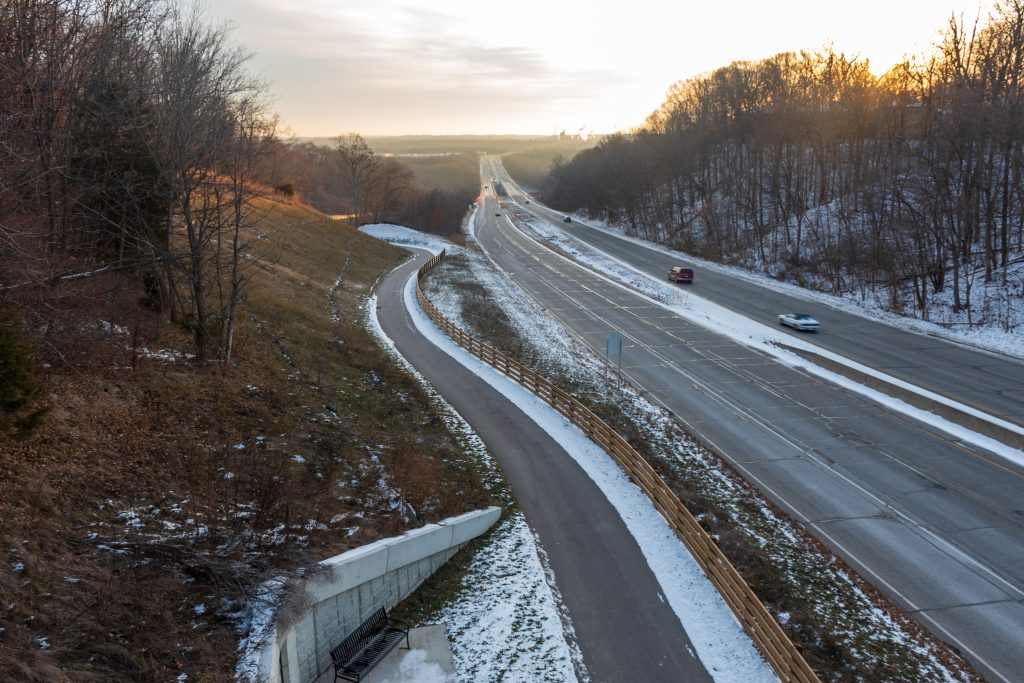
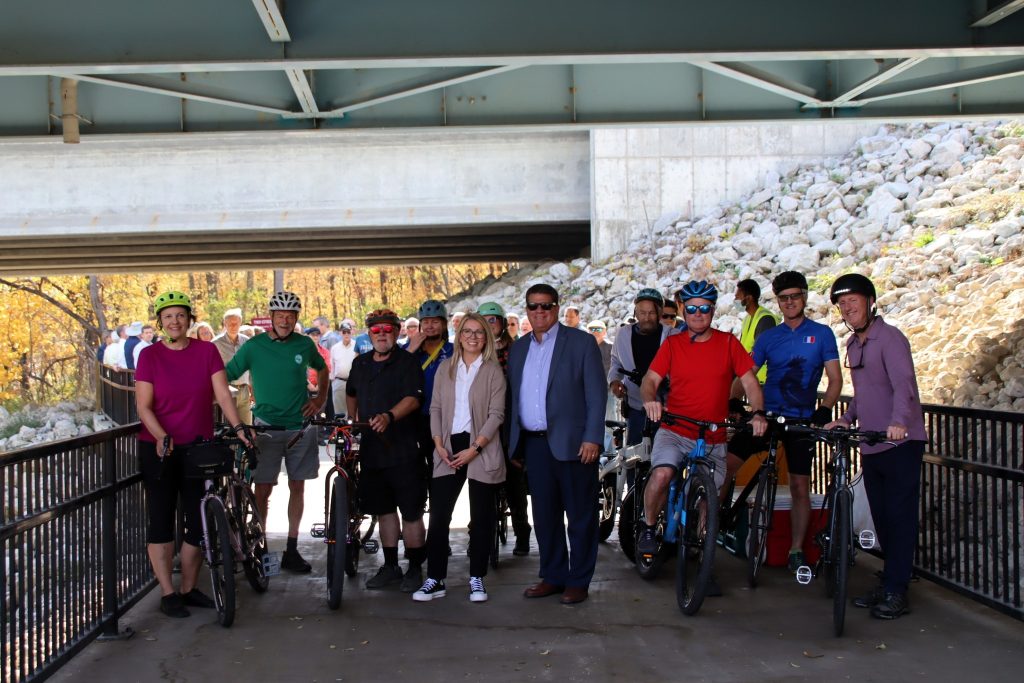
As part of the Wabash River Enhancement Corp.’s (WREC) ongoing commitment in promoting outdoor recreation and conservation in Greater Lafayette, the Lafayette portion of the Sagamore Parkway Trail, linking to the newly built West Lafayette portion, officially opened in October 2024. The new trail offers users multimodal connections to and from parks, neighborhoods, existing trail networks and business and retail destinations.
Planning for the trail, which spans 1.5 miles between the two cities, began in 2016 following the replacement of the Sagamore Parkway eastbound bridge over the Wabash River. The new bridge added a protected sidewalk for pedestrians to safely cross.
Stretching 0.9 miles in Lafayette and 0.6 miles in West Lafayette, the trail has connections to additional paths in both cities. It’s designed for hiking, biking and nature walks, and some of its amenities include scenic overlooks, wildlife viewing areas, rest areas and accessibility to individuals of all abilities. It not only offers a space for physical activity and relaxation, but also serves as a vital connector to the Wabash River, encouraging an appreciation for the natural environment that surrounds it.
“The trail’s prominent location has also increased public awareness, reinforcing our commitment to expanding and improving our trail system,” says Myles Holtsclaw, senior community development manager at the City of Lafayette’s Economic Development Department.
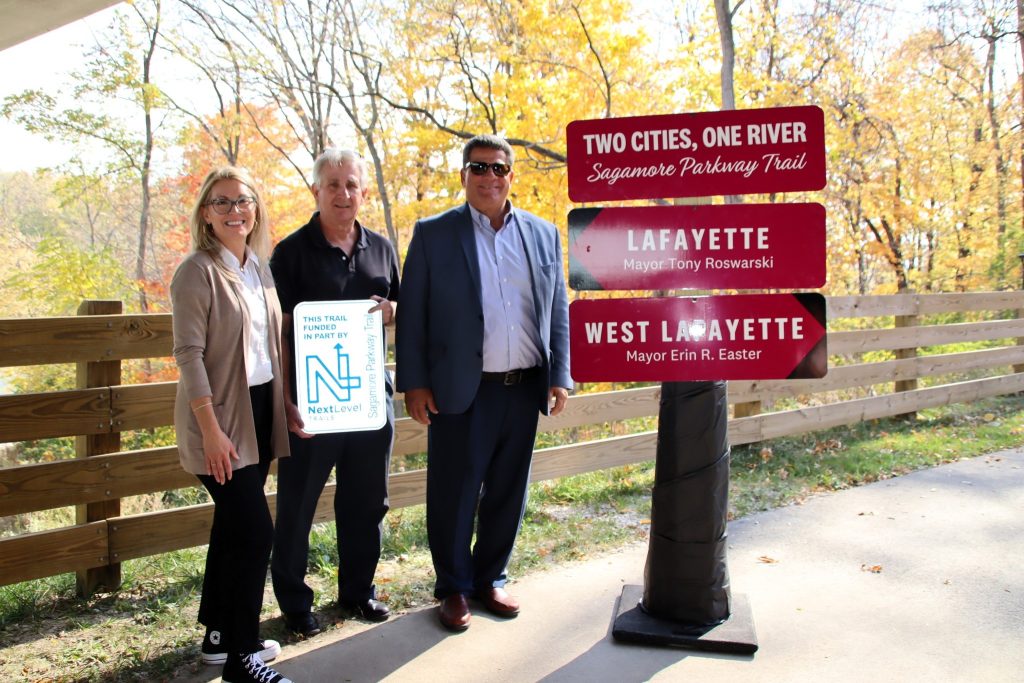
As for funding, West Lafayette City Engineer Natalia Bartos says the West Lafayette portion cost roughly $6 million, of which 20% was funded by West Lafayette’s Redevelopment Commission and 80% was funded by the Indiana Department of Transportation. On the Lafayette side, officials used a $2.7 million grant from Indiana’s Next Level Trails program to help build the trail. Administered by the Indiana Department of Natural Resources, the $180 million program is the largest infusion of trails funding in state history.
“The Sagamore Parkway Trail is a game changer for the Greater Lafayette trail network,” Holtsclaw says. “Before its completion, there was no continuous loop connecting Lafayette and West Lafayette. Cyclists could use the John T. Myers Pedestrian Bridge for a safe, bike-friendly crossing but had to either turn back or use one of the less bike-friendly bridges designed for vehicular traffic. The Sagamore Parkway Trail now resolves this problem by offering cyclists the option to cross the river at either the pedestrian bridge or the Sagamore Parkway Trail, seamlessly connecting to existing trail networks.”
As far as feedback from the Greater Lafayette community, it’s been overwhelmingly positive.
“Its strategic location has generated significant attention, and there was a great deal of excitement leading up to its completion,” he says. “Since the trail only officially opened at the end of October, there hasn’t been much time for people to fully experience it yet. However, we’re hopeful that by next spring we will see a surge in activity along this trail and the connecting routes.”
Bartos says, “Our (West Lafayette) engineering department has received positive feedback. Users appreciate the scenery and cycling opportunities.”
According to West Lafayette officials, a parking lot will be constructed at nearly the halfway point of the trail, as part of the WREC – READI 1.0 Wabash River Greenway Project. Individuals will be able to access the start of the West Lafayette portion near the Goodwill store on Sagamore Parkway W, and a halfway point via road access off the Sagamore Parkway westbound ramp.
Michelle Brantley, director of communications for the City of West Lafayette, says the trail will be open 24/7, but individuals should always keep safety in mind. In 2025, there are plans to install solar lighting along the West Lafayette portion of the trail, improving visibility and safety for trail-goers in low-lit areas. These lights will be installed on the tops of existing fence posts along the trail.
As for future expansions, according to DNR, these projects are the first of multiple-funded trail projects, expected to create an eight-mile looped section of the Wabash River Greenway connecting the communities, county and Purdue University to each other; Prophetstown State Park, and seven local, municipal and county parks.
Officials on the West Lafayette side say there are plans to connect the trail to Soldiers Home Road with construction beginning as early as 2028.
“West Lafayette’s trail system has approximately 37 miles of paved trails and 15 miles of footpaths, and we’re always expanding,” says West Lafayette Parks and Recreation Superintendent Kathy Lozano.
If you have yet to experience Greater Lafayette’s vast trail system, officials on both side of the river encourage you to take advantage of what the community has to offer.
“The Greater Lafayette trail system is an excellent resource for both cyclists and pedestrians,” Holtsclaw says. “If you haven’t yet explored the trails, now is the perfect time to start.”
“West Lafayette offers an extensive trail network that provides numerous benefits for residents and visitors alike,” Brantley says. “Engaging with these trails can enhance physical health, mental well-being and connection to the community. To get started, I encourage residents and visitors to plan their visit by identifying a nearby trail that aligns with their interests and fitness level. Many trails have multiple access points and varying lengths to accommodate different preferences.”
Brantley also encourages individuals to join group activities such as organized walks, runs or biking events, making the experience more enjoyable and opening the opportunity to make connections with others who enjoy utilizing the trails.
Holtsclaw says with the right preparation, winter can be one of the best times to explore the trail systems, but he wants users to be mindful and follow proper trail etiquette to maintain a safe and enjoyable experience.
“Always stay on the right side of the trail, except when passing other users, he reminds. “Before overtaking someone, make sure to communicate your intentions by calling out or ringing a bell. Be mindful to yield to slower trail users and uphill traffic. And remember the simple rule: “Wheels Yield to Heels” — cyclists should always give priority to pedestrians and other non-wheel users on the trail.” ★
An interactive look at the entire trail network throughout Greater Lafayette may be found here.