The rebirth of Tippecanoe County’s historic school buildings
BY ANGELA K. ROBERTS | PHOTOS BY CHRISTINE PETKOV
The ring of the school bell once signaled the start of the day for generations of Tippecanoe County students, echoing through city blocks and wooded groves. From the grand brick structures of early 20th century urban high schools to the simpler construction of 19th century rural outposts, the buildings shaped the region’s early educational history. While many of these landmarks have succumbed to the passage of time, some are experiencing a second chapter. Including a Quaker meeting house, a community park centerpiece and a senior apartment complex with a faithful addition, these repurposed school buildings demonstrate how preservation can offer new purpose long after classes have ended.
The county’s first rural academy
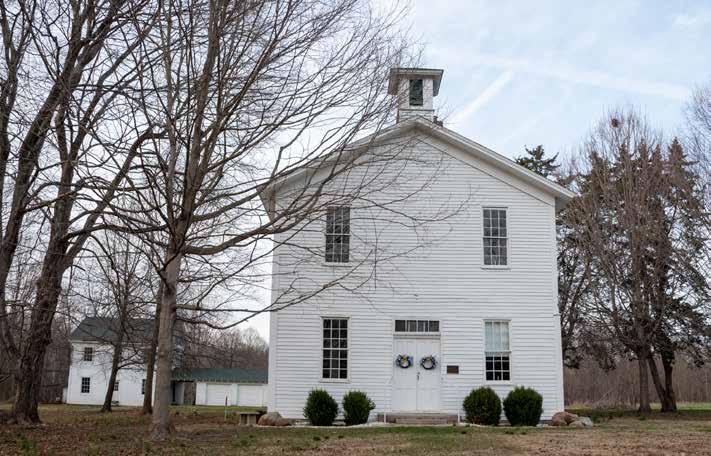
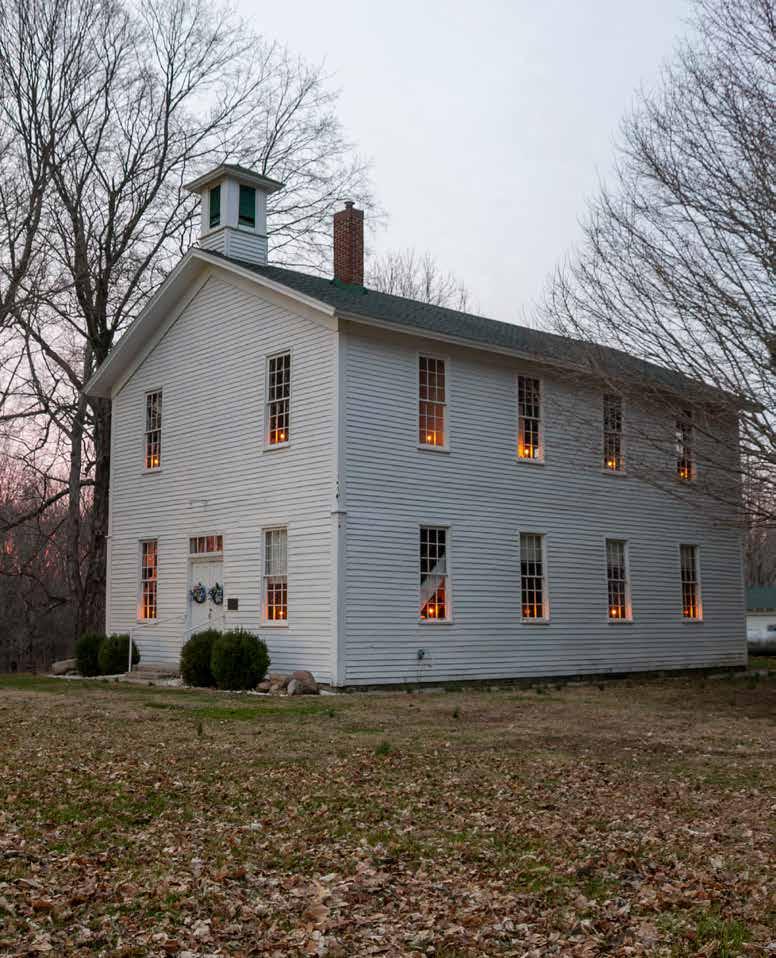
In a shady grove along a quiet stretch of Shadeland, a white two-story frame building stands as a monument to early Indiana education.
In 1851, the Society of Friends opened Farmers Institute, considered to be the first academy in rural Tippecanoe County. Drawing boys and girls from the neighboring towns of Lafayette, Thorntown and Stockwell and from as far away as Ohio, the school offered a boarding house for residential students.
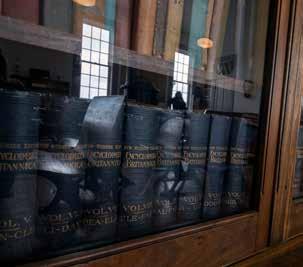
The curriculum included reading, writing, spelling, arithmetic, English, grammar, geography, history, chemistry, physiology, algebra, geometry, trigonometry, Greek and Latin. At the school’s busiest, 75 to 125 students attended each year. According to a historical marker in front of the meeting house, “The library was large and of exceptional quality.”
When the school closed its doors after the founding of Purdue University, the building eventually became a Quaker meeting house, which was later renamed Farmers Institute Friends Meeting.
Saving an endangered building
In 2012, Indiana Landmarks listed Farmers Institute among Indiana’s most endangered historic buildings, citing structural deterioration. By then, the institute had been “laid down” – a Quaker term for a meeting that has closed its doors.
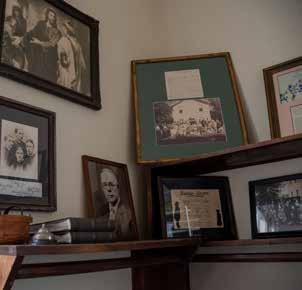
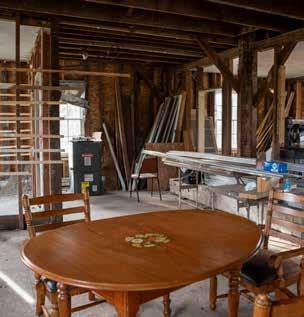
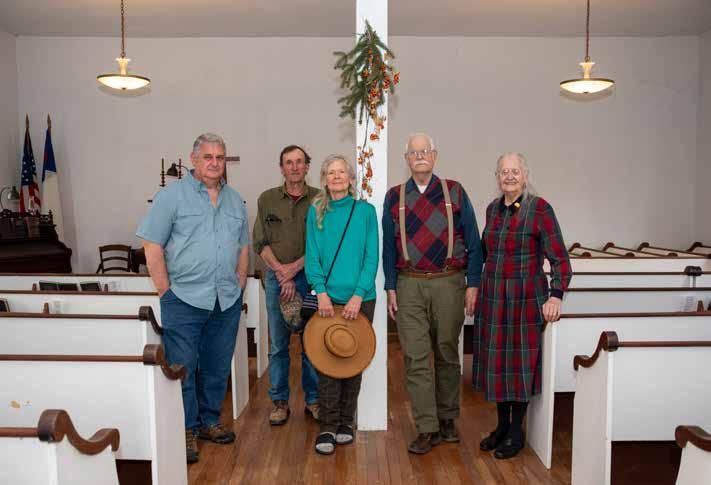
That year, a group of locals vowed to save the structures. They began meeting again for silent worship on the first Sunday of each month and gathering regularly to work on the buildings and grounds.
After tackling critical repairs to the exterior and interior of the meeting house, they turned their attention to the section of boarding house that remains.
Volunteers like Karla Ross, a retired clinical assistant professor from Purdue University, are part of the institute’s renaissance. With the foundation of the boarding house now shored up, they are currently replacing its windows and re-siding the building with southern Indiana poplar, which they are painting and nailing by hand. By this fall, Ross says, they hope to have the exterior of the boarding house completed so that they may tackle the inside.
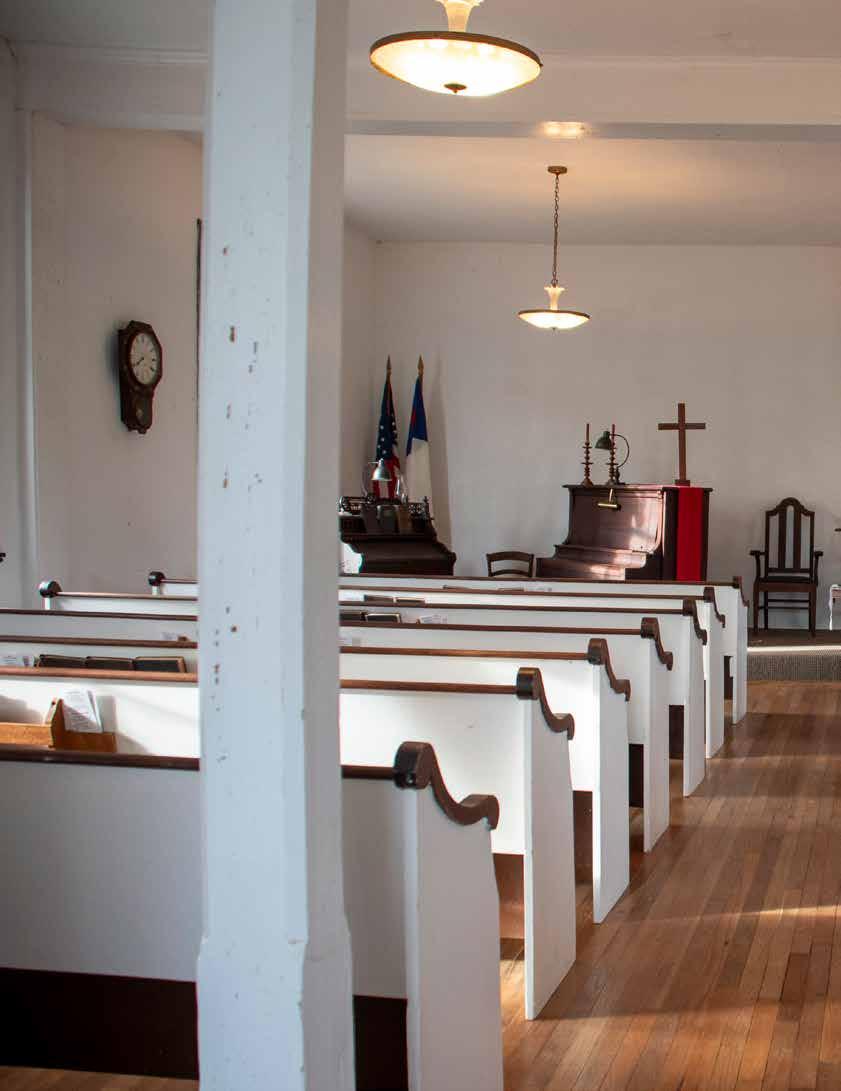
Next door, the meeting house has retained much of its 19th century aesthetic. Inside a quiet vestibule, glass bookcases preserve a collection of vintage books and photos. The entryway opens into a bright meeting room defined by glazed windows, wide-plank wood flooring and soft white walls.
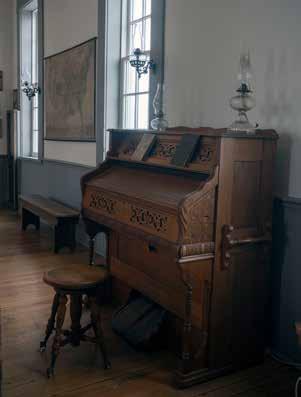
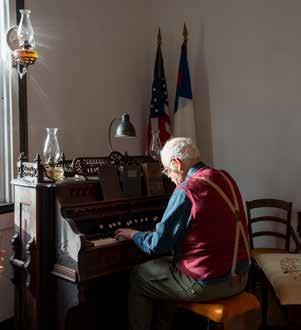
On either side of a center aisle, wooden pews await folks gathering for silent worship once a month, the quiet sometimes punctuated by hymn singing and piano music. During evening events, kerosene lamps mounted on the walls offer a soft amber glow, supplementing electrical lighting.
Despite a small monthly attendance of 10 to 15 people, the group remains active in its mission. “It’s one thing I’ve learned, which is humbling. It isn’t the size of the group. It’s the commitment to what they’re doing,” Ross says.
Each fall, Farmers Institute puts on a Quaker Fair. Drawing hundreds, the fundraising event features an old-fashioned bean dinner, historical talks and displays, music, quilt exhibits and handmade crafts.
In early December, the meeting hosts an annual carol sing. As guests arrive in the dark of winter, electric candles illuminate each window of the meeting house, guiding them toward the double front doors and the communal warmth waiting inside.
History, on the move and hands on
While many historic structures remain tethered to their original foundations, the Morris Schoolhouse, built in 1879, embarked on a unique journey to ensure its preservation. Situated on land slated for new development by Franciscan Health, the schoolhouse required a new home to avoid being lost to history.
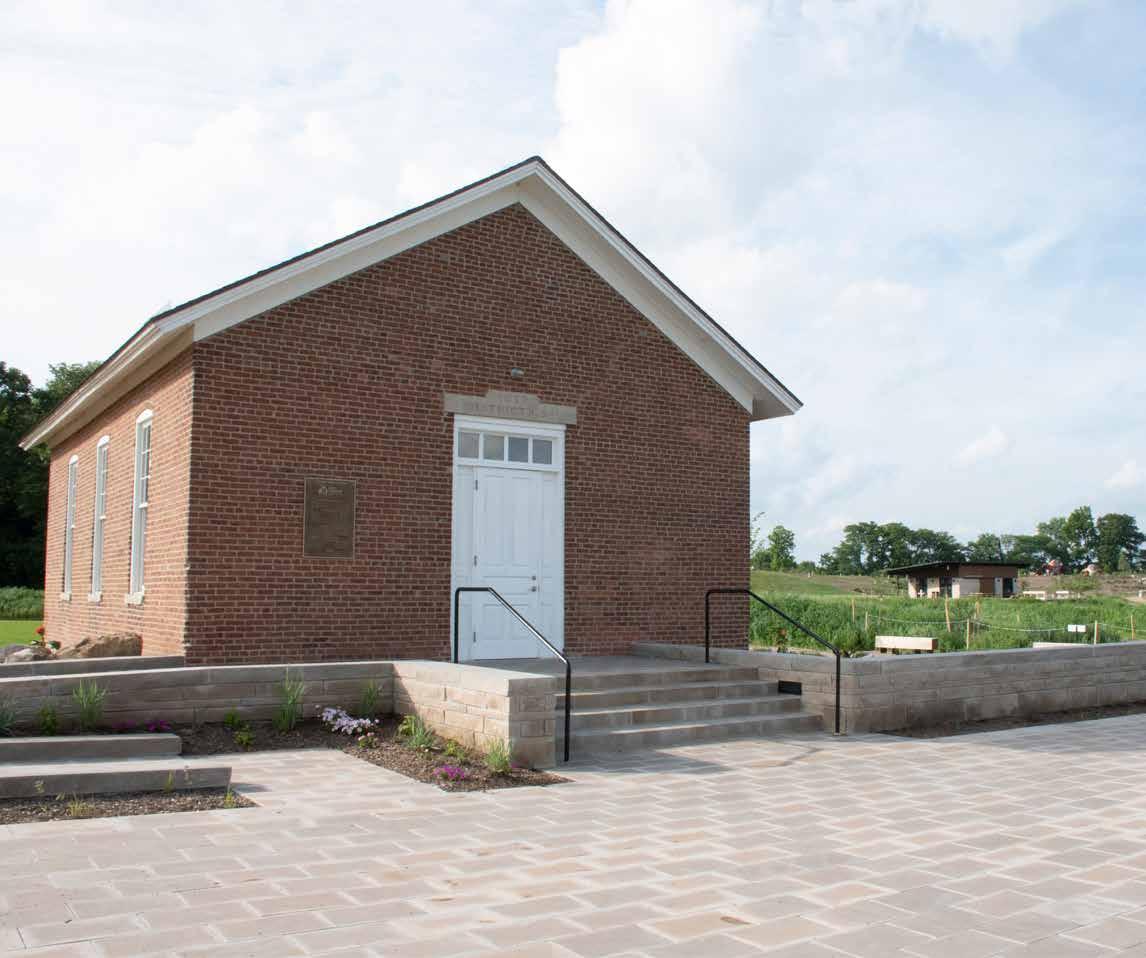
Lynn Cason, a local resident, donated 13.6 acres of retired farmland along Cumberland Avenue to serve as a permanent sanctuary for the building. On a clear, late-winter day in 2017, as hundreds of spectators watched, the schoolhouse was lifted with hydraulic jacks, placed on steel beams and driven across a barren soybean field to its current location.
Today, the red brick landmark stands as the centerpiece of the new Cason Family Park, nestled among prairie grasses and connected to West Lafayette’s 27-mile trail system.
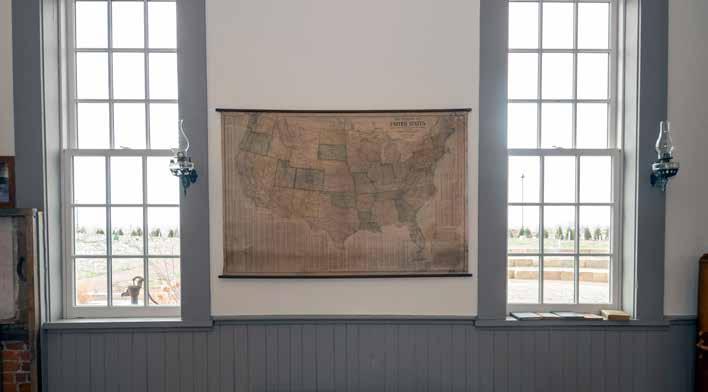
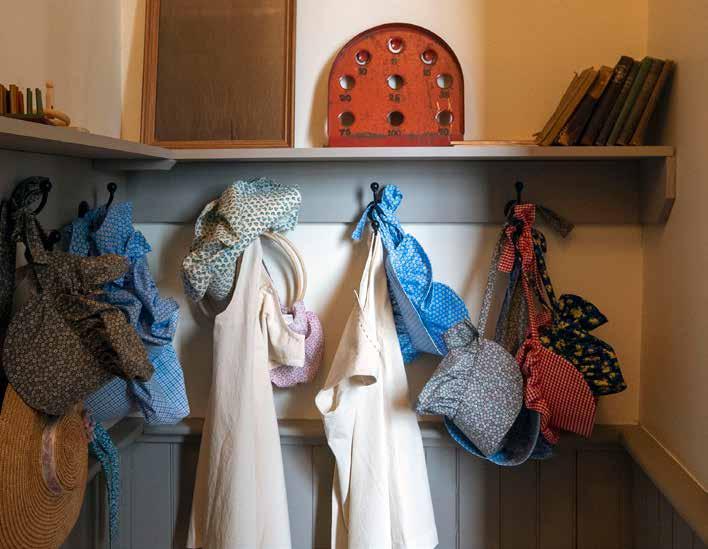
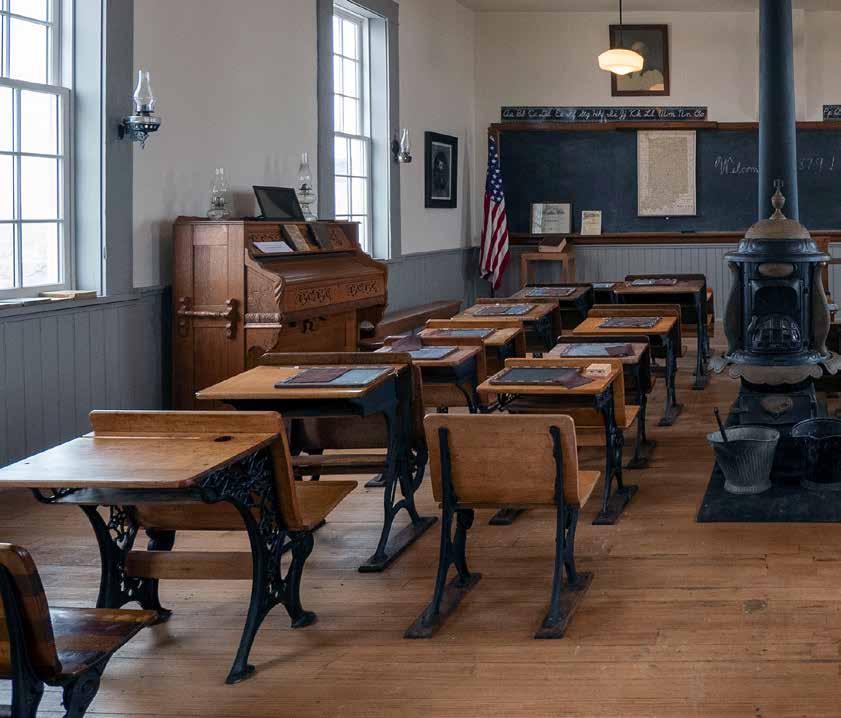
Walking into the restored schoolhouse feels like stepping back 150 years. A cast-iron stove presides over the room, flanked by rows of wooden desks standing on ornate legs. Stretching across the back wall is a chalkboard with the phrase “Welcome to 1879!” written in cursive letters. In the tiny cloakroom, bonnets, lunch pails and caps hang on black pegs, harking back to an earlier generation of students. Wood floors and beadboard complete the scene.
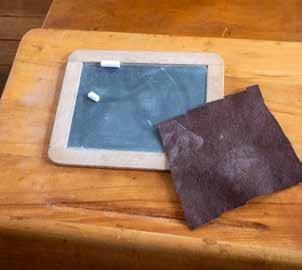
“We have slate boards at each desk. Visitors are welcome to sit in the desks and write on the slates,” says Amanda Jeffries, recreation coordinator at West Lafayette Parks and Recreation Department. “There are many books that can be looked through. There are maps and photos around the room to look at. There are some replica toys in the closet as well.”
Starting in April, the building will be open for weekend tours, with future plans for immersive field trips where 21st century students can experience the rhythms of a 19th century school day.
Preservation and historic reproduction in the Old City
The Historic Jeff Centre Senior Apartments represent a meticulous preservation of the Old City’s architectural and educational heritage. Built in the 1910s and expanded
in the 1920s to include a gymnasium, the brick Tudor Revival served as Lafayette’s public high school for nearly 60 years before transitioning into a junior high and then a home for Ivy Tech Community College of Indiana. In 2000, the landmark reopened after an adaptive reuse transformation, finding new purpose as an affordable senior apartment complex with 74 units. Last December, Homestead Resources debuted a nearly $13 million addition. Named after the school’s newspaper, the new Jeffersonian contains 50 affordable senior housing units.
Rising from the site of the old Jeff gymnasium that had been demolished decades before, the new apartment building was designed with input from residents of the Historic Jefferson Neighborhood. “We did work with the neighborhood – and they’re an integral part of our partners – to make sure we got them something they could be proud of, to look outside their windows every day at,” said Marie Morse, executive director of Homestead Resources, at the grand opening in December.
Physically separated from the historic school building by a parking lot, the Jeffersonian complements its next-door neighbor in an updated traditional style. Like its historic predecessor, the new building is three stories high. Brick masonry veneer mimicking the older building’s exterior mixes with modern fiber cement panels. Double-hung windows, a staple of early 20th century architecture, are embellished with cast stone lintels and soldier course brickwork, evoking the ornamental details of surrounding historic homes.
Inside, contemporary furnishings such as vinyl plank flooring, glass public doors and stainless-steel appliances offer modern comforts. Memorabilia from past athletic events are on display, showcasing the land’s historical significance.
Located on North Ninth Street, the Historic Jeff Centre Senior Apartments and the Jeffersonian offer up-to-date living within a historic framework, ensuring that the site where high schoolers once wrote on chalkboards and tossed basketballs continues to play a meaningful role in the life of Greater Lafayette residents.